
Come-on let us see what the symptoms of high cholesterol in the body are? Why do high cholesterol symptoms develop?
As per the modern medicine, there are no symptoms for high cholesterol. Yet, TCM defines certain traits for increased level of cholesterol.
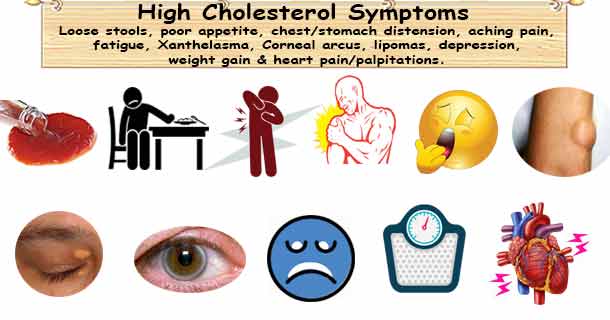
Traditional Chinese Medicine (TCM) defines a set of cholesterol-raising traits. Based on these traits and also after visited numerous health forum and questioned many cholesterol patients; we have shortlisted below a list of high cholesterol symptoms.
{"preview_thumbnail":"/drupal8/sites/default/files/styles/video_embed_wysiwyg_preview/public/video_thumbnails/hJ8-zPL_qCg.jpg?itok=apAuY5nM","video_url":"https://youtu.be/hJ8-zPL_qCg","settings":{"responsive":1,"width":"854","height":"480","autoplay":0},"settings_summary":["Embedded Video (Responsive)."]}
10 Cholesterol Symptoms You NEVER know before!
What are the symptoms of high cholesterol in the body?
- Loose stools
- Chronic poor appetite or lack of appetite
- Chest and stomach distension
- Aching pain (felt at particular parts; an example headache or knee/back pain).
- Fatigue
- High cholesterol symptom eyes -Xanthelasma and Corneal arcus.
- High cholesterol symptoms on the skin - Masses in the body called lipomas.
- Memory-drop, depression or emotions
- Excess weight gain (sensation of body heaviness)
- Heart pain/palpitations
Do you have a few of the high cholesterol risk factor and symptoms, then you need to undergo high cholesterol diagnosis.
Why do high cholesterol symptoms develop?
What is lipid homeostasis? Human lipid homeostasis is a stable & balanced fat metabolism in the body.
To maintain healthy cholesterol range body needs to carry out more complex interactions. Any disturbance to this homeostasis leads to various high cholesterol symptoms.
Why cholesterol patients have loose stool?
STOMACH pain, diarrhea, and nausea are all symptoms of gallstones - hard particles formed of cholesterol that develop in the gallbladder — also, fat metabolism problems due to digestion, absorption, and or stool consistency disturbance.
Why cholesterol patients have a lack of appetite?
Chronic poor appetite or lack of appetite medically referred to as anorexia. Any persisting lack of appetite should be evaluated. Causes of loss of appetite include pregnancy, metabolic problems, liver disease, hepatitis, hypothyroidism, kidney problem, heart failure, and antibiotic use.
Why cholesterol patients experience chest or stomach distension?
Intestinal inflammation (ulcer) and small bowel bacterial overgrowth may lead to excess intestinal gas. This excess gas leads to chest and stomach distension.
Why cholesterol patients experience pains (headache, knee, or back)?
Intestinal inflammation (ulcer) and small bowel bacterial overgrowth may lead to excess intestinal gas. This gas has the characteristic of moving everywhere and cause pain where it resides; this causes aching pain.
Why high cholesterol causes tiredness or fatigue?
May be due to high carb eating habit or digestion problem. Refined carbs (sugar, white bread, white pasta) would provide a burst of energy followed by a 'crash' and feelings of fatigue or sluggishness. Alternatively, any non-diagnosable liver problem may have fatigue or tiredness, loss of appetite, nausea or vomiting, etc.
Why high cholesterol have symptoms of eyes?
Yellowish deposit of cholesterol underneath the skin of the inner canthus often upper eyelid called Xanthelasma. Xanthelasma may be a symptom of dyslipidemia and generally not painful.
Corneal arcus or arcus senilis is sometimes indicative of elevated serum cholesterol. It is a grayish-white ring around one or both corneas in the eyes. These rings are lipid or fat deposits due to chronically high blood levels of cholesterol or other lipids.
Why high cholesterol have symptoms on the skin?
High cholesterol symptoms on the skin - Masses in the body, such as bumps, bumps, and fatty moles in the body called lipomas. Usually develops in the abdominal region, neck, legs, and arms. A lipoma is a lump under the skin that occurs due to an overgrowth of fat cells due to improper fat metabolism.
Why high cholesterol causes memory-drop, depression, etc.?
The brain contains 25% of the total cholesterol in the body; more than any other organ.
Clinical study shows cholesterol metabolism defect linked with Alzheimer’s disease & other neurodegenerative conditions. Research shows depression, memory loss & emotions linked with high LDL-C or low HDL-C.
Why high cholesterol patients gain excessive weight?
Excess weight gain (sensation of body heaviness) may be due to hypothyroidism, persistent depressive disorder, too much of stress (high cortisol level), sleep deprivation, etc. Hypothyroidism may cause high cholesterol. Stress, depression, and sleep deprivation can cause inflammation that might lead to high cholesterol levels.
Why high cholesterol patients experience heart pain or palpitations?
Even a minimal plaque formation in any parts of the body can lower blood flow and nutrient supply. The heart works hard to restore normal blood flow, causing pain or palpitation.