
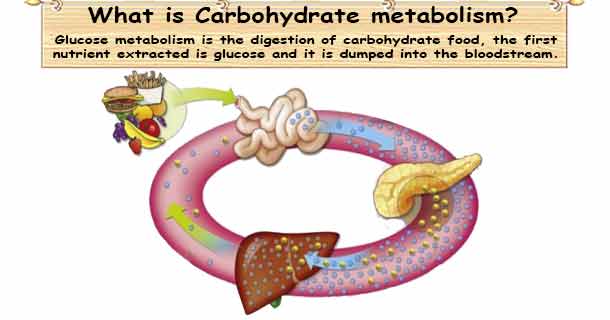
Glucose metabolism is the digestion of carbohydrate food, the first nutrient that extracts out is glucose (or sugar) and released put into the bloodstream.
What are carbohydrates?
Carbohydrates are sugars and starches, provides energy to the body needed for its various activities. Energy can also be from the fats we eat. Some familiar carbohydrate sources are bread, potatoes, rice, pasta, cereals, and sugars.
What is Glucose (Carbohydrate) metabolism?
Carbohydrate metabolism is the process your body uses to make energy from the carbohydrate food you eat.
Digestion of carbohydrates is by mechanical (chewing in the mouth) and chemical (enzyme’s secretion by the body) process of digestion.
Carbohydrates are broken down into glucose by the saliva and gut.
Once the food reaches the mouth, saliva secretion contains an enzyme (amylase or ptyalin secretion by parotid glands) that begins the breakdown of carbohydrate. This breakdown process continues, and glucose separates in the stomach. Once the food reaches the small intestine, glucose absorption takes place and released into the bloodstream for energy needs.
Also, proteins in the meal broken down into glucose to some degree, but this process is prolonged than from carbohydrates.
Pancreas role in Carbohydrate Metabolism
The blood sugar level in the blood is controlled by three hormones namely insulin, glucagon, and epinephrine.
After digestion, the small intestine absorbs the available glucose in the food and releases into the bloodstream. So the blood-glucose level in the blood rises. The pancreas responds to this by releasing stored insulin. Insulin allows glucose from the blood to be used for energy by the body’s cells. Also, muscles and the liver store excess glucose as glycogen.
Insulin in blood instructs (message or comment)
- The liver to stop releasing glucose into the bloodstream,
- The body cell to begin consuming glucose in the bloodstream for energy.
Liver in Glucose Metabolism
The process of conversion of glucose into glycogen is called glycogenesis.
Once the necessary glucose consumption is over. And if there, is any excess glucose still available in the bloodstream then the liver starts converting it into glycogen and stored in it and skeletal muscle for the future needs.
Glycogen to glucose conversion
The process of conversion of glycogen to glucose is called glycogenolysis.
If you are not taking food for a prolonged time, then the blood glucose level drops. Your body cells need glucose for energy, so the liver starts to convert the stored glycogen into glucose and releases it into the bloodstream.
Glucose metabolism and diabetes
In type 2 diabetes, the effectiveness of insulin reduced called insulin resistance, and in type 1 diabetes, insulin levels in the body are deficient or no insulin.
If there is any problem or deficiency in glucose metabolism - whether it is glucose absorption, insulin secretion, glucose use, glucose storage, or releasing stored glucose. This minor deficiency in glucose metabolism will progressively develop diabetes.