
Check your risk for undiagnosed type 2 diabetes and prediabetes in 60 seconds. Understand your risk factors, score results, and next steps for testing.
Type 2 Diabetes Risk Calculator: Check Your Risk in 60 Seconds
Use this free, evidence-based self-assessment tool to estimate your likelihood of having undiagnosed type 2 diabetes or prediabetes. No blood sample or lab work is required to complete this screening.
About This Diabetes Risk Assessment
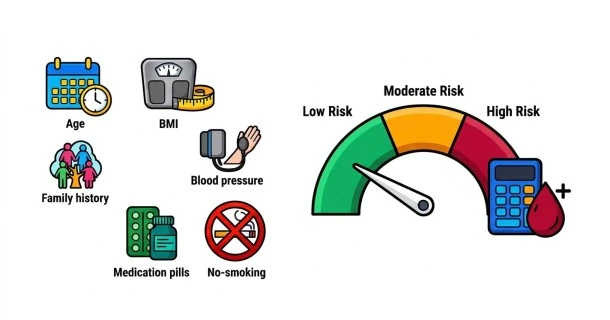
This calculator uses the clinical parameters of the validated Cambridge Diabetes Risk Score. Unlike basic questionnaires, this model evaluates a combination of demographic data, body mass index (BMI), family history, smoking status, and specific medications—such as corticosteroids and blood pressure drugs—that influence blood sugar levels.
Note: This screening tool provides an educational risk estimate and cannot diagnose diabetes. Always share your results with a qualified doctor for proper blood testing.
How to Understand Your Diabetes Risk Score
After entering your health details, your result estimates your probability of having elevated blood glucose or undiagnosed type 2 diabetes. Use the guide below to decide your next step:
| Risk Category | What Your Result Means | Recommended Next Steps |
|---|---|---|
| Low Risk | Your current lifestyle and health profile show a low likelihood of undiagnosed type 2 diabetes. | Maintain a balanced diet, stay physically active, and repeat this assessment every 3 years. |
| Moderate Risk | You have one or more risk factors that increase your chance of developing prediabetes over time. | Focus on gradual weight management and discuss routine blood sugar screening during your next checkup. |
| High Risk | Your profile strongly correlates with insulin resistance, prediabetes, or undiagnosed type 2 diabetes. | Schedule an appointment with a healthcare provider for a diagnostic HbA1c or fasting blood glucose test. |
Key Risk Factors Evaluated in This Calculator
Type 2 diabetes develops gradually when the body becomes resistant to insulin or stops producing enough of it. Each question in this calculator measures a clinically proven risk factor:
- Age and Biological Sex: The risk of insulin resistance rises significantly after age 40, and men statistically develop type 2 diabetes at slightly lower weight thresholds than women.
- Body Mass Index (BMI): Carrying excess weight—especially visceral fat around the abdomen—interferes with how cells respond to insulin. Note that people of South Asian, East Asian, Black, and Hispanic descent face higher diabetes risks at lower BMI levels (starting at 23 kg/m²).
- Family History of Diabetes: Having a first-degree relative (a mother, father, brother, or sister) with type 2 diabetes increases your genetic predisposition. Having both a parent and a sibling affected raises the risk further.
- High Blood Pressure Medication: Hypertension and insulin resistance frequently occur together as part of metabolic syndrome, sharing underlying vascular and inflammatory pathways.
- Prescribed Steroids (Corticosteroids): Oral or systemic steroid medications can cause the liver to release extra glucose and temporarily block insulin action, leading to steroid-induced hyperglycemia.
- Smoking History: Nicotine and tobacco chemicals promote chronic inflammation and oxidative stress, making current smokers 30% to 40% more likely to develop type 2 diabetes than non-smokers.
Diagnostic Blood Tests to Confirm Your Status
If your calculator score indicates moderate or high risk, a doctor will typically order one of the following standard laboratory tests to check for prediabetes or diabetes:
| Diagnostic Test | Normal Range | Prediabetes Range | Diabetes Range |
|---|---|---|---|
| HbA1c (A1C) Test | Below 5.7% | 5.7% to 6.4% | 6.5% or higher |
| Fasting Plasma Glucose (FPG) | Below 100 mg/dL | 100 to 125 mg/dL | 126 mg/dL or higher |
| Oral Glucose Tolerance Test (OGTT) | Below 140 mg/dL | 140 to 199 mg/dL | 200 mg/dL or higher |
5 Proven Ways to Lower Your Type 2 Diabetes Risk
Clinical trials such as the Diabetes Prevention Program show that targeted lifestyle changes can reduce the risk of progressing from prediabetes to type 2 diabetes by more than half:
- Lose 5% to 7% of Your Body Weight: If you are overweight, losing even a modest amount of weight significantly improves insulin sensitivity.
- Aim for 150 Minutes of Weekly Movement: Brisk walking, cycling, or swimming for 30 minutes five days a week helps muscles absorb blood glucose without needing extra insulin.
- Prioritize Fiber-Rich Whole Foods: Swap refined grains and sugary drinks for non-starchy vegetables, legumes, nuts, and whole grains to prevent sharp blood sugar spikes.
- Quit Smoking: Stopping tobacco use steadily improves blood vessel health and lowers systemic insulin resistance.
- Monitor Blood Pressure and Sleep: Managing hypertension and getting 7 to 8 hours of quality sleep per night helps regulate stress hormones like cortisol that raise blood sugar.
Frequently Asked Questions (FAQ)
Can an online diabetes risk calculator tell me if I have diabetes?
No. An online calculator only estimates your statistical likelihood of having prediabetes or undiagnosed type 2 diabetes based on known risk factors. Only a blood test ordered by a healthcare professional—such as an HbA1c or fasting blood glucose test—can confirm a diagnosis.
What are the early warning signs of type 2 diabetes?
Early type 2 diabetes often causes no noticeable symptoms. When symptoms do appear, they commonly include increased thirst, frequent urination, unexplained fatigue, blurry vision, slow-healing cuts, and darkened skin patches around the neck or armpits (acanthosis nigricans).
Why does this calculator ask about steroid medications?
Prescribed corticosteroids (such as prednisone or dexamethasone) mimic stress hormones in the body, causing the liver to release stored sugar into the bloodstream while making cells more resistant to insulin. Long-term or high-dose steroid use is a major clinical predictor of elevated blood sugar.
At what BMI is diabetes risk higher for Asian populations?
While standard Western guidelines define overweight starting at a BMI of 25 kg/m², people of South Asian, East Asian, and Southeast Asian heritage tend to store more visceral fat around internal organs. Medical guidelines recommend diabetes screening for Asian adults starting at a BMI of 23 kg/m² or higher.
Can prediabetes be reversed if I catch it early?
Yes. Prediabetes means your blood sugar levels are higher than normal but not yet high enough for a type 2 diabetes diagnosis. Through regular physical activity, balanced nutrition, and modest weight loss, many people return their blood sugar levels to the normal range.
Does this calculator assess Type 1 diabetes or gestational diabetes?
No. This assessment is specifically designed for Type 2 diabetes. Type 1 diabetes is an autoimmune condition that usually develops rapidly and is unrelated to lifestyle or BMI, while gestational diabetes occurs specifically during pregnancy and requires dedicated prenatal glucose screening.