
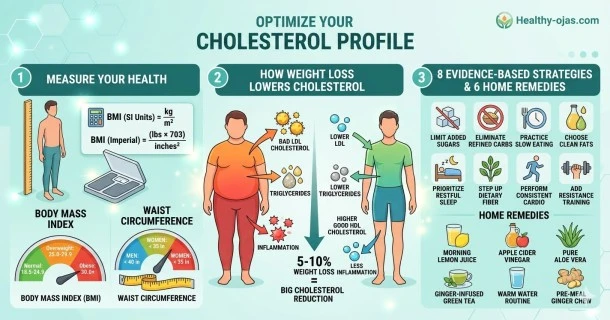
Learn how losing weight optimizes your lipid panel. Discover the direct link between high BMI, waist size, and cholesterol, plus simple remedies to shed pounds.
Weight Loss and Cholesterol: How BMI and Waist Size Affect Lipids
Shedding excess body fat is one of the most reliable lifestyle interventions to optimize your lipid profile, significantly dropping bad LDL cholesterol and dangerous triglycerides while boosting protective HDL levels. Carrying excess body weight—especially around your midsection—directly alters your metabolic pathways. This structural guide covers how body mass index (BMI) and waist circumference dictate your cardiovascular health, alongside actionable strategies to manage both safely.
How Weight Loss Optimizes Your Cholesterol Profile
When you drop surplus pounds, your body stops producing excess inflammatory markers and shifts away from lipid accumulation:
- Reverses Dyslipidemia: Losing just 5% to 10% of total body weight drastically improves your circulating lipid numbers.
- Suppresses Saturated Fat Impact: Combining caloric control with targeted reductions in saturated fats shifts how your liver processes cholesterol, safely accelerating low-density lipoprotein (LDL) clearance.
- Combats Metabolic Syndrome: Reversing structural weight gain prevents the dangerous clustering of high blood pressure, elevated glucose, and poor cholesterol profiles.
15 Systemic Health Benefits of Achieving a Leaner Weight
Dropping excess body weight provides immense protection across your entire physiological framework:
- Halts Type 2 Diabetes: Maximizes insulin sensitivity and successfully corrects pre-diabetes markers.
- Enhances Sleep Quality: Alleviates structural snoring and physical sleep apnea for deep, long-lasting rest.
- Lowers Blood Pressure: Reduces physical systemic resistance, safely dropping blood pressure by an average of 5 mmHg.
- Decreases Heart Attack Risk: Reduces the intense muscular strain placed on your heart and vascular network.
- Soothes Joint Pain: Minimizes the literal skeletal load and daily mechanical wear on your joints.
- Restores Balanced Hormones: Corrects structural sex hormone imbalances, directly improving fertility parameters.
- Boosts Psychological Wellness: Elevates baseline self-esteem while lowering chronic anxiety and depressive states.
- Eases Respiratory Strain: Minimizes upper airway restriction, helping to mitigate systemic allergy symptoms.
- Calms Vascular Inflammation: Minimizes the inflammatory signals from visceral fat cells that lead to arterial plaque.
- Amplifies Daily Energy: Enhances dopamine pathways, boosting your motivation levels and mood.
- Stabilizes Immune Response: Balances your internal immune system defenses to clear persistent baseline inflammation.
- Restores Easy Mobility: Allows you to execute daily activities comfortably without physical exhaustion.
- Improves Bladder Control: Reduces heavy abdominal pressure to alleviate daily urinary incontinence.
- Protects Cognitive Function: Minimizes circulating inflammatory chemicals to lower chronic dementia risks.
- Extends Lifespan Expectancy: Puts your body in an optimized state to maximize healthy longevity.
Understanding Your Metrics: BMI and Waist Size
Body Mass Index (BMI) and waist size are key tools to evaluate body weight and health risks. BMI uses height and weight to estimate total body mass, while waist size measures belly fat around your organs.
1. Body Mass Index (BMI)
Your Body Mass Index evaluates your total weight relative to your height. Clinical trials confirm a direct, linear relationship: as BMI rises, total cholesterol and dangerous LDL rise alongside it, while protective HDL drops.
- SI Units Formula: \(\text{BMI} = \frac{\text{Weight (kg)}}{\text{Height (meters)}^2}\)
- Imperial Units Formula: \(\text{BMI} = \frac{\text{Weight (lbs)} \times 703}{\text{Height (inches)}^2}\)
+------------------+-----------------------+
| BMI Range | Weight Classification |
+------------------+-----------------------+
| 18.5 to 24.9 | Normal / Healthy |
+------------------+-----------------------+
| 25.0 to 29.9 | Overweight |
+------------------+-----------------------+
| 30.0 or Greater | Obese |
+------------------+-----------------------+
(Note: Clinical markers show that high BMI numbers present a more pronounced coronary heart disease risk in men compared to women with identical scores.)
2. Waist Circumference
Your waist size measures dangerous visceral fat wrapped around internal abdominal organs. A waist line measuring 35 inches or more for women and 40 inches or more for men marks a direct risk parameter for metabolic syndrome and heart conditions. Strict modern cardiac targets recommend keeping measurements under 30 inches for women and 35 inches for men.
How to Measure Your Waist Correctly:
- Remove bulky upper clothing items or lift them clear of your waistline.
- Locate your natural waistline, which sits roughly half an inch above your navel (belly button).
- Wrap a reliable measuring tape in a perfect, level circle around your torso without allowing it to sag.
- Relax your posture completely; do not pull your stomach inward or hold your breath.
- Record the exact number where the tape overlaps its starting point.
8 Evidence-Based Ways to Lose Weight Naturally
Implementing simple, targeted nutritional adjustments can rapidly accelerate fat loss:
- Limit Added Sugars: Minimize hidden processed sugars to rapidly lower daily calorie intake.
- Eliminate Refined Carbs: Replace simple, stripped starches with whole options to stop blood sugar and insulin spikes.
- Practice Slow Eating: Chew slowly to allow natural fullness hormones to log satiety before overeating.
- Swap for Clean Fats: Replace inflammatory trans fats with modest amounts of ghee or coconut oil to boost digestion.
- Prioritize Restful Sleep: Aim for deep nightly rest, as sleep deprivation increases obesity risks by 55%.
- Step Up Dietary Fiber: Increase fiber step-by-step to feel full naturally and cultivate protective gut bacteria.
- Perform Consistent Cardio: Engage in power walking, jogging, or cycling to optimize cardiovascular health.
- Add Resistance Training: Lift weights to maintain vital muscle tissue, keeping your metabolic rate high.
6 Simple Home Remedies to Accelerate Fat Loss
Incorporate these safe, traditional kitchen remedies to complement your dietary modifications:
- Morning Lemon Juice: Squeeze half a fresh lemon into warm water on an empty stomach to optimize digestion.
- Apple Cider Vinegar: Dilute 1 to 2 teaspoons of raw, unfiltered ACV in water right before your main meals.
- Pure Aloe Vera: Consume pure aloe extract to naturally stimulate cellular metabolism and mobilize stored fat.
- Ginger-Infused Green Tea: Swap sodas for 3 to 4 daily cups of green tea brewed with fresh ginger.
- Warm Water Routine: Switch completely from cold drinking water to warm water to flush metabolic waste.
- Pre-Meal Ginger Chew: Chew a thin slice of fresh ginger mixed with lime juice and a pinch of Himalayan salt before eating.
Frequently Asked Questions (FAQs)
Why does being overweight lower my "good" HDL cholesterol?
Excess body weight, particularly visceral fat stored around the midsection, triggers underlying metabolic changes that accelerate the breakdown of high-density lipoprotein (HDL). When you lose weight, these pathways stabilize, allowing protective HDL levels to rise naturally.
Can I have a normal BMI and still have high cholesterol from weight?
Yes. BMI only accounts for your total weight relative to your height. It does not measure body composition. If you have a normal BMI but carry an elevated waist circumference (visceral fat), you can still experience high triglycerides and bad LDL cholesterol.
How fast will my cholesterol improve after losing weight?
Your body begins clearing inflammatory markers and optimizing fat metabolism within weeks of starting a weight loss regimen. Significant, highly visible drops in total cholesterol and LDL are typically recorded on lipid panels after 8 to 12 weeks of sustained weight loss.
What is the single most important dietary change to lower both weight and lipids?
The most impactful change is drastically reducing your intake of added sugars, refined simple carbohydrates, and inflammatory saturated or trans fats. Replacing these items with high-fiber whole foods naturally lowers your daily caloric intake while easing stress on your liver.