Discover how reflexology can support your cholesterol management plan. Learn about foot reflex points for stress reduction, metabolic support, and cardiovascular relaxation.
Reflexology for High Cholesterol: A Supportive Approach to Lipid Management
Managing high blood cholesterol (hyperlipidemia) requires a comprehensive clinical approach, primarily centering around dietary modifications, physical activity, and doctor-prescribed medications like statins. For individuals looking to integrate complementary and alternative medicine (CAM), reflexology for high cholesterol serves as a non-invasive, relaxing therapy to support your overall lifestyle strategy.
Reflexology is a specialized wellness practice based on the principle that specific reflex zones on the feet, hands, and ears map directly to corresponding organs and systems within the body. While reflexology cannot physically clear lipids from your bloodstream or dissolve arterial plaque, modern clinical observation shows it is highly effective at inducing deep relaxation, dropping systemic stress, and supporting healthy peripheral blood circulation.
Note: Reflexology is a supportive, mind-body wellness practice and should never be used as a replacement for standard medical treatments, lifestyle changes, or cholesterol-lowering medications prescribed by your healthcare provider.
The Link Between Stress, Metabolism, and Cholesterol
Metabolism is the complex series of chemical processes your body uses to convert nutrients from food into energy. When these metabolic pathways operate under optimal conditions, the liver efficiently balances the production, processing, and clearance of dietary fats and lipids.
However, long-term psychological stress frequently disrupts normal metabolic function. Chronic stress triggers a sustained release of the hormone cortisol. Elevated cortisol levels can prompt the liver to synthesize excess low-density lipoprotein (LDL) or "bad" cholesterol while simultaneously increasing circulating triglycerides.
By targeting key reflex zones, reflexology works to soothe the nervous system, down-regulate the body's physiological stress response, and foster a balanced physical environment where your metabolic systems can function smoothly.
3 Core Reflex Zone Groups for Cholesterol & Wellness Support
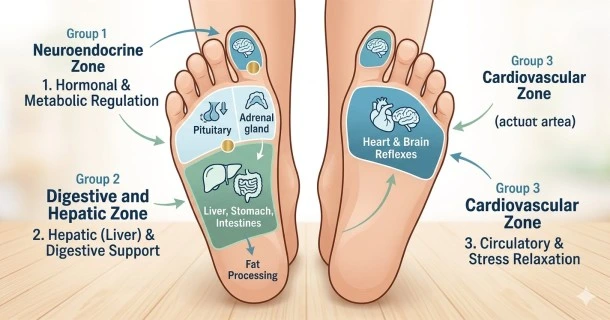
A comprehensive wellness reflexology session for cardiovascular and lipid management focuses on three primary reflex zones:
1. The Neuroendocrine Reflex Zones (Metabolic Regulation)
- Target Areas: Pituitary, Thyroid, and Adrenal gland reflex points on the feet.
- Why it matters: The endocrine system serves as the hormonal messaging network for your entire metabolism. Massaging the pituitary reflex (center of the big toe) and the thyroid reflex (base of the big toe) helps promote overall metabolic balance. Stimulating the adrenal reflex (mid-sole) helps counter stressful physical reactions, regulating cortisol spikes that can adversely influence lipid production.
2. The Digestive and Hepatic Reflex Zones (Fat Processing Support)
- Target Areas: Liver, Stomach, and Small Intestine reflex points.
- Why it matters: The liver is the central command station for processing fats and manufacturing endogenous cholesterol. The liver reflex zone (located on the right foot, just below the ball of the foot) is focused on to energetically support general liver vitality. Massaging the stomach and small intestine reflex zones helps encourage overall comfortable digestion and nutrient assimilation.
3. The Cardiovascular Reflex Zones (Circulatory Relaxation)
- Target Areas: Heart and Brain reflex points.
- Why it matters: Sustained high cholesterol places a long-term workload on the heart and vascular pathways. Massaging the heart reflex zone (located on the left foot, on the ball below the big toe) and the brain reflex zone (tips of the toes) induces systemic physical relaxation, lowers tension across the nervous system, and promotes healthy, unhindered peripheral circulation throughout the body.
How to Safely Practice Foot Reflexology at Home
You can perform a supportive, self-administered foot reflexology routine at home by following these structured guidelines:
- Prepare: Sit in a comfortable, quiet environment. Wash and dry your feet, then apply a small amount of lotion or massage oil to reduce skin friction.
- Apply Pressure: Use your thumb or index finger to apply a firm, steady pressure to a specific reflex point. Use a technique called "thumb-walking," moving slowly across the targeted area.
- Gauge Intensity: Apply enough pressure to feel a deep, dull, localized pressure or a mild ache, but it should never cause sharp or intense pain. Massage each chosen zone for 1 to 3 minutes.
- Breathe: Take deep, rhythmic belly breaths throughout the massage to maximize the relaxation response of your central nervous system.
Clinical Safety and Precautions
Reflexology is a gentle, safe, and generally well-tolerated practice, but specific clinical conditions require direct caution or absolute avoidance:
- Local Injuries and Active Inflammations: Never apply direct manual pressure over open wounds, unhealed skin ulcers, active infections, deep vein thrombosis (DVT), severe leg swelling (edema), or fresh fractures and sprains in the foot or ankle.
- Gout: Avoid reflexology completely during an acute gout flare-up, as manipulating the affected joints can trigger severe inflammation and intense pain.
- Pregnancy: Vigorous manual stimulation of certain reflex areas on the ankles and feet may potentially trigger uterine contractions. Pregnant individuals must avoid aggressive foot therapies and consult a certified prenatal specialist or their OB-GYN before proceeding.
- Severe Circulatory Deficits: If you suffer from advanced peripheral artery disease (PAD) or severe diabetic neuropathy, speak with your physician first to ensure manual foot therapies are safe for your specific vascular condition.
Frequently Asked Questions (FAQs)
Can reflexology lower my cholesterol numbers on its own?
No. Reflexology is not a cure or an independent treatment for hyperlipidemia. It cannot directly remove fats or break down lipid molecules in your blood. Instead, it functions as a supportive lifestyle tool designed to decrease metabolic stress and improve systemic relaxation, which works alongside your standard medical treatments.
How often should I use reflexology for wellness and metabolic support?
For general stress management and metabolic relaxation benefits, practicing reflexology 2 to 3 times per week for about 15–20 minutes per session is highly beneficial. Consistency over a few months is key to successfully helping your body manage chronic stress.
Can I safely practice reflexology while taking cholesterol statins?
Yes. Reflexology is a completely non-invasive, drug-free therapy that does not introduce any biochemical substances into your body. It will not interfere with your prescriptions. Make sure to double-check your physical prescription labels to follow your exact medication routine, and keep up with regular lab panels scheduled by your doctor.
What should I do if a specific reflex point on my foot feels very tender?
Mild tenderness can sometimes occur if a muscle is tight or if deep pressure is applied to a sensitive nerve ending. If you experience localized discomfort, simply decrease the amount of pressure you are using so that it remains a soothing, comfortable, and therapeutic massage. Never press hard enough to cause sharp or lasting pain.