Understand the serious health complications of high cholesterol. Learn how unmanaged lipid levels contribute to atherosclerosis, heart disease, and stroke.
High Cholesterol Complications: Understanding Your Long-Term Vascular Risks
Sustained high blood cholesterol, medically referred to as hyperlipidemia, is a primary driving factor behind cardiovascular disease. Because elevated cholesterol levels do not cause noticeable symptoms on their own, the condition is frequently called a "silent" health threat.
The serious medical risks associated with high cholesterol do not stem from the circulating lipids themselves, but rather from the progressive damage they inflict on your vascular system over time. Unmanaged lipids gradually alter the structure of your arteries, significantly increasing the likelihood of life-threatening cardiovascular events.
The Root of All Risks: How Cholesterol Drives Atherosclerosis
Virtually all major complications of high cholesterol begin with a condition called atherosclerosis—the progressive buildup of fatty deposits, cellular waste, and calcium on the inner walls of the arteries. This accumulation forms a hardened substance known as arterial plaque.
Arteries serve as the primary structural highways of your circulatory system, transporting oxygen-rich blood and vital nutrients from your heart to your brain, organs, and peripheral tissues. When excess low-density lipoprotein (LDL) cholesterol circulates in the blood, it penetrates the endothelial lining of these vessel walls.
This process triggers a multi-stage vascular decline:
- Arterial Stenosis (Narrowing): As plaque steadily accumulates over years, the interior diameter of the artery constricts. This narrowing physically restricts the total volume of blood that can pass through the vessel.
- Loss of Elasticity (Hardening): The infiltration of lipids and subsequent calcification causes the normally flexible, muscular walls of the arteries to become rigid and brittle.
- Ischemia (Oxygen Deprivation): Due to the compromised blood flow, downstream tissues and vital organs suffer from a chronic shortage of essential oxygen and metabolic nutrients.
5 Major Cardiovascular Complications of High Cholesterol
Atherosclerosis can develop in any artery throughout the body, leading to several distinct clinical conditions depending on which vascular pathways become obstructed:
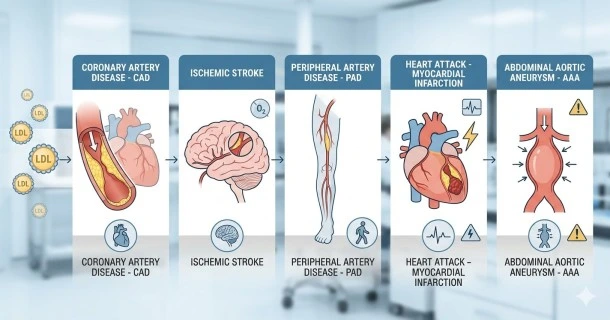
1. Coronary Artery Disease (CAD)
When plaque accumulates within the primary coronary arteries—the blood vessels that supply the muscle of the heart itself—it leads to coronary artery disease. CAD is the most common form of heart disease and a leading cause of mortality globally.
2. Angina (Chest Pain)
As coronary arteries narrow, the heart muscle may still receive enough blood during rest, but struggles during physical exertion or stress. This localized oxygen deficit causes angina, a clinical symptom characterized by chest pain, pressure, squeezing, or shortness of breath.
3. Acute Myocardial Infarction (Heart Attack)
If an unstable cholesterol plaque cracks or ruptures, the body attempts to repair the vessel wall by rapidly forming a blood clot over the site. This clot can instantly block all blood flow through the coronary artery. Deprived of oxygen, the downstream heart tissue begins to suffer irreversible necrosis (tissue death) within minutes.
4. Ischemic Stroke
Similar to a heart attack, an ischemic stroke occurs when the arterial pathways supplying blood to the brain become severely narrowed or completely blocked by a localized clot or a piece of traveling plaque. Without continuous oxygen, brain cells in the affected zone begin to die, potentially causing permanent neurological deficits.
5. Heart Failure
Over time, the combination of chronic oxygen deprivation from CAD or the structural muscle damage left behind by a previous heart attack weakens the heart. The cardiac muscle loses its ability to pump blood efficiently, leading to fluid retention, fatigue, and chronic heart failure.
Modifying Your Risk Profile: Taking Control of Your Vascular Health
The World Health Organization (WHO) estimates that a substantial percentage of strokes and coronary heart disease events worldwide are directly attributable to elevated cholesterol levels.
While statistics regarding cardiovascular disease can look daunting, hyperlipidemia is highly manageable. Unlike non-modifiable risk factors such as your age or genetic background, your lipid profile is an aspect of your health that you can actively change. Through targeted lifestyle interventions, nutritional changes, and doctor-prescribed medical therapies like statins, you can slow, stabilize, or even halt the progression of arterial plaque.
Frequently Asked Questions (FAQs)
How long does it take for high cholesterol to cause complications?
Vascular complications from high cholesterol do not develop overnight. Atherosclerosis is a slow, progressive condition that typically takes years or even decades to narrow the arteries enough to cause symptoms like angina or trigger an acute event like a heart attack. This is why regular lipid screenings are vital.
Can you reverse the arterial plaque caused by high cholesterol?
While it is difficult to completely eliminate calcified, hardened plaque from your arterial walls, modern clinical therapies—including strict lipid-lowering medications like statins alongside intensive dietary changes—can stabilize existing plaque. This prevents the plaque from growing or rupturing, drastically lowering your risk of a heart attack or stroke.