
Learn how fibrates like fenofibrate and gemfibrozil lower high triglycerides and raise HDL cholesterol. Discover mechanism of action, risks, and statin interactions.
Fibrates: Heart-Healthy Medications for High Triglycerides and Low HDL
When managing your lipid panel, total cholesterol is only part of the equation. High blood triglycerides (fats) and low levels of High-Density Lipoprotein (HDL, or "good" cholesterol) are significant, independent risk factors for heart disease and cardiovascular events.
While statins are the go-to treatment for lowering LDL cholesterol, fibrates are a specialized class of medications specifically designed to target and lower high triglycerides while modestly boosting your good cholesterol.
What Are Fibrates and How Do They Work?
Fibrates are organic acid compounds that directly modify how your liver metabolizes lipids. Unlike other cholesterol drugs, their primary mechanism of action centers around clearing fat particles from your bloodstream rather than just blocking cholesterol synthesis.
[Liver VLDL Production Drops] ──► Less Triglyceride Released Into Blood
                                         │
                                         ▼
[Lipoprotein Lipase Enhanced] ──► Faster Breakdown & Clearing of Blood Fats
                                         │
                                         ▼
            [Result: 20% to 50% Reduction in Blood Triglycerides]
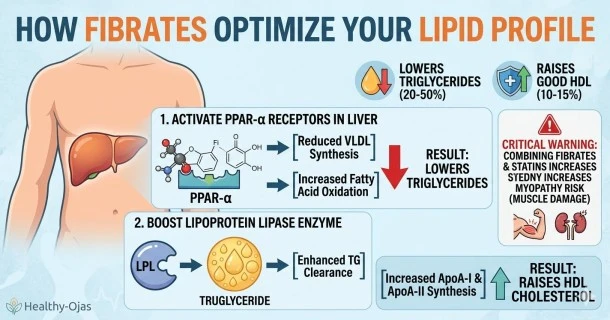
At a cellular level, fibrates function as agonists that activate Peroxisome Proliferator-Activated Receptor Alpha (PPAR-alpha). This activation switches on specific genes in your liver and muscles, leading to two major changes:
- Reduced Production: The liver slows down its manufacturing of Very-Low-Density Lipoprotein (VLDL)—the primary particle responsible for carrying triglycerides through your blood.
- Accelerated Removal: It increases the activity of lipoprotein lipase, an essential enzyme that rapidly breaks down and removes existing triglycerides from the bloodstream.
What Results Can You Expect From Fibrate Therapy?
Fibrates are highly effective tools for adjusting specific components of your lipid profile:
- Triglyceride Reduction: You can typically expect a significant 20% to 50% drop in overall blood triglyceride levels.
- HDL Boost: These medications offer a modest 10% to 15% increase in your protective HDL cholesterol.
- LDL Levels: Fibrates are generally not effective at lowering "bad" LDL cholesterol on their own, and require alternative or combination therapies if high LDL is also a primary concern.
Who is a Candidate for Fibrates?
Physicians typically prescribe fibrates for individuals facing specific cardiovascular profiles:
- Severe Hypertriglyceridemia: Patients with critically high triglyceride levels, which puts them at a elevated risk for developing acute pancreatitis.
- Low HDL and High Triglycerides: Heart disease patients who present with this specific lipid imbalance and need targeted risk reduction for heart attacks.
Who Should Avoid Fibrates? (Contraindications)
Fibrate medications are processed heavily by your major filtration organs. You should not use these medications if you have:
- An active, known allergy to fibrate compounds
- Pre-existing liver disease (such as biliary cirrhosis or gallbladder disease)
- Severe kidney disease or renal impairment
Available Fibrate Brands and Generic Options
Several common fibrate medications are available on the market today as generics or under well-known brand names:
- Fenofibrate (Common brands: Tricor, Lofibra)
- Gemfibrozil (Common brand: Lopid)
- Bezafibrate (Common brand: Bezalip)
How to Correctly Take Fibrate Medications
To ensure safe absorption and ideal treatment efficacy, always adhere to your doctor's specific prescription directions. The general administration guidelines include:
- Timing: Fibrates are usually prescribed to be taken in two daily doses.
- Meal Coordination: For maximum absorption, take your dose roughly 30 minutes before your morning and evening meals.
Potential Side Effects and Safety Warning Signs
While the majority of patients tolerate fibrates well, some rare or mild adverse effects can occur. These include:
- Nausea, vomiting, stomach upset, abdominal pain, or diarrhea
- Headaches and general tiredness
- Mild liver irritation or elevated liver enzymes
- An increased risk of developing gallstones over time
- Anemia (low red blood cell count)
Critical Drug Interaction Warning: Fibrates and Statins
Taking fibrates at the same time as statin medications significantly increases your risk of developing myopathy (muscle damage) or rhabdomyolysis (a severe, life-threatening breakdown of muscle tissue that can cause kidney failure).
Contact your healthcare provider immediately if you experience:
- Unexplained, severe muscle pain, tenderness, or widespread aching
- Profound muscle weakness or fatigue
- Muscle issues accompanied by a fever or unusual dark, tea-colored urine
Frequently Asked Questions (FAQ)
What is the main difference between a statin and a fibrate?
Statins primarily target the liver enzyme HMG-CoA reductase to stop the production of "bad" LDL cholesterol. Fibrates activate PPAR-alpha receptors to reduce the liver's production of VLDL and speed up the clearing of triglycerides (fats) from the blood. Statins lower LDL, while fibrates lower triglycerides.
Can you take a statin and a fibrate together safely?
While sometimes prescribed together for complex lipid disorders, combining a statin with a fibrate (especially gemfibrozil) significantly increases your risk of severe muscle damage and toxic muscle breakdown. If combination therapy is necessary, doctors often prefer pairing a statin with fenofibrate under close monitoring.
Why do fibrates cause gallstones?
Fibrates work in part by increasing the amount of cholesterol that your liver excretes into your bile. This excess cholesterol can over-saturate your bile, making it easier for crystals to form and eventually develop into painful gallstones within your gallbladder.