
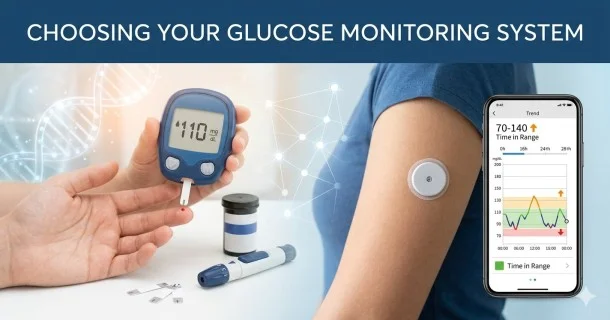
Compare the best self-monitoring blood glucose devices. Learn the differences between traditional glucometers and continuous glucose monitors (CGMs) to optimize your daily diabetes tracking.
Blood Glucose Testing Devices: Choosing the Right Tools for Diabetes Tracking
Effective diabetes management relies heavily on regular, accurate tracking of blood glucose levels. Maintaining glucose homeostasis—the delicate balance where the body naturally regulates circulating sugar—is disrupted in individuals living with diabetes.
By monitoring your levels, you gain the actionable insights required to balance nutrition, physical activity, and medication dosages under the guidance of your healthcare team.
The Purpose of Blood Glucose Testing
A quantitative blood glucose test measures the exact concentration of sugar present in your bloodstream at any given moment. Consistent testing helps individuals with diabetes:
- Track Lifestyle Variables: Understand precisely how different foods, carbohydrates, stress, and exercise routines affect your metabolic health.
- Prevent Glycemic Extremes: Identify and address sudden blood sugar spikes (hyperglycemia) or dangerous drops (hypoglycemia) before they lead to acute clinical complications.
- Evaluate Treatment Efficacy: Monitor how well your current insulin regimen or oral medications are managing your baseline levels throughout the day.
Recommended Testing Frequencies
Testing schedules vary significantly based on your specific diagnosis, therapy plan, and how stable your current levels are.
- Newly Diagnosed Individuals: Often require more frequent testing to map how their bodies respond to dietary interventions, new medication dosages, and exercise routines.
- Type 1 Diabetes: Typically mandates testing three or more times per day. This often includes fasting windows, pre-meal checks, and post-exercise monitoring to safely titrate rapid-acting insulin doses.
- Type 2 Diabetes: Frequencies are generally lower but highly personalized. Testing may range from once a day (to check fasting baseline levels) to multiple times a week depending on whether the plan involves oral therapeutics or basal insulin injections.
Modern Tools for Self-Monitoring of Blood Glucose (SMBG)
Choosing the correct monitoring architecture depends on your daily lifestyle, physical risks, and clinical goals.
1. Traditional Blood Glucose Meters (Glucometers)
Traditional glucometers remain the gold standard for point-in-time testing. By placing a small drop of capillary blood onto a single-use test strip, the meter calculates your absolute glucose concentration within seconds. These devices are vital for providing immediate verification during suspected glycemic events and serving as calibration references.
2. Continuous Glucose Monitors (CGMs)
Continuous Glucose Monitoring represents a paradigm shift in diabetes care, delivering autonomous readings every few minutes, 24 hours a day.
- Asymptomatic Hypoglycemia Protection: CGMs are critical for individuals with type 1 diabetes who suffer from hypoglycemia unawareness—a high-risk condition where physiological warning signs of low blood sugar are completely absent.
- Dynamic Trend Mapping: Instead of isolated snapshots, CGMs overlay continuous telemetry to showcase directional vector arrows, indicating whether glucose is climbing, plateauing, or dropping rapidly.
3. Ketone Screening Devices
While not directly measuring glucose, ketone test strips evaluate the presence of metabolic ketones in either your urine or blood streams. High ketone concentrations signify that the body is dangerously burning fat reserves for primary fuel due to a profound lack of insulin, acting as an early warning metric for Diabetic Ketoacidosis (DKA).
Direct Comparison: Testing Modalities
| Evaluation Metric | Blood Glucose Meters (Glucometers) | Continuous Glucose Monitors (CGMs) |
|---|---|---|
| Long-Tail Keyword Intent | Affordable blood sugar tracking | Real-time glucose trend alerts |
| Sample Material | Capillary blood via fingerstick | Interstitial fluid via subcutaneous sensor |
| Contextual Value | Precise point-in-time validation | Proactive trend mapping and slope analysis |
| Hypoglycemia Mitigation | Retrospective (detects low sugar after it happens) | Preventive (predictive threshold alarms) |
Frequently Asked Questions (FAQ)
What does a quantitative blood glucose test tell you?
A quantitative test measures the exact concentration of glucose within your bloodstream at that specific moment. This metric reveals how your body is currently managing your glucose levels, showing the immediate impact of meals, stress, or recent medication doses.
Why are CGMs recommended for individuals with hypoglycemia unawareness?
Individuals with hypoglycemia unawareness do not experience physical symptoms (like shaking or sweating) when blood sugar drops dangerously low. A CGM continuously tracks levels and sounds loud acoustic alerts if blood sugar plummets, providing early warnings to treat the drop before it becomes a medical emergency.
Can I completely replace my fingerstick glucometer with a CGM?
While modern CGMs reduce the need for daily fingersticks, traditional glucometers are still required. You will need a standard meter to calibrate certain CGM sensors, verify readings if your symptoms do not match the CGM alerts, or check your levels if the sensor undergoes a temporary data gap.