
Can acupressure lower blood sugar? Discover the facts behind reflexology for type 2 diabetes, key acupressure points (LI4, ST36, SP6), and crucial safety warnings.
Acupressure Points for Diabetes Control: Complementary Support Explained
Many people exploring natural wellness ask: can acupressure lower blood sugar? While managing diabetes relies fundamentally on medical treatment, lifestyle changes, and proper nutrition, complementary therapies like acupressure are growing in popularity as supportive tools.
Acupressure is a traditional practice involving the application of precise pressure to specific locations on the body. When looking at acupressure points for diabetes control or investigating reflexology for type 2 diabetes, it is crucial to understand what this practice can—and cannot—do for your health.
The Medical Reality: Acupressure vs. Diabetes Management
Acupressure cannot cure diabetes, reset insulin production, or replace standard medical treatments.
Clinically, diabetes mellitus requires structured management via prescribed medications (such as metformin or insulin), routine blood glucose monitoring, a balanced diet, and regular physical activity. There is no scientific evidence that a "pinch method" or sudden application of pressure can rapidly lower a dangerous blood sugar spike.
However, clinical research into mind- and body-based practices shows that therapies like acupressure can significantly reduce psychological stress and systemic tension. Because acute and chronic stress triggers the release of hormones like cortisol—which directly elevates blood glucose levels—utilizing acupressure for relaxation can serve as a valuable, stress-reducing addition to your primary diabetes care plan.
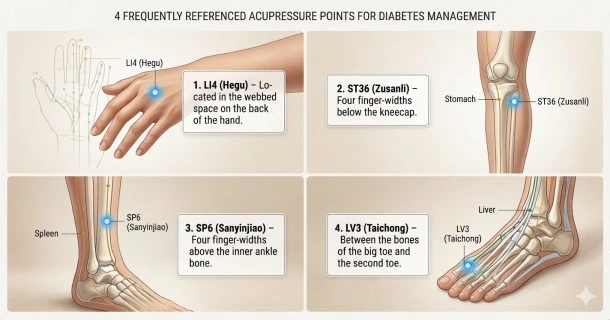
4 Frequently Referenced Acupressure Points
In traditional practices, certain points are frequently utilized to promote relaxation and systemic balance. If you choose to try self-acupressure, apply firm but comfortable pressure using your thumb or index finger for 1 to 2 minutes per point. The pressure should feel relieving, never painful.
1. Large Intestine 4 (LI4) – Hegu
- Location: The webbed space on the back of the hand, located between the base of your thumb and index finger.
- Traditional Focus: Commonly targeted for general pain relief, headaches, stress reduction, and relaxation.
2. Stomach 36 (ST36) – Zusanli
- Location: Positioned on the front of the lower leg, roughly four finger-widths below the bottom of the kneecap and one finger-width toward the outside of the shinbone.
- Traditional Focus: Traditionally used in reflexology to support digestive health, boost energy levels, and alleviate lower leg fatigue.
3. Spleen 6 (SP6) – Sanyinjiao
- Location: Found on the inner side of the lower leg, approximately four finger-widths above the highest peak of the inner ankle bone.
- Traditional Focus: Targeted to help regulate fluid balance, support endocrine function, and soothe stress.
4. Liver 3 (LV3) – Taichong
- Location: Situated on the top of the foot, in the depression between the bones of the big toe and the second toe.
- Traditional Focus: Frequently used to manage stress, reduce emotional tension, and improve general systemic circulation.
Crucial Safety Warnings and Contraindications
Acupressure is generally safe when performed gently, but individuals with diabetes must observe strict precautions:
- Avoid if Pregnant: Certain points, specifically SP6 and LI4, can stimulate uterine contractions and must be completely avoided during pregnancy.
- Diabetic Neuropathy and Sensation Loss: If you suffer from diabetic peripheral neuropathy (nerve damage causing numbness or tingling in the hands or feet), you may not be able to accurately feel the amount of pressure being applied. Applying too much pressure can cause skin breakdown, bruising, or tissue damage without your knowledge, increasing the risk of hard-to-heal diabetic foot ulcers.
- Skin Integrity: Never apply pressure to areas with open wounds, scratches, bruising, redness, or signs of infection.
Frequently Asked Questions (FAQ)
Can acupressure replace my diabetes medications or insulin?
No. Acupressure is strictly a complementary relaxation technique. It cannot replace insulin, oral health medications, or standard medical therapies. Never alter or discontinue your diabetes medications without the direct guidance of your physician.
How exactly does acupressure help someone with type 2 diabetes?
Acupressure helps primarily by promoting relaxation and lowering stress. High stress levels cause the body to release hormones that raise blood glucose. By managing stress, you support your overall metabolic well-being.
What should I do if a pressure point hurts when I press it?
You should stop immediately. Acupressure should feel firm and relieving, but it should never cause sharp pain, bruising, or discomfort. If you feel pain, you may be pressing too hard or targeting an inappropriate area.
Can I try reflexology for diabetes if I have numb feet?
If you have reduced sensation or diabetic neuropathy in your feet, you must exercise extreme caution. Because you cannot accurately gauge pain, it is highly recommended to avoid self-administered foot acupressure. Consult a licensed acupuncturist or your podiatrist to ensure safety.