
Explore the biological causes of diabetes. Learn the mechanics behind type 1 autoimmune triggers, type 2 insulin resistance, and gestational hormone shifts.
What Causes Diabetes? A Deep Dive into Biological Triggers
The clinical causes of diabetes mellitus root from distinct physiological defects in insulin production, cellular insulin action, or both. Because insulin is the foundational hormone required to escort glucose from the bloodstream into your cells, any breakdown in this dynamic leads directly to chronic high blood sugar (hyperglycemia).
While the exact primary catalyst that initiates the disease remains the subject of ongoing research, modern clinical medicine has identified the specific biological paths that drive each distinct form of the condition.
The Biological Causes of Diabetes Types
Diabetes is not a single condition with a single source; rather, it develops through entirely different biological pathways depending on the specific type:
[Immune System Attack] ───────► Type 1 Diabetes (Zero Insulin)
[Cellular Resistance/Shortage] ► Type 2 Diabetes (Ineffective Insulin)
[Placental Hormones Block] ───► Gestational Diabetes (Pregnancy-Induce
1. Type 1 Diabetes Causes: An Autoimmune Destructive Path
Type 1 diabetes is primarily driven by genetic predispositions paired with environmental triggers that cause the body to turn on itself.
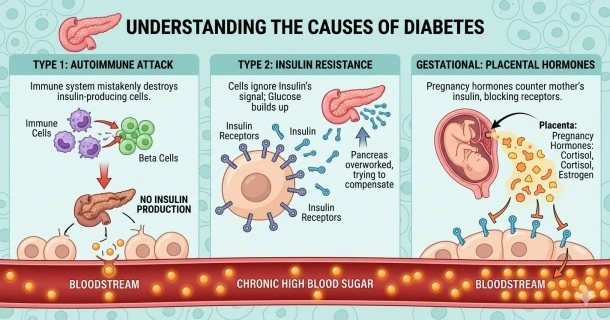
- Autoimmune Attack: The human immune system mistakenly identifies the insulin-producing beta cells inside the pancreas as foreign invaders. Special immune cells systematically target and destroy these beta cells, completely stripping the pancreas of its ability to manufacture insulin.
- Physical Pancreatic Damage: Less commonly, type 1-like hyperglycemia can be triggered when the pancreas is structurally damaged by diseases like cystic fibrosis or removed during pancreatic surgery.
2. Type 2 Diabetes Causes: Insulin Resistance and Exhaustion
In a healthy state, the pancreas perfectly matches insulin production to the carbohydrates you eat. Type 2 diabetes develops over time when one or both of the following failures occur:
- Insulin Resistance: The body's cells develop a reduced sensitivity to insulin. Even though insulin is floating in the blood, the cellular receptors ignore its signal, locking glucose out of the cells.
- Pancreatic Exhaustion: As cells continue to ignore insulin, the pancreas tries to compensate by pumping out massive amounts of the hormone. Over time, the pancreatic beta cells become exhausted and can no longer produce enough insulin to match the demand.
Does Overeating Sugar Directly Cause Diabetes?
(Medical Correction: Clearing up a widely believed nutritional myth).
Eating sugar, candy, or desserts does not directly cause diabetes. Type 1 diabetes is sparked by unknown environmental or genetic triggers, completely unrelated to diet.
For type 2 diabetes, a high-sugar diet is a notable lifestyle risk factor, but it cannot cause the disease by itself. Type 2 diabetes develops from a combination of risk factors, including genetics, physical inactivity, systemic inflammation, and excess body weight. Maintaining a balanced diet and regular exercise routine heavily reduces your likelihood of developing type 2 diabetes, even if you carry genetic risks.
Frequently Asked Questions (FAQs)
What triggers the autoimmune attack in type 1 diabetes?
The precise trigger is still unknown, but medical research indicates it is driven by a combination of genetic factors and environmental triggers (such as certain viral infections). This combination causes the immune system to mistakenly target and destroy its own pancreatic beta cells.
What is insulin resistance and how does it cause type 2 diabetes?
Insulin resistance happens when the cells in your muscles, fat, and liver stop responding correctly to insulin signals. Because the cells ignore the hormone's commands, glucose remains trapped in the blood, forcing the pancreas to overproduce insulin until it burns out.
Why does gestational diabetes develop during pregnancy?
It develops because the placenta secretes hormones like cortisol and estrogen that are crucial for the baby's growth. These specific hormones naturally block the mother's insulin receptors. If her pancreas cannot produce enough extra insulin to override this barrier, gestational diabetes occurs.
Can eating too much sugar directly give you diabetes?
No, consuming sugar alone does not directly cause either type of diabetes. However, chronically overeating sugar can lead to weight gain and increased body fat, which are major environmental risk factors for developing type 2 diabetes.