
Discover the ultimate Type 1 Diabetes food list. Learn which foods stabilize blood sugar, what to avoid, and how to spot hidden sugars on ingredients labels.
Type 1 Diabetes Food List: Best Options, Foods to Avoid, and Hidden Sugars
Adopting a strategic nutritional approach is one of the most effective ways to maintain blood glucose levels within your target range and prevent unpredictable spikes. Making sudden changes to your lifelong eating habits can feel overwhelming. By focusing on small, sustainable adjustments—such as prioritizing low-glycemic, nutrient-dense whole foods over heavily processed alternatives—you can achieve smoother glycemic control and reduce long-term diabetes complications.
1. Dietary Do's: Best Foods for Blood Sugar Stability
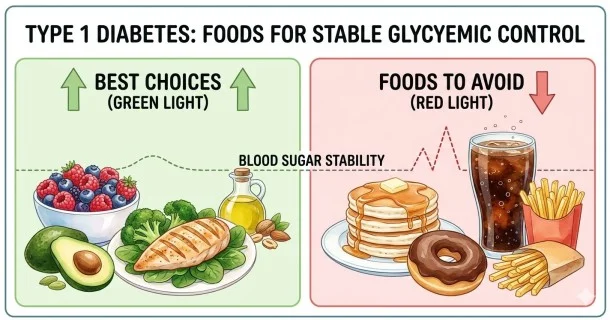
Healthy choices for Type 1 Diabetes include nutrient-dense foods that offer sustainable energy without causing extreme postprandial blood glucose spikes.
Prioritize Whole, Unprocessed Foods
- Non-Starchy Vegetables: These are highly diabetic-friendly due to their rich fiber content and minimal glycemic impact. Fill your plate with fresh choices like spinach, broccoli, kale, cabbage, asparagus, celery, cucumbers, bell peppers, radishes, and onions.
- Lean, High-Quality Proteins: Protein triggers a negligible immediate insulin response and helps manage intense sugar cravings by promoting early satiety. Excellent sources include fresh wild-caught seafood, poultry, lean meats, eggs, tofu, beans, and legumes.
- Natural, Unprocessed Fats: Pure dietary fats do not directly spike blood sugar and can be incredibly useful for slowing down the digestion of any co-ingested carbohydrates. Incorporate avocados, cold-pressed olive oil, unrefined coconut oil, nuts, seeds, butter, and ghee into your meals.
- Low-Glycemic Fruits: When satisfying a sweet preference, choose high-fiber berries such as raspberries, blackberries, and strawberries, which contain significantly less sugar per serving than tropical fruits.
2. Dietary Don'ts: Foods That Disrupt Glycemic Control
Unhealthy foods complicate blood sugar management by provoking sudden hyperglycemic spikes, often followed by dangerous, delayed hypoglycemic crashes.
Avoid Simple and Refined Carbohydrates
- Processed Starches: Eliminate or strictly limit white bread, pastries, standard breakfast cereals, pasta, french fries, chips, and crackers. These refined foods provide negligible nutritional value and rapidly dump glucose into your bloodstream.
- Liquid Sugars and Commercial Smoothies: Avoid fruit juices, sodas, energy drinks, and commercial fruit smoothies. Lacking intact natural fiber, these liquids are absorbed almost immediately, causing severe glycemic disruption.
- Industrial Trans Fats and Processed Meats: Heavily refined vegetable oils, hydrogenated trans fats, and ultra-processed snack foods elevate systemic inflammation and increase your long-term risk of cardiovascular disease.
- Carbohydrate-Heavy Plates: Avoid traditional meal structures where the absolute majority of your plate is occupied by starches. Modern clinical approaches favor capping carbohydrate quantities significantly to make insulin calculations more predictable.
3. Unmasking Hidden Sugars: Reading the Ingredients Label
Protecting your health requires identifying added sugars that food manufacturers frequently conceal under unfamiliar technical names. Always inspect nutritional labels for these hidden glycemic culprits:
- Traditional Syrups and Sugars: Table sugar, brown sugar, molasses, honey, maple syrup, cane syrup, agave nectar, raw sugar, turbinado, and high-fructose corn syrup (HFCS).
- Chemical Sugar Identifiers: Fructose, lactose, sucrose, beet sugar, cane sugar, glucose, and maltose.
- Sugar Alcohols and Structural Bulking Agents: Sorbitol, xylitol, glycol, glycerol, mannitol, and isomalt. While sugar alcohols have a lower glycemic index than pure sucrose, they can still alter blood glucose when consumed in large quantities.
4. Specific Low-Carbohydrate Food Metrics
To assist with precise carbohydrate counting, use these raw carbohydrate values per 100-gram servings as a foundational guide for your grocery shopping:
Low-Carb Vegetables (Carbs per 100g)
- Broccoli: 0.15g
- Watercress: 0.79g
- Celery: 1.37g
- Spinach: 1.43g
- Asparagus: 1.78g
- Radish: 1.80g
- Avocado: 1.84g
- Zucchini: 2.11g
- Mushrooms: 2.26g
- Tomato: 2.69g
- Cabbage: 3.00g
Low-Carb Fruits (Carbs per 100g)
- Raspberries: 5.0g
- Blackberries: 5.7g
- Strawberries: 6.0g
- Cantaloupe: 6.9g
- Cherries: 10.0g
Note on Grains: While grains like oatmeal (24g per cooked cup), quinoa (34g per cooked cup), and wild rice (32g per cooked cup) are complex carbohydrates, skipping grains entirely or choosing grain-free alternatives remains the most effective strategy for ultra-tight glycemic control.
Frequently Asked Questions (FAQs)
What makes a food "good" or "bad" for Type 1 Diabetes management?
In the context of Type 1 Diabetes, "good" foods are nutrient-dense options that promote stable, predictable blood glucose levels—such as non-starchy vegetables, lean proteins, and healthy fats. "Bad" or high-risk foods are those that cause severe, rapid blood sugar spikes and increase cardiovascular risks, such as refined starches, trans fats, sugary drinks, and ultra-processed snacks.
Do dietary fats and proteins impact blood sugar levels at all?
Pure fats have an almost negligible direct impact on blood sugar, though they do delay gastric emptying, which slows down the absorption of any carbohydrates eaten during the same meal. Proteins have a minimal immediate impact but can cause a moderate, delayed rise in blood glucose 3 to 4 hours post-consumption as the liver slowly converts excess amino acids into glucose via gluconeogenesis.
Are sugar substitutes and sugar alcohols safe to consume for Type 1 Diabetics?
Artificial sweeteners and sugar alcohols (like sorbitol and xylitol) cause significantly smaller blood sugar rises compared to standard sucrose. However, they are not entirely free of glycemic impact. Some sugar alcohols can still moderately raise blood glucose when consumed in larger quantities and may cause gastrointestinal discomfort. Always verify your individual response using routine glucose monitoring.
Why should I choose whole fruits over fresh fruit juices?
Whole fruits contain essential dietary fiber that slows down the digestion and structural absorption of natural fructose, resulting in a gradual rise in blood sugar. When fruit is juiced, the protective fiber matrix is entirely removed, transforming the drink into a fast-acting liquid sugar that triggers rapid postprandial hyperglycemia.