
Discover the essential diabetes management products and devices, from continuous glucose monitors (CGMs) to advanced insulin delivery systems and ketone testing strips. Learn how to optimize your daily care.
Navigating Modern Diabetes Management: A Comprehensive Guide to Essential Devices and Technology
Managing diabetes effectively requires a combination of clinical guidance, lifestyle adjustments, and the right tools. While there is currently no permanent cure for diabetes, modern diabetes technology has transformed daily care. Today, an array of advanced monitoring systems and insulin delivery devices allow individuals and their families to maintain stable blood sugar levels, prevent severe complications, and live active, fulfilling lives. [1, 2]
Understanding how these tools function helps you make informed choices alongside your healthcare team to optimize your long-term health.
1. Blood Glucose Monitoring Systems
Keeping blood glucose levels within a target range is the cornerstone of effective diabetes care. Regular monitoring helps you track how food, physical activity, and medications impact your body.
- Standard Blood Glucose Meters (Glucometers): These traditional devices measure blood sugar levels at a specific point in time using a drop of blood obtained from a fingerstick. They are reliable, highly portable, and remain an essential backup tool for all individuals with diabetes.
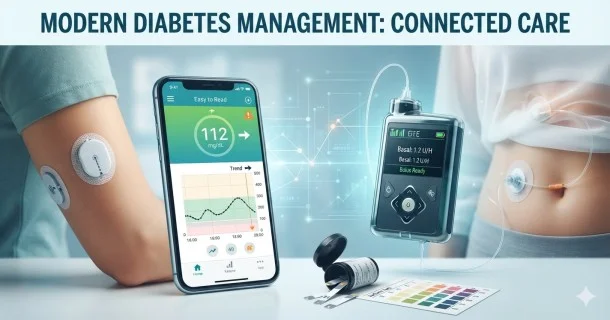
- Continuous Glucose Monitors (CGMs): A CGM uses a small sensor inserted just beneath the skin to measure glucose levels in the interstitial fluid continuously. These systems provide real-time updates every few minutes, tracking glucose trends and sending alerts for high or low blood sugar levels before they become dangerous.
2. Advanced Insulin Delivery Systems
For individuals who require insulin therapy, modern delivery methods offer varying levels of flexibility, precision, and convenience to match different lifestyles.
- Insulin Pens: Replacing traditional vials and syringes, insulin pens are pre-filled or refillable devices that allow for highly accurate dose dialling. They are discreet, easy to transport, and cause minimal discomfort.
- Insulin Pumps: These computerized devices deliver a continuous, low dose of rapid-acting insulin (basal rate) throughout the day via a tiny cannula under the skin. Users can also program specific doses (bolus) to cover meals or correct high blood sugar readings.
- Alternative Delivery Tools: Devices like auto-injectors (which automate the needle insertion process to ease anxiety) and jet injectors (which deliver a fine mist of insulin through the skin using high pressure instead of a needle) provide viable options for individuals with needle phobias.
3. Screening for Diabetic Ketoacidosis (DKA)
When the body lacks sufficient insulin to process glucose for energy, it begins breaking down fat at a rapid rate, producing acidic waste products known as ketones. A severe buildup of ketones leads to Diabetic Ketoacidosis (DKA), a dangerous, life-threatening metabolic emergency. [1]
- Ketone Testing Strips: These strips allow you to detect the early presence of ketones by analyzing either a urine sample or a fingerstick blood droplet. [1]
- When to Test: Clinical consensus recommends testing for ketones during periods of acute illness (like the flu), whenever you experience symptoms of DKA (such as nausea, vomiting, or fruity-scented breath), or if your blood glucose readings are consistently above 240 mg/dL.
Direct Comparison: Glucometers vs. Continuous Glucose Monitors (CGMs)
| Feature | Blood Glucose Meters (Glucometers) | Continuous Glucose Monitors (CGMs) |
|---|---|---|
| Measurement Source | Capillary blood (fingerstick) | Interstitial fluid (under the skin) |
| Data Frequency | Single point-in-time snapshot | Continuous, real-time updates every 1–5 minutes |
| Trend Tracking | Requires manual logging of multiple separate tests | Automatically visualizes upward or downward trends |
| Alerts & Alarms | None | Automated warnings for impending highs and lows |
Frequently Asked Questions (FAQ)
What is the main benefit of a CGM over a traditional glucose meter?
A traditional meter only shows your blood sugar at the exact moment of the test. A CGM provides a continuous dynamic view, showing whether your blood sugar is rising, falling, or stable, which helps you proactively manage trends.
When should someone test for ketones?
You should test for ketones if you are ill, experiencing nausea or vomiting, or if your blood glucose readings remain consistently above 240 mg/dL across two consecutive checks.
How do insulin pumps differ from multiple daily injections (MDI)?
Multiple daily injections require separate manual needle injections for basal coverage and each meal. An insulin pump remains attached to the body, automatically delivering a continuous basal dose and allowing you to administer mealtime boluses with the press of a button.