
Understand the 4 major types of diabetes classification based on clinical guidelines. Learn the symptoms, risk factors, and latest diagnostic thresholds.
Types of Diabetes: Classification, Symptoms, and Diagnostic Criteria
Diabetes mellitus is a complex group of metabolic disorders characterized by chronically elevated blood glucose levels (hyperglycemia). This occurs because the pancreas either stops producing enough insulin (the hormone that regulates blood sugar) or the body becomes resistant to the insulin being produced.
According to the latest ADA Clinical Guidelines and global health frameworks, diabetes is no longer categorized by old terms like "Insulin-Dependent (IDDM)" or "Non-Insulin Dependent (NIDDM)". Instead, it is classified into four primary medical categories based on its underlying biological cause.
The 4 Main Types of Diabetes
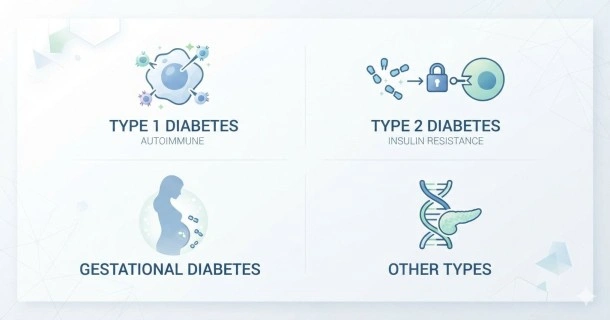
Diabetes Mellitus is categorized into four, they are; Type 1 Diabetes (Absolute Deficiency), Type 2 Diabetes (Insulin Resistance) , Gestational Diabetes (Pregnancy), and Other Specific types.(Monogenic,Pancreatic Exocrine).
1. Type 1 Diabetes Mellitus
- Pathophysiology: An autoimmune condition where the body’s immune system mistakenly attacks and destroys insulin-producing beta cells in the pancreas, leading to an absolute insulin deficiency.
- Onset: Historically called "juvenile diabetes," it can actually manifest at any age, though it is most frequently diagnosed in children and young adults.
- Management: Individuals with Type 1 diabetes require daily insulin therapy to survive.
2. Type 2 Diabetes Mellitus
- Pathophysiology: The most common form of diabetes. It develops when the body's cells become resistant to the effects of insulin (insulin resistance), combined with a progressive decline in insulin secretion over time.
- Risk Factors: Strongly linked to genetics, physical inactivity, and being overweight or obese.
- Management: Managed through structured nutrition, physical activity, oral medications, and sometimes injectable therapies or insulin.
3. Gestational Diabetes Mellitus (GDM)
- Pathophysiology: Glucose intolerance that is first recognized during pregnancy (typically in the second or third trimester) due to natural hormonal shifts that block insulin function.
- Long-Term Impact: While it frequently resolves after delivery, women who experience GDM have a significantly elevated lifetime risk of developing chronic Type 2 diabetes.
4. Other Specific Types of Diabetes
This category encompasses distinct, less common underlying causes:
- Monogenic Diabetes Syndromes: Rare genetic defects in beta-cell function, such as Neonatal Diabetes and Maturity-Onset Diabetes of the Young (MODY).
- Exocrine Pancreatic Diseases: Structural damage to the pancreas from conditions like cystic fibrosis or chronic pancreatitis.
- Drug- or Chemical-Induced: Secondary diabetes triggered by medications like high-dose glucocorticoids or anti-cancer therapies.
Current Clinical Diagnostic Criteria
An accurate medical diagnosis is established by evaluating specific blood plasma markers. The medical consensus outlines three primary thresholds for diagnosing overt diabetes:
| Diagnostic Test | Normal Range | Prediabetes Range | Diabetes Threshold |
| Fasting Plasma Glucose (FPG) | < 100 mg/dL | 100 mg/dL to 125 mg/dL | ≥ 126 mg/dL |
| 2-Hour Oral Glucose Tolerance (OGTT) | < 140 mg/dL | 140 mg/dL to 199 mg/dL | ≥ 200 mg/dL |
| Hemoglobin A1C (HbA1c) | < 5.7% | 5.7% to 6.4% | ≥ 6.5% |
Note: In the absence of clear, severe symptoms of high blood sugar (such as extreme thirst, frequent urination, or rapid weight loss), an abnormal test result requires a confirmatory test on a separate day to solidify the diagnosis.
Prediabetes: A Crucial Warning Window
Prediabetes is a serious metabolic warning state where blood sugar levels are elevated above normal, but do not yet meet the diagnostic threshold for Type 2 diabetes. It serves as a vital clinical window because, through sustainable nutritional changes and increased physical activity, individuals can frequently reverse insulin resistance and prevent progression to chronic disease.
Frequently Asked Questions (FAQ)
What is the main difference between Type 1 and Type 2 diabetes?
The primary difference lies in the underlying cause. Type 1 diabetes is an autoimmune condition where the body stops producing insulin entirely due to cell destruction. Type 2 diabetes is a progressive metabolic condition where the body still makes insulin but cannot use it effectively due to insulin resistance.
Are the old terms IDDM and NIDDM still used to classify diabetes?
No, modern clinical medicine has retired the terms Insulin-Dependent Diabetes Mellitus (IDDM) and Non-Insulin Dependent Diabetes Mellitus (NIDDM). Because individuals with Type 2 diabetes may eventually require insulin therapy to manage their condition, classification is now accurately based on the physiological cause rather than treatment methods.
Can gestational diabetes occur if you didn't have diabetes before pregnancy?
Yes. Gestational diabetes is specifically defined as glucose intolerance that develops or is first identified during pregnancy, typically triggered by hormonal fluctuations that interfere with how your body processes insulin.
What blood sugar level definitively diagnoses diabetes?
According to the American Diabetes Association, a diabetes diagnosis is confirmed if your Fasting Plasma Glucose (FPG) is 126 mg/dL or higher, your 2-Hour Oral Glucose Tolerance Test (OGTT) is 200 mg/dL or higher, or your baseline HbA1c is 6.5% or higher.