
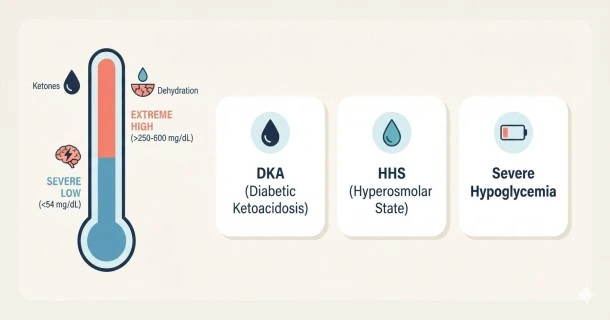
Learn the 3 primary causes of a diabetic coma—DKA, HHS, and severe hypoglycemia. Discover critical blood sugar thresholds, risk factors, and how to prevent an emergency.
Diabetic Coma Causes: How Extreme Blood Sugar Triggers an Emergency
A diabetic coma is a life-threatening diabetes complication that causes prolonged unconsciousness. Unlike fainting, a person in a diabetic coma is alive but cannot be awakened and cannot respond purposefully to sights, sounds, or other stimulation.
It occurs when blood glucose (sugar) levels become dangerously high (hyperglycemia) or dangerously low (hypoglycemia) for too long. Without prompt medical treatment, a diabetic coma can lead to permanent brain damage or death.
The 3 Primary Causes of a Diabetic Coma
Three distinct medical conditions can cause blood sugar extremes severe enough to trigger unconsciousness:
1. Diabetic Ketoacidosis (DKA)
When your body does not have enough insulin, glucose cannot enter your cells to provide energy. Starved for fuel, the body begins breaking down fat at a rapid rate. This process produces toxic acids called ketones, which build up in the bloodstream and spill into the urine.
- Blood Sugar Threshold: Typically occurs when blood sugar rises above 250 mg/dL (13.9 mmol/L) alongside moderate-to-high ketone levels, though it can occasionally occur at lower glucose levels.
- Who is Most at Risk: Most common in people with Type 1 diabetes, though it can also affect people with Type 2 diabetes (especially those taking SGLT2 inhibitor medications) or gestational diabetes.
2. Hyperglycemic Hyperosmolar State (HHS)
Previously known as diabetic hyperosmolar syndrome, HHS occurs when blood sugar levels skyrocket, making the blood thick and syrupy. The kidneys try to flush out the excess sugar through frequent urination, which drains massive amounts of fluid from the body. Unlike DKA, enough insulin is usually present to prevent ketone buildup, so the primary danger is profound, life-threatening dehydration.
- Blood Sugar Threshold: Usually diagnosed when blood glucose exceeds 600 mg/dL (33.3 mmol/L).
- Who is Most at Risk: Most common in older adults with Type 2 diabetes, often triggered by an underlying infection or illness.
3. Severe Hypoglycemia (Dangerously Low Blood Sugar)
Your brain relies on a steady supply of glucose to function. If blood sugar drops too low, the brain is starved of energy and essentially shuts down, leading to seizures or coma. Unlike DKA or HHS, which develop over hours or days, a hypoglycemic coma can develop within minutes.
- Blood Sugar Threshold: Hypoglycemia begins below 70 mg/dL (3.9 mmol/L). Levels below 54 mg/dL (3.0 mmol/L) represent clinically significant severe hypoglycemia, where the risk of losing consciousness spikes sharply.
- Who is Most at Risk: Anyone who takes insulin or oral diabetes medications that stimulate insulin production (such as sulfonylureas like glipizide or glimepiride).
Comparison: High vs. Low Blood Sugar Coma Triggers
| Cause | Blood Sugar Level | Ketones Present? | Most Common Diabetes Type | Onset Speed |
|---|---|---|---|---|
| Diabetic Ketoacidosis (DKA) | Usually > 250 mg/dL | Yes (High acid levels) | Type 1 Diabetes | Hours to a few days |
| Hyperglycemic Hyperosmolar State (HHS) | Usually > 600 mg/dL | No (or trace amounts) | Type 2 Diabetes | Days to weeks |
| Severe Hypoglycemia | Typically < 54 mg/dL | No | Type 1 & insulin-treated Type 2 | Minutes to hours |
Everyday Risk Factors & Triggers
Anyone living with diabetes—or undiagnosed diabetes—can experience a diabetic coma, but certain situations dramatically increase your risk:
- Illness, Infection, or Surgery: When your body fights an infection (like pneumonia or a urinary tract infection) or recovers from trauma, it releases stress hormones that cause blood sugar to surge. Illness is the leading trigger for both DKA and HHS.
- Insulin Delivery Issues: Skipping insulin doses, miscalculating mealtime insulin, or experiencing a kinked catheter or malfunction in an insulin pump can rapidly starve cells of insulin and trigger DKA.
- Hypoglycemia Unawareness: Over time, frequent low blood sugar episodes can dull your body's early warning signs (such as shakiness, sweating, or a racing heart). Without these cues, blood sugar can drop to coma-inducing levels without warning.
- Heavy Alcohol Consumption: Your liver normally releases stored glucose to keep blood sugar stable. Because the liver prioritizes clearing alcohol from the blood, drinking heavily—especially on an empty stomach—can cause a severe, delayed drop in blood sugar up to 24 hours later. Alcohol also masks the symptoms of low blood sugar.
- Strenuous Exercise Without Fuel: Intense physical activity increases insulin sensitivity and burns glucose rapidly, which can trigger severe hypoglycemia if medication doses or carbohydrate intake are not adjusted.
- Substance Use: Recreational or illicit drugs can impair judgment—causing missed medications—and directly stress the body, leading to dangerous spikes in blood glucose.
Frequently Asked Questions (FAQ)
What exact blood sugar level causes a diabetic coma?
There is no single exact number, as individual tolerance varies, but medical emergencies typically occur at two extremes:
- Too Low: Blood sugar dropping below 54 mg/dL (3.0 mmol/L) carries a high risk of loss of consciousness.
- Too High: Blood sugar climbing above 600 mg/dL (33.3 mmol/L) can trigger a hyperosmolar coma, while levels over 250 mg/dL (13.9 mmol/L) can lead to a coma if dangerous levels of ketones are also present.
Can a diabetic coma happen while sleeping?
Yes. Nocturnal hypoglycemia (low blood sugar during sleep) is a common concern for people using insulin. If blood sugar drops severely overnight and the person does not wake up to treat it with fast-acting carbohydrates, it can progress to seizures or a coma. Using a Continuous Glucose Monitor (CGM) with low-glucose alarms helps prevent overnight emergencies.
Can you recover from a diabetic coma?
Yes, most people make a full recovery if they receive emergency medical treatment quickly. Treatment depends on the cause: a hypoglycemic coma is treated immediately with intravenous (IV) glucose or a glucagon injection, while DKA and HHS require IV fluids, electrolytes (like potassium), and IV insulin. However, if a diabetic coma goes untreated for too long, it can cause permanent brain damage or become fatal.
Is a diabetic coma more common in Type 1 or Type 2 diabetes?
Both types carry risk, though the underlying causes differ:
People with Type 1 diabetes are more likely to experience a coma caused by DKA or severe hypoglycemia.
People with Type 2 diabetes are more likely to develop a coma caused by Hyperglycemic Hyperosmolar State (HHS), particularly older adults experiencing an illness or dehydration.
What should I do if someone shows signs of a diabetic coma?
Call emergency services immediately. Do not try to give food, liquids, or insulin to an unconscious person, as they could choke or experience a fatal drop in blood sugar. If the person has a prescribed emergency glucagon kit and you know how to use it, administer it while waiting for paramedics.