
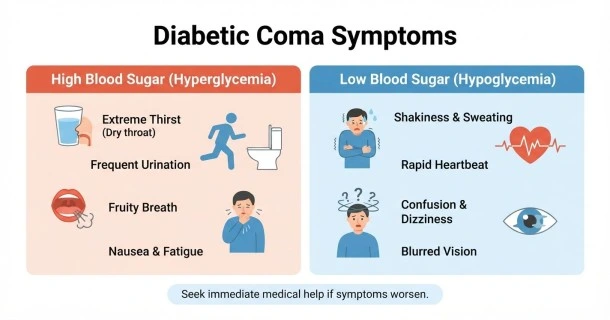
Usually diabetic coma has signs and symptoms of the condition that is behind its cause; they are high-blood-sugar (hyperglycemia) and low-blood-sugar (hypoglycemia).
Symptoms of Diabetic Coma
Usually diabetic coma has signs and symptoms (hyperglycemia/hypoglycemia)
If have hyperglycemia, you may experience few of these symptoms:
- Too much thirst
- Urinate frequently
- Weakness or fatigue
- Drowsiness
- Nausea and vomiting
- Shortness of breath
- Pain in the abdominal (Stomach pain)
- Appetite loss
- Low pulse and low blood pressure
- Fruity-scented breath
- Confusion
If have Low blood-sugar (hypoglycemia), you may experience few of these symptoms:
- Trembling, Shaky or nervous, Poor coordination and difficulty walking
- Tired, lack of energy, feels weak, Fatigue, lethargy, or drowsy
- Sweating, cold, clammy even without any physical activity
- Hungry
- Nausea
- Rapid heartbeat
- Irritability, anxiety, restlessness, or anger
- Confused, thinking difficulty, concentration difficulty
- Blurred vision, dizziness, lightheaded, or headache
- Talking difficulty - staggering or slurred speech
Many people even sometime may experience hypoglycemia without any warning symptoms.
If you experience any of the symptoms of high or low blood-sugar, immediately test your blood-glucose level and based on the result start treatment accordingly. If the symptoms do not subside or if the symptoms worsen, request emergency help.
Diabetic hyperosmolar syndrome in type 2 diabetes may take days or even weeks to develop.
Possible diabetic hyperosmolar signs and symptoms may include:
- High blood-sugar level
- Too much thirst
- Mouth dryness
- Increased urination
- Warm, dry skin without sweat
- Fever
- Sleepiness
- Confusion, thinking difficulty
- Hallucinations
- Blurred loss
- One sided body weakness