
Learn how a diabetic coma is treated in the hospital and what to do in an emergency. Compare DKA, HHS, and hypoglycemia treatments—from glucagon to IV fluids and insulin.
Diabetic Coma Treatment: Emergency First Aid & Hospital Care
A diabetic coma is a life-threatening medical emergency that requires immediate hospital care. Treatment depends entirely on whether the coma was triggered by dangerously low blood sugar (severe hypoglycemia) or dangerously high blood sugar (Diabetic Ketoacidosis [DKA] or Hyperglycemic Hyperosmolar State [HHS]). [1, 2]
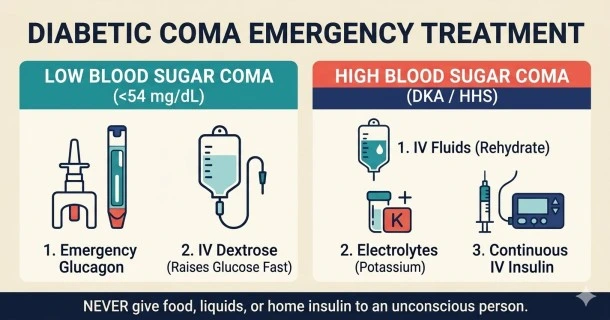
Critical Warning: Never give food, sugary drinks, or insulin to someone who is unconscious. Giving liquids or food to an unresponsive person can cause fatal choking (aspiration), and giving insulin during low blood sugar can cause permanent brain damage or death. [1, 2, 3]
Step 1: Immediate Emergency First Aid (While Waiting for Paramedics)
If someone with diabetes becomes unresponsive or cannot be awakened, take these steps right away:
- Call Emergency Services Immediately: Contact your local emergency services (such as 112/108 in India or emergency services in your region) and state that a person with diabetes is unconscious. [1]
- Place Them in the Recovery Position: Gently roll the person onto their side so their airway stays clear and they will not choke if they vomit. [1]
- Administer Emergency Glucagon (If Available): If you have a prescribed glucagon emergency kit, glucagon nasal spray, or pre-mixed glucagon pen—and you suspect or know their blood sugar is dangerously low—administer it immediately. If you do not know whether blood sugar is high or low and cannot check a glucometer, administering glucagon is still considered safe in an emergency because reversing severe hypoglycemia is time-critical. [1, 2]
- Do Not Force Anything by Mouth: Never put glucose tablets, juice, honey, or water into the mouth of an unconscious person. [1, 2]
Step 2: Hospital Treatment for High Blood Sugar Coma (DKA & HHS)
When emergency blood tests confirm that a coma is caused by DKA or HHS, doctors admit the patient to an emergency or intensive care unit (ICU) to gradually correct dehydration, acid buildup, and high blood glucose over 12 to 24 hours: [1, 2]
1. Intravenous (IV) Fluid Resuscitation (First Priority)
Extreme hyperglycemia causes severe fluid loss through frequent urination. Doctors immediately administer isotonic IV fluids (such as normal saline or balanced crystalloids) to restore blood volume, stabilize blood pressure, improve circulation to vital organs, and help the kidneys flush out excess glucose. [1, 2]
2. Electrolyte Replacement (Especially Potassium)
High blood sugar and dehydration strip essential electrolytes—including potassium, sodium, and phosphate—from body cells. [1, 2, 3]
- Doctors closely monitor and replenish potassium before and during insulin therapy, because insulin drives potassium out of the bloodstream and into cells. Without potassium replacement, levels can drop dangerously low and trigger abnormal heart rhythms. [1, 2]
3. Continuous Intravenous (IV) Insulin Therapy
Once fluid replacement begins and potassium levels are verified as safe, doctors start a continuous, low-dose IV regular insulin infusion. [1, 2]
- Insulin allows glucose to enter cells for energy, stops fat breakdown, clears toxic ketones from the blood in DKA, and brings blood sugar down at a safe, controlled pace (lowering blood sugar too rapidly can cause dangerous brain swelling). [1, 2, 3]
4. Treating Underlying Triggers
Because hidden infections (like pneumonia or a urinary tract infection) or cardiac events frequently trigger hyperglycemic comas, doctors administer IV antibiotics or targeted medical therapies as soon as an underlying cause is identified. [1, 2]
Step 3: Emergency Treatment for Low Blood Sugar Coma (Severe Hypoglycemia)
When a diabetic coma is caused by dangerously low blood sugar (< 54 mg/dL), the brain is starved of fuel and requires immediate glucose restoration: [1, 2]
1. Intravenous (IV) Dextrose (Glucose)
In an ambulance or emergency room, healthcare providers inject IV dextrose (concentrated medical glucose solution) directly into a vein. Because it enters the bloodstream immediately, consciousness often returns within 5 to 15 minutes. [1]
2. Emergency Glucagon (Injection or Nasal Spray)
When IV access is not immediately available, responders or caregivers administer glucagon, a hormone that signals the liver to rapidly release stored glucose into the bloodstream. Modern glucagon options include: [1, 2]
- Intranasal Glucagon Powder: A needle-free, single-dose nasal spray absorbed through the lining of the nose.
- Pre-Mixed Glucagon Auto-Injector Pen: A ready-to-use pen injected into the thigh or upper arm, similar to an epinephrine pen.
- Reconstituted Glucagon Emergency Kit: A powdered medication mixed with sterile liquid right before intramuscular or subcutaneous injection. [1, 2]
3. Post-Awakening Carbohydrate & Monitoring
Once the person wakes up and can swallow safely, they are given fast-acting carbohydrates followed by a long-acting carbohydrate and protein snack (such as crackers with cheese or a small sandwich) to prevent blood sugar from dropping again. Doctors also monitor blood sugar hourly for several hours and review insulin or medication doses before discharge. [1, 2, 3]
Summary: High vs. Low Blood Sugar Coma Treatment
| Feature | Low Blood Sugar Coma (Severe Hypoglycemia) | High Blood Sugar Coma (DKA or HHS) |
|---|---|---|
| Primary Goal | Rapidly raise blood sugar to protect the brain | Rehydrate the body, balance electrolytes, and clear ketones |
| First-Line Emergency Care | Glucagon (nasal spray or injection) or IV Dextrose | Isotonic IV fluids (saline) |
| Hormone / Drug Therapy | Glucagon (raises blood sugar) | Continuous IV Insulin (lowers blood sugar & stops ketones) |
| Electrolyte Support | Rarely required | IV Potassium, sodium, and chloride monitoring |
| Typical Recovery Time | Minutes once glucose is restored | Hours to 1–2 days in hospital care |
Frequently Asked Questions (FAQ)
How long does it take to wake up from a diabetic coma?
Recovery time depends on the cause and how quickly treatment starts:
- Low Blood Sugar (Hypoglycemia): Most people regain consciousness within 5 to 15 minutes after receiving IV dextrose or a glucagon dose.
- High Blood Sugar (DKA or HHS): Waking up is more gradual and can take several hours to over 24 hours as doctors slowly rehydrate the body, correct blood acidity, and normalize blood concentration. [1, 2]
Can a diabetic coma be treated at home?
No. Once a person loses consciousness, it is a life-threatening emergency that requires hospital care. While a caregiver can administer an emergency glucagon nasal spray or injection at home if severe low blood sugar is suspected, you must still contact emergency services immediately afterward for medical evaluation and follow-up monitoring. [1]
Why shouldn't you give insulin to someone in a diabetic coma?
Giving insulin at home to an unconscious person is extremely dangerous. If the coma was caused by low blood sugar, extra insulin will drive glucose levels even lower, causing fatal brain damage. Even if the coma is caused by high blood sugar, insulin must be given cautiously in a hospital after IV fluids and potassium levels are stabilized. [1, 2]
Are there long-term effects after recovering from a diabetic coma?
If treated promptly, most people recover completely with no lasting complications. However, if the brain goes without adequate glucose or oxygen for a prolonged period, a severe diabetic coma can result in memory problems, neurological deficits, permanent brain damage, or death. [1]