
A diabetic coma is a life-threatening medical emergency. Learn the warning signs of severe hypoglycemia, DKA, and HHS, and discover how to act quickly to prevent it.
Understanding a Diabetic Coma: Warning Signs, Causes, and Emergency Action
A diabetic coma is a life-threatening medical emergency that causes a person to lose consciousness. It can affect individuals living with both type 1 and type 2 diabetes. When blood sugar levels fluctuate drastically—either soaring dangerously high or dropping catastrophically low—it disrupts brain function, leading to confusion, unconsciousness, and potentially irreversible damage if left untreated.
Because a diabetic coma requires immediate, specialized medical intervention, recognizing the early warning signs can save a life.
The Three Critical Causes of a Diabetic Coma
A diabetic coma is not a single condition. It is the end point of three entirely different metabolic crises. Understanding these distinct mechanisms is crucial:
1. Severe Hypoglycemia (Insulin Shock)
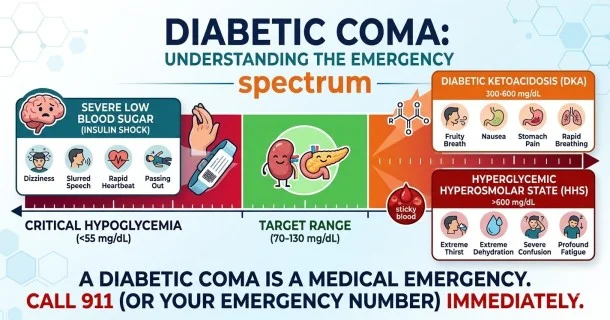
Severe hypoglycemia occurs when blood glucose levels crash dangerously low, typically below 55 mg/dL (though symptoms can begin under 70 mg/dL). Without adequate glucose, the brain starves of energy and shuts down. This is most frequently triggered by an accidental overdose of insulin or other diabetes medications, a skipped meal, or intense, uncompensated physical activity.
2. Diabetic Ketoacidosis (DKA)
Classic to type 1 diabetes (but possible in severe type 2 cases), DKA develops when the body faces a severe shortage of insulin. Without insulin, cells cannot use glucose for energy, prompting the body to break down fat at a dangerous pace. This process releases toxic acidic compounds called ketones into the bloodstream. The accumulation of ketones alters the blood's pH balance, leading to chemical imbalances and unconsciousness.
3. Hyperglycemic Hyperosmolar State (HHS)
Most common in older adults with type 2 diabetes, HHS features extreme blood glucose levels that frequently surge above 600 mg/dL. Unlike DKA, the body retains just enough insulin to prevent massive ketone production. However, the extreme blood sugar concentration turns the blood highly concentrated and "syrupy" (hyperosmolality). This pulls fluid directly out of body tissues and the brain, causing profound dehydration, shock, and altered mental status.
Identifying the Early Warning Signs
A diabetic coma rarely occurs without warning. Most individuals display progressive symptoms as their metabolic state deteriorates.
| Condition | Early Warning Signs | Advanced/Emergency Symptoms |
|---|---|---|
| Severe Low Blood Sugar (Hypoglycemia) | Shaking, sweating, rapid heartbeat, extreme hunger, pale skin, anxiety, or dizziness. | Slurred speech, severe confusion, sudden uncoordinated movements, seizures, and passing out. |
| High Blood Sugar Crises (DKA or HHS) | Extreme thirst, frequent urination, profound fatigue, blurry vision, and unexplained weight loss. | Fruity-smelling breath (in DKA), nausea and severe abdominal pain, deep rapid breathing, extreme dry mouth, and confusion. |
Emergency Protocol: What to Do
If you encounter someone with diabetes who is exhibiting altered mental states or has lost consciousness, treat it as a strict medical emergency:
- Call Emergency Services Immediately: Never delay seeking professional emergency care. A diabetic coma cannot be managed at home.
- Check for a Medical ID: Look for a bracelet, necklace, or wallet card identifying the person’s condition.
- Never Force Liquids or Food: If the person is unconscious or unable to swallow safely, do not place food or liquids into their mouth, as this poses a fatal choking and aspiration risk.
- Administer Glucagon if Trained: If the individual is unconscious due to suspected low blood sugar and an emergency rescue glucagon kit is available, administer it according to the kit's strict guidelines.
- Do Not Guess with Insulin: Never inject an unconscious person with insulin unless explicitly instructed by emergency medical professionals. If their unconsciousness is caused by a low blood sugar crash, adding insulin will drop their glucose further, which can be fatal.
Essential Steps for Preventing a Diabetic Coma
The vast majority of hyperglycemic and hypoglycemic emergencies are entirely preventable with careful, everyday management habits:
- Consistent Blood Glucose Monitoring: Utilize a traditional blood glucose meter or a Continuous Glucose Monitor (CGM) to catch rising or falling trends long before they reach crisis thresholds.
- Strict Medication Adherence: Take your insulin or oral diabetes medications exactly as prescribed by your healthcare team. Never skip doses or arbitrarily alter amounts without medical consultation.
- Manage Sick Days Closely: Physical illness, infections, or high stress levels cause the body to release hormones that drive blood sugar up. Work with your care team to establish a strict "sick-day plan" that includes frequent blood sugar and ketone testing.
- Wear Medical Identification: Always wear a medical alert tag or keep an emergency profile set up on your smartphone so first responders instantly know you have diabetes if you lose consciousness.
Frequently Asked Questions (FAQ)
Can a person fully recover from a diabetic coma?
Yes. When emergency medical professionals administer prompt intravenous fluids, electrolyte corrections, or targeted glucose/insulin therapy, most individuals recover fully without permanent neurological damage. However, delayed treatment increases the risk of severe long-term complications.
Is a diabetic coma more common in Type 1 or Type 2 diabetes?
It occurs across both types, but the underlying pathways differ. Diabetic Ketoacidosis (DKA) is far more common in Type 1 diabetes, whereas Hyperglycemic Hyperosmolar State (HHS) is the typical high blood sugar crisis seen in Type 2 diabetes. Severe low blood sugar crashes can happen to anyone using insulin or insulin-secreting oral medications.
How fast can a diabetic coma develop?
A coma triggered by severe low blood sugar (hypoglycemia) can develop incredibly fast, sometimes within minutes of a sharp drop. In contrast, comas stemming from DKA or HHS build up gradually over several days or weeks as chronic dehydration and metabolic imbalances worsen.