
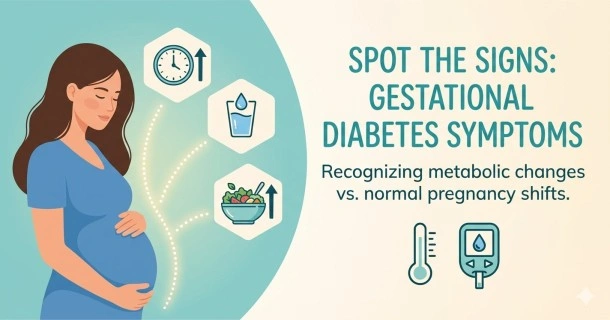
Are your pregnancy changes normal, or signs of GDM? Learn the classic symptoms of gestational diabetes, including frequent urination, extreme thirst, and fatigue.
Gestational Diabetes Symptoms: Signs vs. Normal Pregnancy Changes
Discovering the symptoms of gestational diabetes mellitus (GDM) can be uniquely challenging. Many classic signs closely mimic the standard, everyday discomforts of a healthy pregnancy. Because these changes often overlap, understanding the specific biological triggers behind them is vital to recognizing when your body is signaling for help.
While noticing these symptoms can provide an initial clue, clinical screening is the only definitive way to know your status. If you are concerned about your risks, you can learn more on our [Gestational Diabetes Risk Factors] page or find out what to expect during your screening on our [Gestational Diabetes Diagnosis Test] page.
Why Is It Hard to Spot Gestational Diabetes Signs?
The primary challenge with identifying signs of high blood sugar during pregnancy is that standard physiological shifts—like carrying extra weight, hormonal fluctuations, and increased pressure on your bladder—naturally cause fatigue, hunger, and frequent trips to the bathroom.
However, when these symptoms stem from gestational diabetes, they are driven by systemic insulin resistance. The placenta produces hormones that interfere with how your body uses insulin. When your cells cannot properly absorb glucose from your bloodstream, it leads to characteristic metabolic symptoms.
The 3 Primary Symptoms of Gestational Diabetes
In clinical settings, doctors look closely at three major metabolic signs, traditionally referred to as the "classic triad" of diabetes symptoms:
- Polyuria (Frequent Urination): This goes beyond the typical pregnancy bladder pressure. When blood glucose levels rise excessively, the kidneys work overtime to filter and flush out the extra sugar. This process draws more water from your tissues, causing you to urinate frequently and in unusually large quantities.
- Polydipsia (Excessive Thirst): Because polyuria rapidly depletes your body’s fluid levels, it triggers a biological hydration reflex. The kidneys signal the brain's thirst centers, resulting in an unquenchable, dry-mouth feeling and constant, massive thirst.
- Polyphagia (Increased Appetite): When your body faces insulin resistance, glucose gets trapped in the bloodstream instead of entering your cells to be used as fuel. Because your cells are starving for energy, they continuously signal your brain that you need to eat, leading to an abnormally frequent and intense hunger.
Complete List of Gestational Diabetes Symptoms
Beyond the primary triad, several other physical changes can indicate underlying glucose intolerance.
1. Persistent Fatigue and Lack of Energy
Feeling tired is a normal part of growing a baby. However, GDM-related fatigue occurs because your body cannot efficiently convert the food you eat into cellular energy. Dehydration from frequent urination and a depletion of vital minerals can further worsen this deep, ongoing exhaustion.
2. Temporary Blurred Vision
Spikes in blood sugar alter the fluid balance inside your body. This can cause the lenses and corneal tissues of your eyes to temporarily swell, distorting how light enters and resulting in blurry vision. This specific symptom is temporary and typically corrects itself once blood glucose levels are brought back into a normal range via targeted [Gestational Diabetes Treatment].
3. Dry, Itchy Skin
The combination of rapid dehydration (from your body trying to flush out sugar) and poor microvascular circulation can reduce the natural moisture barriers of your skin, leaving it feeling uncomfortably dry and chronically itchy.
4. Tingling or Numbness in the Extremities
When blood glucose remains elevated, it can temporarily impair peripheral blood flow and irritate nerve endings. This often manifests as a subtle "pins and needles" tingling or general numbness in your feet or hands.
5. Slow-Healing Cuts or Sores
High blood sugar levels can sluggishly slow down your body's natural healing mechanisms. An inefficient immune response combined with reduced localized nutrient delivery means that minor scratches, cuts, or bruises take noticeably longer to heal.
6. Rapid or Sudden Weight Gain
While steady weight gain is expected during pregnancy, sudden or unexpected spikes in weight can sometimes occur with GDM. This happens due to continuous overeating triggered by polyphagia (cell starvation) and the body's tendency to store unutilized blood glucose as fat.
Next Steps: Confirming Your Symptoms
Because it is virtually impossible to accurately diagnose gestational diabetes based on physical symptoms alone, medical guidelines require formal screening. If you are experiencing any of these signs, do not wait for your standard third-trimester appointment.
- Consult your OB/GYN or midwife to discuss an early [Gestational Diabetes Diagnosis Test].
- Explore how proper management protects your newborn on our [Gestational Diabetes Baby] page.
Frequently Asked Questions (FAQ)
Can you have gestational diabetes without any symptoms?
Yes, it is very common to have gestational diabetes without experiencing any noticeable symptoms at all. Many women feel completely fine, which is why routine clinical screening between 24 and 28 weeks of pregnancy is standard practice for all expectant mothers.
How can I tell the difference between normal pregnancy fatigue and gestational diabetes?
Normal pregnancy fatigue usually improves with rest and is often most severe during the first and third trimesters. Gestational diabetes fatigue is typically accompanied by other metabolic signs, such as an unquenchable thirst and unusually large amounts of urination, and does not go away simply by getting more sleep.
When do gestational diabetes symptoms usually start showing up?
If symptoms do develop, they most commonly surface during the late second trimester or early third trimester (around weeks 24 to 28), which is when placental hormones reach peak levels and cause the highest amount of insulin resistance.