
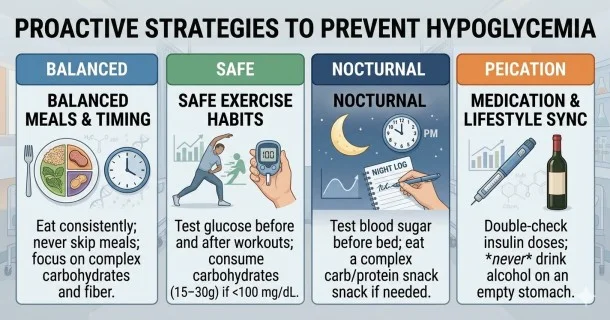
Discover effective clinical strategies to prevent hypoglycemia (low blood sugar). Learn how to coordinate meals, prevent nighttime drops, and exercise safely.
How to Prevent Hypoglycemia: Strategies for Stable Blood Sugar
Hypoglycemia (low blood sugar) is a highly manageable condition that can be systematically prevented with proactive lifestyle planning and correct medication adjustments. While active self-treatment tools like the 15-15 rule are essential when a drop occurs, the ultimate clinical goal is to stabilize your metabolic baseline so that dangerous drops below 70 mg/dL do not materialize in the first place.
Preventing low blood sugar requires coordinating your dietary carbohydrate intake, balancing your physical activity levels, and maintaining close, precise communication with your prescribing medical team.
Core Pillars of Daytime Hypoglycemia Prevention
To keep your blood glucose within a safe, stable target range during your daily routine, incorporate these foundational prevention habits:
1. Maintain Consistent Meal Timing and Composition
- Do Not Delay or Skip Meals: If you take insulin or oral medications that stimulate insulin production (such as sulfonylureas), your body requires a steady influx of carbohydrates to match that active medication. Skipping meals leaves the medication unopposed, causing blood sugar to plunge.
- Emphasize Complex Carbohydrates and Fiber: Incorporate complex carbs (like whole grains, legumes, and vegetables) paired with healthy fats and lean proteins into your regular meals. These foods slow down digestion, providing a gradual, sustained release of glucose into your bloodstream rather than a sharp spike followed by a rapid crash.
2. Practice Precise Medication Adjustments
- Review Dosages with Your Endocrinologist: If you experience frequent low blood sugar episodes, your baseline or mealtime medication doses may be set too high. Keep a detailed log of your drops and present them to your doctor to safely adjust your insulin-to-carbohydrate ratios or baseline settings.
- Avoid Dosing Errors: Always double-check your physical labels, pen settings, or pump inputs before administering insulin to ensure you are taking the correct dose at the appropriate time.
Preventing Low Blood Sugar After Exercise
Physical activity dramatically increases insulin sensitivity, allowing your muscles to clear sugar out of your blood without needing extra insulin. This protective metabolic effect can cause drops during or up to 24 hours after a workout. Use these rules to exercise safely:
- Test Glucose Before, During, and After: Always test your blood sugar before starting a workout. If your starting finger-stick or continuous glucose monitor (CGM) reading is below 100 mg/dL, consume a small 15-to-30-gram carbohydrate snack (like a piece of fruit or crackers) before beginning.
- Incorporate In-Workout Carbohydrates: For prolonged or high-intensity exercise lasting longer than one hour, consume easy-to-digest carbohydrates (such as a sports drink or energy gel) periodically during the activity to keep pace with your muscles' glucose consumption.
Proactive Strategies to Prevent Nighttime Drops
Low blood sugar that occurs while you sleep (nocturnal hypoglycemia) can be highly dangerous because it is harder to notice. Protect your sleep with these safety protocols:
- Check Your Sugar Before Bed: Establish a habit of testing your blood glucose immediately before going to sleep. If your reading is trending low or is near the lower boundary of your safe target range, eat a small bedtime snack that combines complex carbohydrates with a fat or protein (such as whole-wheat toast with peanut butter) to sustain your numbers overnight.
- Adjust for a Highly Active Day: If you performed intense or unaccustomed physical activity late in the afternoon or evening, consult your physician's guidelines about safely reducing your evening baseline insulin dose or eating an expanded bedtime snack to offset the delayed post-exercise drop.
[ Active Daytime Exercise ] ──► Increases Insulin Sensitivity ──► Delayed Overnight Drop
│
┌────────────────────────────────────────────────────────────────┘
└──► Prevention Action: Test glucose at bedtime + Eat a complex carb & protein snack.
To review the physical warning signs that alert you to an unexpected drop in sugar, explore our guide on Recognizing Hypoglycemia Symptoms. If your blood sugar has already dropped below safe parameters, instantly deploy the structured clinical steps found on our page for Treating Hypoglycemia and The 15-15 Rule.
Frequently Asked Questions (FAQ)
How can I prevent my blood sugar from dropping overnight?
To effectively prevent nocturnal hypoglycemia, always check your blood sugar level right before bed. If your reading is lower than your doctor's recommended bedtime target (typically under 100 to 140 mg/dL depending on your individual plan), eat a balanced bedtime snack containing complex carbohydrates, protein, or fat, such as a handful of nuts with a piece of fruit or cheese with whole-grain crackers. This combination provides a slow, steady release of energy throughout the night.
Why does alcohol increase my risk of a low, and how can I prevent it?
Alcohol actively prevents your liver from performing its natural fallback function of releasing stored glucose into your blood. If you drink alcohol on an empty stomach, your liver becomes entirely occupied with processing the alcohol, leaving your body unable to correct a dropping sugar level. To prevent this, never drink alcohol on an empty stomach; always consume alcohol alongside a meal containing substantial carbohydrates, and check your blood sugar more frequently, especially before going to sleep.
How can I prevent blood sugar crashes after working out?
Because exercise leaves your muscles highly sensitive to insulin for up to 24 hours, preventing a post-workout crash requires planning. Test your blood sugar immediately before exercising; if it is under 100 mg/dL, eat a 15-gram carbohydrate snack. For intense workouts, you may need to reduce your mealtime insulin dose prior to the activity or consume extra slow-burning carbohydrates afterward. Always talk to your endocrinologist to create a customized exercise adjustment plan.
What is the best way to prevent reactive hypoglycemia?
Preventing reactive hypoglycemia (low blood sugar that crashes 2 to 4 hours after eating) requires modifying the types of food you consume. Avoid heavily processed carbohydrates, sugary drinks, and refined pastries, which force your pancreas to overproduce an excessive surge of insulin. Instead, build your meals around a balance of low-glycemic, high-fiber complex carbohydrates, healthy lean proteins, and beneficial fats to ensure a controlled, steady rise and fall of blood glucose.