
Learn how to recognize the symptoms of hypoglycemia (low blood sugar). Explore early autonomic warning signs, nighttime symptoms, and critical neuroglycopenic red flags.
Recognizing Hypoglycemia Symptoms: Early Warning Signs & Red Flags
Hypoglycemia (low blood sugar) can materialize rapidly, often changing from a mild inconvenience to a severe medical emergency within minutes. Because your brain relies entirely on a continuous supply of glucose to function, learning to recognize the very first warning signs of a drop is critical to keeping yourself safe.
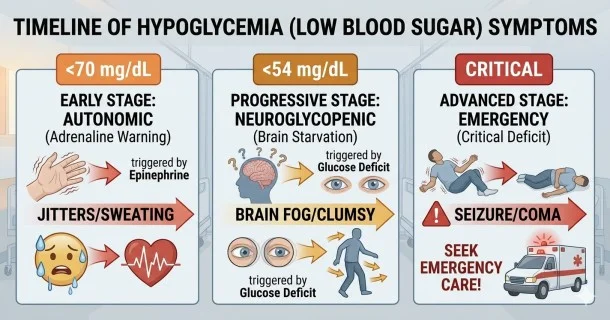
Medical professionals divide low blood sugar symptoms into two distinct clinical categories: autonomic signs (triggered by your body's "fight-or-flight" survival response) and neuroglycopenic signs (triggered directly by glucose starvation in the brain).
Early Warning Signs (The Autonomic Stage)
When blood glucose drops below 70 mg/dL, your body releases an emergency surge of epinephrine (adrenaline) to force the liver to release stored sugar. This sudden adrenaline spike triggers highly noticeable, physical warning signs:
- Shakiness and Trembling: An involuntary trembling in your hands or limbs, often accompanied by an internal feeling of jitters.
- Excessive, Cold Sweating (Diaphoresis): Sudden, heavy sweating that occurs even if you are resting in a cool environment.
- Rapid or Pounding Heartbeat (Palpitations): A noticeable racing, fluttering, or hard-pounding pulse.
- Anxiety and Nervousness: A sudden, inexplicable wave of panic, nervousness, or acute irritability.
- Intense Hunger (Polyphagia): A sharp, urgent craving for food, particularly carbohydrates or sugary foods, as your body tries to correct the deficit.
Progressive Symptoms (The Neuroglycopenic Stage)
If blood sugar is not promptly corrected with fast-acting carbohydrates and continues to decline (typically dropping below 54 mg/dL), the brain begins to starve for energy. This phase introduces neurological complications:
- Confusion and Brain Fog: Extreme difficulty concentrating, slurred speech, slow response times, or acting disoriented.
- Dizziness and Lightheadedness: Feeling unsteady on your feet or experiencing a spinning sensation.
- Blurred or Double Vision: Sudden changes in your eyesight, such as difficulty focusing or seeing double.
- Tingling or Numbness (Paresthesia): A distinct pins-and-needles sensation around your mouth, lips, tongue, or fingertips.
- Headaches and Lack of Coordination: A dull, persistent headache paired with clumsy movements, stumbling, or muscle weakness.
Nighttime Symptoms (Nocturnal Hypoglycemia)
Low blood sugar can easily occur while you are asleep. Because you cannot actively monitor your symptoms while resting, look for these specific indicators of a nighttime low:
- Waking Up Drenched in Sweat: Experiencing extreme night sweats that leave your sheets or pajamas damp.
- Vivid Nightmares or Restless Sleep: Sudden, disruptive, or unusually chaotic dreams paired with tossing and turning.
- A Persistent Morning Headache: Waking up with a dull, throbbing headache or feeling unrefreshed despite sleeping a full night.
Critical Red Flags (Advanced Emergency Stage)
When brain cells are critically deprived of glucose for an extended duration, a person will lose the ability to self-treat. The following advanced symptoms require immediate emergency intervention (such as an injection of glucagon or a call to emergency services):
- Inability to Eat or Swallow Safely: Being too disoriented or weak to safely take oral glucose tablets or juices without choking.
- Seizures or Involuntary Muscle Convulsions: Violent shaking or uncontrolled muscle spasms.
- Loss of Consciousness or Coma: Passing out completely and becoming entirely unresponsive.
[ Early Stage: Autonomic ] ───► [ Progressive Stage: Brain Starvation ] ───► [ Emergency Stage: Critical ]
Shakiness & Sweating Confusion & Dizziness Seizures
Rapid Heartbeat Slurred Speech & Blurred Vision Loss of Consciousness
Anxiety & Urgent Hunger Clumsiness & Headaches Inability to Swallow
To explore the specific lifestyle errors, medical adjustments, or underlying illnesses that structurally cause your blood sugar to drop this low, read our guide on Hypoglycemia Causes & Triggers. For a foundational look at how your body maintains its glucose balance, visit our Introduction to Hypoglycemia.
Frequently Asked Questions (FAQ)
What are the very first signs of low blood sugar?
The very first signs of low blood sugar are usually shakiness, sweating, an unusually fast heartbeat, and sudden, intense hunger. These early indicators are caused by an emergency release of adrenaline, which your body uses as a defense mechanism to alert you to take action before your brain becomes starved of glucose.
What is hypoglycemia unawareness?
Hypoglycemia unawareness is a medical condition where an individual no longer experiences the early physical warning signs of a drop (like shakiness or sweating). It typically develops in people who have frequent low blood sugar episodes, which numbs the body's normal adrenaline response. As a result, their blood sugar can plunge straight into dangerous, confusing neurological stages without any prior warning.
Why do I wake up with night sweats and a headache?
Waking up with a headache or finding your pajamas drenched in sweat is a strong indicator of nocturnal hypoglycemia (low blood sugar during sleep). The night sweats are triggered by your body's adrenaline surge attempting to bring your sugar levels back up, while the morning headache is caused by the temporary lack of glucose reaching your brain cells overnight.
Can low blood sugar cause sudden mood changes?
Yes, low blood sugar can directly alter your behavior and mood, often causing sudden irritability, unexplained anger, crying spells, or severe anxiety. Because the brain requires glucose to control emotions and impulses, a lack of fuel impairs your cognitive processing, causing a person to act out of character or appear uncooperative.