
Discover how insulin analogs improve diabetes care. Compare rapid vs. long-acting analog timelines, brand names, and benefits over human insulin.
Complete Guide to Insulin Analogs: Innovations, Action Timelines, and Brand Profiles
Insulin analogs are genetically altered or chemically modified forms of human insulin designed to alter how quickly the hormone is absorbed into the bloodstream. Unlike traditional human insulins, which can be less predictable in their action curves, synthetic analogs allow for highly customized glycemic control by mimicking either rapid mealtime spikes or smooth, long-lasting baseline coverage.
Always double-check the physical label of your prescribed insulin analog to verify the exact generic name, brand name, and expiration date before dosing.
What is an Insulin Analog?
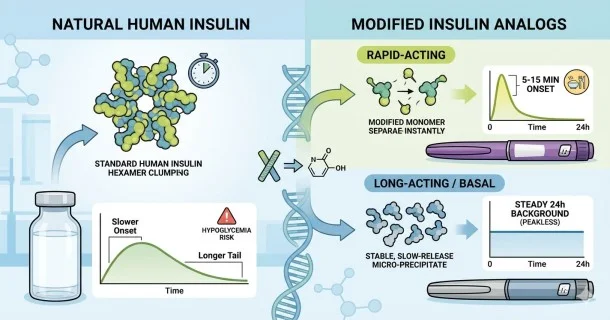
Historically, man-made insulins were identical in molecular structure to the human insulin hormone. However, structural constraints meant they often clumped together under the skin, delaying their therapeutic onset.
To resolve this, biomedical engineers altered the amino acid sequence of the human insulin molecule to create insulin analogues. While they are structurally modified variations rather than an exact replica of human insulin, they retain complete, highly efficient glucose-lowering functionality. By altering the solution's properties or the protein's electrical charge, manufacturers can accelerate or delay absorption to match an individual's unique lifestyle needs.
Direct Comparison of Available Insulin Analogs
To achieve optimal glycemic control, most individuals managing diabetes utilize a combination of multiple analog types customized to their metabolic demands. The table below outlines the pharmacokinetic profiles of the most common options available in the market:
| Analog Class | Generic Name | Common Brand Names | Onset Time | Peak Window | Duration Range | Clinical Timing & Role |
|---|---|---|---|---|---|---|
| Rapid-Acting | Insulin Lispro Insulin Aspart Insulin Glulisine | Humalog NovoLog Apidra | 5–15 minutes | 30–90 minutes | 3–5 hours | Administered right at mealtime to immediately cover the glucose load from food. |
| Short-Acting | Human Regular | Humulin R Novolin R | 30–60 minutes | 2–4 hours | 5–8 hours | Regular human insulin; taken 30 minutes prior to meals. |
| Intermediate-Acting | NPH | Humulin N Novolin N | 1–3 hours | 8 hours | 12–16 hours | Human insulin suspended with protamine to delay its release profile. |
| Long-Acting | Insulin Glargine Insulin Detemir | Lantus Levemir | 1–2 hours | Flat (No Peak) | 20–26 hours | Injected once daily to serve as steady background basal protection. |
| Pre-Mixed Analogs | Lispro Protamine / Lispro Aspart Protamine / Aspart | Humalog Mix 75/25 NovoLog Mix 70/30 | 5–15 minutes | Dual Peaks (Varies) | 10–16 hours | Combines intermediate-acting suspensions and rapid-acting analogs in one single device. |
Clinical Advantages of Insulin Analogs Over Human Insulin
Transitioning from standard human insulins to modified analogs offers significant therapeutic benefits:
- Predictable Background Levels: Long-acting analogs like glargine dissolve slowly without hitting a clinical peak, significantly dropping the risk of unpredictable nocturnal hypoglycemia.
- Greater Mealtime Flexibility: Because rapid-acting analogs act in 5 to 15 minutes, you can take them immediately as you sit down to eat, rather than waiting 30 to 45 minutes like old short-acting regular options.
- Fewer Injections: The prolonged 24-hour baseline duration of ultra-long analogs eliminates the need for multiple intermediate baseline injections throughout the day.
Frequently Asked Questions (FAQ)
What makes an insulin analog different from regular human insulin?
Regular human insulin matches the exact structural makeup of the insulin naturally created by the human body. While highly effective, it tends to clump into groups under the skin, resulting in a delayed onset and a prolonged tail that can cause late drops in blood sugar. Insulin analogs are structural modifications of human insulin, explicitly altered by substituting specific amino acids. This change causes the medication to either separate instantly for ultra-fast action or form a stable micro-precipitate that absorbs slowly over a 24-hour period.
Why are rapid-acting analogs preferred for mealtime management?
Rapid-acting analogs like NovoLog, Humalog, and Apidra are highly preferred because their structural layout allows them to enter the bloodstream within 5 to 15 minutes of injection. This rapid timeline closely mimics the immediate insulin release of a healthy pancreas when encountering food. Regular short-acting human insulin requires a strict 30-to-45-minute waiting window between injection and meal intake to avoid dangerous after-meal spikes.
Can you mix long-acting insulin analogs with other types of insulin in the same syringe?
No. Long-acting insulin analogs, particularly insulin glargine (Lantus), are engineered with a specific acidic pH that allows them to slowly form a baseline cushion under the skin. If you mix glargine with any other clear, rapid-acting or short-acting analog in the same syringe, the balance is ruined, causing the insulin to drop out of solution immediately. This neutralization completely destroys the intended slow-release baseline, risking severe, immediate hypoglycemia followed by prolonged high blood sugar.
Are insulin analogs safe for pregnant women managing gestational diabetes?
Many rapid-acting and long-acting insulin analogs are widely considered safe and are commonly prescribed during pregnancy to optimize blood sugar control. However, management must be explicitly directed by your healthcare team. Certain analogs have more robust safety data during pregnancy than newer ultra-long variations, so your endocrinologist will customize your prescription to maximize fetal safety.