
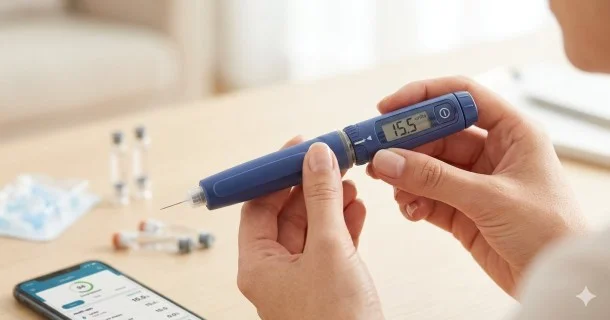
Learn how to choose and properly use an insulin pen. Explore the structural differences between reusable and disposable models, priming steps, and dosing tips.
A Complete Guide to Insulin Pens: Choosing and Using Modern Injection Devices
For individuals requiring insulin therapy, an insulin pen offers a convenient, highly precise, and discreet alternative to traditional syringes and vials. Designed to mimic the appearance of a classic fountain pen, an insulin pen houses an internal insulin reservoir and features a mechanical dial to accurately measure and deliver a specific dose.
The Two Primary Types of Insulin Pens
While dozens of models are available from major manufacturers, all devices fall into two main categories:
1. Reusable Insulin Pens
Reusable devices are built with a durable chassis designed to last for several years with proper care.
- Mechanism: You load a replaceable 150-unit or 300-unit glass insulin cartridge (sold separately in boxes of five) into the pen body.
- Operation: When the cartridge runs empty, you dispose of it and insert a fresh one, keeping the mechanical pen base intact.
2. Disposable Insulin Pens
Disposable devices arrive pre-filled with insulin directly from the pharmacy.
- Mechanism: Most disposable models hold a baseline capacity of 300 units of insulin.
- Operation: You do not need to load or touch raw cartridges. Once the total reservoir is fully depleted, you safely discard the entire pen apparatus into a sharps container and start using a new pen.
How to Choose the Best Insulin Pen for Your Needs
Selecting the ideal pen configuration depends on your specific dosage patterns and physical comfort needs. Consider the following structural variables alongside your healthcare team:
- Dose Increments: Evaluate how finely the pen adjusts doses. Some devices adjust in 2-unit increments, others in 1-unit increments, and specialized pediatric pens adjust in highly precise half-unit (0.5 U) steps.
- Maximum Single Dose: Verify the absolute maximum limit the pen can inject in a single press (e.g., 30, 60, or 80 units).
- Dial Legibility: Check the size of the font on the unit display window to ensure you can easily read the numbers without a magnifier.
- Volume Indicators: Ensure the pen features an explicit visual gauge that shows if there is enough remaining medication left to complete your full required dose.
Step-by-Step Insulin Pen Injection Procedure
One of the greatest benefits of this technology is its straightforward injection protocol. Follow these steps to ensure safe delivery:
- Sanitization & Attachment: Wash your hands thoroughly. Wipe the rubber seal at the top of the pen with an alcohol swab, then twist or click a fresh, sterile pen needle into place.
- Priming the Pen: Turn the dial to 1 or 2 units. Hold the pen with the needle pointing upward and press the injection button completely. Watch for a small droplet of insulin to emerge at the tip. This step is vital to purge any trapped air pockets from the needle path.
- Dose Selection: Turn the dial to the exact number of units prescribed by your medical professional.
- Injection: Clean the skin site, pinch the subcutaneous fat layer gently, and insert the needle at a 90-degree angle. Press the injection button down firmly until the dose indicator returns to zero.
- The Pause Rule: Keep the needle inserted completely while slowly counting to 5 or 10 seconds before withdrawing it from the skin. This prevents the medication from leaking out of the injection path, ensuring your body receives the complete dose.
Medication Variations & Mixing Protocols
Insulin pens are available pre-filled with multiple formulations, including rapid-acting (lispro, aspart, glulisine), short-acting (regular), intermediate-acting (NPH), long-acting (glargine, detemir), and fixed premixed blends (such as 70/30 or 75/25).
- Label Verification: Always double-check the physical medication label on the pen box and cartridge before injecting to make sure you are administering the correct formulation at the correct time of day.
- Suspension Resuspension: If you use cloudy, intermediate-acting NPH or premixed insulins, you must gently roll the pen horizontally between your palms 10 times and tip it up and down 10 times to evenly mix the suspension before injecting.
Frequently Asked Questions (FAQ)
What is the advantage of using a half-unit insulin pen?
Half-unit pens allow you to dial doses in increments of 0.5 units (e.g., 1.5, 2.0, 2.5). This high level of precision is ideal for infants, children, or highly insulin-sensitive individuals where a full 1-unit change could trigger unexpected hypoglycemia.
Why do I need to keep the needle in my skin for 5 to 10 seconds after injecting?
Subcutaneous fat tissue takes a few moments to absorb the liquid volume forced out by the pen plunger. Keeping the needle in place for a slow count prevents the insulin from leaking back out of the skin puncture site, ensuring you receive your full dose.
Can I share my reusable insulin pen body if I change the needle tip?
No. An insulin pen must never be shared between different individuals under any circumstances. Even if you alter the sterile disposable needle tip, microscopic amounts of blood and biological cellular debris can backflow into the internal cartridge housing, risking serious cross-contamination or bloodborne infection.