Learn how to prevent diabetic ketoacidosis (DKA) safely. Master diabetes sick-day rules, fluid management, insulin adjustments, and pump troubleshooting.
How to Prevent Diabetic Ketoacidosis (DKA): Essential Sick-Day Rules
Diabetic ketoacidosis (DKA) is highly preventable with proactive blood sugar management and structured lifestyle protocols. While acute illnesses, structural infections, or physiological stress can quickly disrupt your metabolism, having a clear action plan allows you to intervene before ketones reach dangerous, toxic levels in your bloodstream.
Preventing DKA requires understanding your medication requirements, establishing strict "sick-day rules" with your medical team, and knowing exactly how to troubleshoot equipment issues.
The Core Pillars of DKA Prevention
To keep your body out of an absolute insulin deficiency and prevent the rapid breakdown of fat into toxic ketones, prioritize these primary medical habits:
1. Consistent Insulin and Medication Adherence
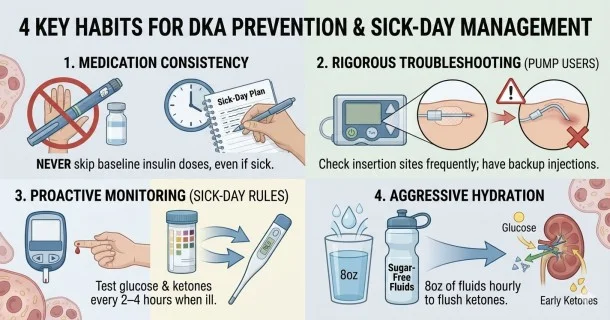
- Never Stop Taking Baseline Insulin: Even if you are sick, throwing up, and unable to eat solid foods, your body still requires a steady background supply of baseline (long-acting) insulin to perform basic cellular functions. Never completely skip your long-acting dose without explicit instructions from your endocrinologist.
- Routinely Verify Expiration Dates: Insulin exposed to extreme direct heat, freezing temperatures, or left open for more than 28–30 days loses its potency. Ineffective insulin can unknowingly cause a severe, rapid drop in active blood insulin levels.
2. Rigorous Troubleshooting for Insulin Pump Users
Insulin pump users carry a unique risk because they do not have a reservoir of long-acting insulin under their skin. If insulin delivery is blocked, DKA can materialize within hours.
- Check the Insertion Site: If your blood sugar spikes unexpectedly, visually inspect your infusion site. Ensure the small plastic tube (cannula) isn't bent, loose, or leaking.
- Always Carry a Back-Up Plan: Keep an emergency supply of traditional syringes or insulin pens alongside long-acting insulin vials in case your pump malfunctions completely.
Mastering the "Diabetes Sick-Day Rules"
When your body is fighting off a cold, influenza, a urinary tract infection (UTI), or any other physical illness, your system releases stress hormones that raise blood sugar and block insulin action. You must immediately deploy your Sick-Day Rules:
[ Feel Illness Starting ]
│
├──► Monitor Closely ──► Test blood glucose & ketones every 2–4 hours.
│
├──► Hydrate ──────────► Drink 8 ounces of sugar-free fluid every hour.
│
└──► Adjust Dose ──────► Administer corrective insulin doses based on your medical plan.
- Test Every 2 to 4 Hours: Increase the frequency of your finger-stick or continuous glucose monitor (CGM) checks. Simultaneously, check your blood or urine ketone levels every few hours, even if your sugar levels appear stable.
- Hydrate Aggressively: Drink at least 8 ounces of water or sugar-free liquids every hour to prevent severe dehydration. Staying hydrated helps your kidneys actively filter and flush excess glucose and early ketones out of your bloodstream.
- Take Extra Corrective Insulin: Because physical illness induces severe insulin resistance, you will likely require additional doses of rapid-acting insulin to bring your numbers down. Follow the exact custom correction factor provided by your care team.
- Manage Your Carbohydrates: If you cannot keep solid food down, sip on clear fluids that contain small amounts of carbohydrates (like standard sports drinks or broth) to provide your cells with clean energy while you continue taking your required corrective insulin.
Medical Disclaimer: The information provided on this page is for general knowledge and educational purposes only. It is not intended as a substitute for professional medical advice, diagnosis, or treatment. Always consult with a healthcare provider with any questions you may have regarding a medical condition. If you suspect you or someone else is experiencing diabetic ketoacidosis, seek emergency medical care immediately.
When to Stop Preventing and Seek Emergency Care
Preventative measures have limits. If you cross any of the following clinical thresholds, stop attempting home management and seek emergency medical care or call emergency services immediately:
- You have been vomiting continuously and are unable to keep any liquids down for more than 2 to 4 hours.
- Your home blood ketone test reads above 3.0 mmol/L (or your urine strips show "Large" ketones).
- Your blood glucose remains consistently above 240 mg/dL to 250 mg/dL despite receiving multiple corrective insulin doses.
- You experience the onset of advanced symptoms like labored, rapid breathing (Kussmaul breathing), extreme dizziness, or confusion.
To review the exact biological pathway that turns an infection into a metabolic crisis, view our guide on Diabetic Ketoacidosis Causes & Triggers. If you need to verify how to interpret your testing strips during a sick day, read our page on How to Test for Diabetic Ketoacidosis.
Frequently Asked Questions (FAQ)
Should I skip my insulin dose if I am vomiting and can't eat?
No, you should never completely skip your baseline or long-acting insulin dose when sick. Even if you aren't eating, your body naturally releases stored liver sugar and stress hormones to fight off the illness. Skipping your insulin removes the primary biological brake that prevents your body from burning fat and generating dangerous ketone acids.
Why is hydration so critically important for preventing DKA?
Severe dehydration drastically accelerates DKA. When your body is properly hydrated, your kidneys can effectively filter out extra glucose and early ketones through your urine, keeping their concentrations under control. If you become dehydrated, your blood concentrates, the kidneys slow down, and ketone levels soar dangerously fast.
Can I develop DKA if I am taking an oral medication for Type 2 diabetes?
Yes. If you take an oral medication known as an SGLT2 inhibitor (such as Jardiance, Farxiga, or Invokana), you are at a small but distinct risk for a unique condition called Euglycemic DKA. To prevent this, many endocrinologists recommend temporarily pausing these medications if you face an upcoming surgery, experience a severe illness, or find yourself unable to eat regular meals. Always consult your prescribing doctor for a precise, personal plan.
How often should I check ketones when I am feeling sick?
When you are feeling sick or running a fever, you should check your blood or urine ketone levels every 2 to 4 hours, or every time you use the restroom. Ketone levels can escalate from safe to dangerous within a single afternoon, so frequent monitoring is essential for early prevention.