
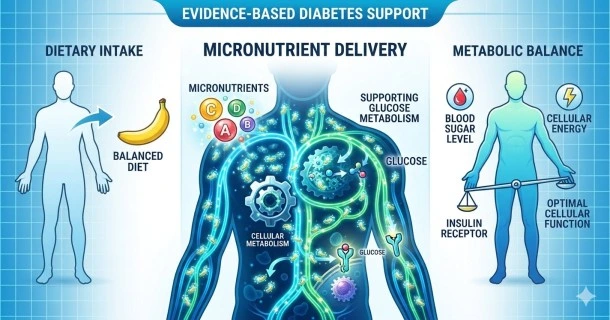
Explore what clinical research says about using micronutrients, vitamins, and minerals for diabetes management. Learn the facts before you buy.
Do Diabetes Supplements Work? An Evidence-Based Guide
Nutritional supplements are often marketed as a natural way to help manage diabetes and its long-term complications. However, navigating the world of vitamins and minerals requires separating marketing claims from scientific data.
While certain micronutrients are vital for metabolic health, major medical organizations—including the American Diabetes Association (ADA)—do not recommend routine supplementation unless a clinical deficiency is diagnosed.
What Are Micronutrients and Why Do They Matter?
Micronutrients are essential vitamins and minerals that the body requires in small amounts to carry out vital metabolic functions. In the context of metabolism, these nutrients act as vital coenzymes and cofactors. They assist cellular reactions that break down carbohydrates, lipids, and amino acids to generate biological energy.
Essential micro-minerals include chromium, zinc, magnesium, manganese, iron, copper, selenium, and iodine. Because the human body cannot synthesize most of these nutrients, they must be obtained through a balanced diet or, when medically indicated, targeted supplementation.
What Does Clinical Research Say?
Researchers frequently study micronutrients to determine if they can prevent or help treat type 1 diabetes, type 2 diabetes, or associated secondary complications.
Public health experts and medical bodies generally urge caution regarding over-the-counter diabetes supplements. For individuals who eat a well-balanced diet, the body absorbs what it needs and excretes excess water-soluble vitamins (such as Vitamin C and B-complex vitamins) through the urine. This means taking high-dose supplements without a true medical deficiency rarely offers additional therapeutic value and can become an unnecessary expense.
Plausible Physiological Mechanisms
When an individual has a baseline nutrient deficiency, correcting it via diet or supplementation may support metabolic health in several theoretical ways:
- Supporting Glucose Metabolism: Adequate enzyme function is required to help the body process glucose efficiently.
- Aiding Insulin Function: Certain minerals play a cellular role in biochemical pathing, which may support how effectively cells respond to insulin.
- Tissue and Nerve Health: Specific vitamins are critical for nerve function and cellular repair, which are important factors in managing diabetic neuropathy or wound healing.
Overview of Popular Diabetes Nutritional Supplements
If you are exploring nutritional support, it is important to know how specific vitamins and minerals interact with the body's metabolic processes. The most frequently discussed options include:
1. Essential Minerals
- Chromium: This trace element is involved in normal carbohydrate and lipid metabolism. It is widely researched for its role in supporting the action of insulin, though clinical trial results on its ability to lower blood sugar remain mixed.
- Magnesium: Frequently studied because low blood magnesium levels are commonly observed in individuals with type 2 diabetes. Magnesium is a vital cofactor for multiple enzymes involved in glucose metabolism.
- Zinc: Plays a structural role in the stabilization and storage of insulin within the pancreas. It also provides antioxidant support, which helps protect cells from oxidative stress.
- Vanadium & Calcium: Vanadium is a trace mineral that has been studied in laboratory settings for mimicking insulin effects, though its safety profile requires careful medical monitoring. Calcium is fundamental for cellular signaling and bone structural integrity.
2. Vitamins and Dynamic Coenzymes
- Vitamins B, C, D, and E: B-complex vitamins (especially B12) are critical for nerve health, particularly for individuals taking metformin, which can lower B12 absorption. Vitamins C and E offer notable antioxidant support, while Vitamin D is heavily researched for its systemic role in immune health and insulin secretion.
- Alpha-Lipoic Acid (ALA) & Coenzyme Q10 (CoQ10): ALA is an antioxidant that has shown promise in clinical studies for easing symptoms of peripheral diabetic neuropathy. CoQ10 plays a critical role in cellular energy production within the mitochondria.
- Brewer's Yeast: Often utilized as a natural dietary source of B-vitamins and biologically active chromium.
Frequently Asked Questions (FAQ)
Can supplements replace my prescribed diabetes medications?
No. Dietary supplements cannot replace prescription blood-sugar-lowering medications, insulin therapies, or foundational lifestyle modifications like diet and exercise. Never adjust your medication doses without consulting your healthcare provider.
Why doesn't the American Diabetes Association recommend routine supplements?
The ADA emphasizes getting essential nutrients from whole foods rather than supplements. Clinical evidence does not conclusively show that vitamin or mineral supplements provide clear benefits for blood sugar control unless a person already has an underlying nutritional deficiency.
Are there risks to taking diabetes supplements?
Yes. High doses of certain fat-soluble vitamins (like Vitamin A and E) can accumulate in the body and become toxic. Additionally, some supplements can interact poorly with prescription drugs or cause gastrointestinal upset. Always check with your pharmacist or doctor before starting a new supplement.