
Discover how to lower your risk of developing type 2 diabetes by up to 58% through evidence-based lifestyle changes, weight management, and medical options.
Evidence-Based Strategies to Prevent Type 2 Diabetes
Type 2 diabetes is a chronic metabolic condition, but it is highly preventable. If you have been diagnosed with prediabetes or have multiple clinical risk factors, implementing targeted lifestyle modifications can significantly delay or entirely halt the progression to type 2 diabetes.
Data from the landmark Diabetes Prevention Program (DPP) research trial demonstrated that structured lifestyle interventions can reduce the risk of developing type 2 diabetes by 58% over three years. For individuals aged 60 and older, these interventions proved even more effective, lowering risk by up to 71%. Taking proactive steps early is essential, as prediabetes is closely linked to an elevated risk of cardiovascular diseases, including heart attacks and strokes.
1. Targeted Weight Management
Sustained weight loss is one of the most effective interventions for addressing insulin resistance and lowering blood glucose levels.
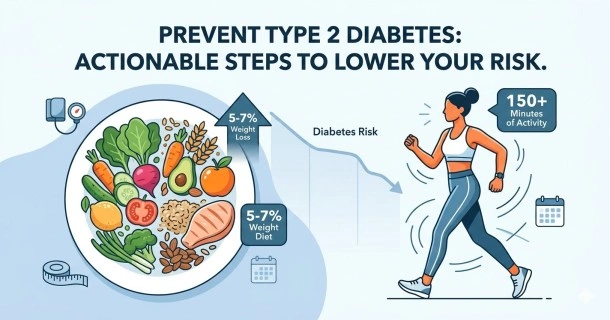
- The 5% to 7% Target: Clinical evidence indicates that losing just 5% to 7% of your initial body weight substantially lowers your risk. For a person weighing 200 pounds, this equates to a manageable goal of 10 to 14 pounds.
- Caloric and Dietary Adjustments: To achieve steady, sustainable weight loss, focus on creating a modest daily caloric deficit. Reducing your total dietary fat intake to less than 25% of your daily calories can assist with weight management. Prioritize nutrient-dense, whole foods while minimizing processed carbohydrates and sugar-sweetened beverages.
2. Regular Physical Activity
Consistent physical exercise enhances insulin sensitivity, allowing your muscles to utilize glucose more efficiently even without relying heavily on insulin production.
- The 150-Minute Weekly Standard: Aim for a minimum of 150 minutes per week of moderate-intensity aerobic physical activity. This requirement can easily be split into 30-minute sessions, five days a week.
- Exercise Modalities: Activities such as brisk walking, cycling, swimming, or rowing are excellent choices. Combining aerobic exercise with resistance training twice a week offers superior metabolic benefits.
3. Pharmacological Interventions: Metformin for Prediabetes
While lifestyle optimizations remain the gold standard, medical guidelines also recognize the value of pharmacological prevention in specific patient profiles.
- Risk Reduction: The DPP trial found that prescription therapy with metformin reduced the overall risk of progressing to type 2 diabetes by 31%.
- Clinical Criteria: Clinical organizations, such as the American Diabetes Association (ADA), recommend considering metformin therapy for individuals with prediabetes, particularly those with a Body Mass Index (BMI) of
 ≥35 kg/m2, individuals under the age of 60, and women with a documented history of gestational diabetes.
Understanding Your Progression Risk
Without definitive lifestyle or medical intervention, prediabetes frequently advances to type 2 diabetes. Statistical trends indicate that approximately 1 in 10 individuals with prediabetes will transition to full type 2 diabetes within a single year. Fortunately, early screening, routine A1C monitoring, and consistent lifestyle changes give you the power to safely rewrite this trajectory.
Frequently Asked Questions (FAQs)
Can prediabetes be reversed naturally?
Yes. Prediabetes can frequently be reversed back to normal blood glucose levels through sustainable lifestyle changes. The most effective approach involves losing 5% to 7% of your body weight and completing at least 150 minutes of moderate physical exercise every week.
How much weight do I need to lose to prevent type 2 diabetes?
Clinical studies show that losing just 5% to 7% of your total body weight is enough to cut your risk of developing type 2 diabetes by over half.
When is metformin prescribed for diabetes prevention?
Metformin is often considered for individuals with prediabetes who face a higher risk of progression. It is most frequently recommended for adults under age 60, individuals with a BMI of 35 or higher, or women who previously experienced gestational diabetes during pregnancy.
What are the best exercises to lower diabetes risk?
Moderate-intensity aerobic exercises like brisk walking, cycling, and swimming are highly effective at lowering blood sugar and improving insulin sensitivity. Adding strength or resistance training twice a week provides even better metabolic results.