
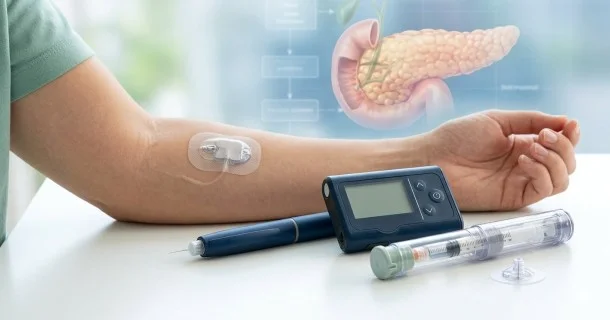
Compare the main modern methods of insulin administration. Explore the differences between insulin pens, computerized pumps, syringes, and needle-free jet injectors.
Modern Methods of Insulin Administration: Choosing the Right Delivery Option
Navigating insulin therapy can feel overwhelming given the variety of choices available today. Because insulin is a protein, it cannot be taken orally as an active pill; your digestive system would break it down entirely before it could enter the bloodstream. Therefore, insulin must be delivered directly into the subcutaneous fat tissue beneath the skin.
Depending on your daily routine, physical comfort levels, and clinical goals, several advanced delivery devices are available to tailor your treatment plan.
1. Traditional Insulin Syringes
The oldest and most cost-effective method of delivery relies on a manual syringe and needle apparatus. Users manually extract a specific volume of insulin from a separate glass vial into a hollow calibrated tube before pressing the plunger to administer the dose under the skin. While highly economical, syringes require manual dexterity and close attention to visual dose lines.
2. Precision Insulin Pens
An insulin pen combines a replaceable or pre-filled cartridge of insulin with a built-in dial mechanism inside a compact, pen-like design. Insulin pens provide significantly higher dosing accuracy and greater portability compared to traditional vials and syringes, making them a preferred baseline choice for many individuals practicing multiple daily injections (MDI).
3. Subcutaneous Insulin Pumps
An insulin pump is a computerized, wearable device that holds a continuous supply of fast-acting insulin. The pump connects via a plastic tube to a flexible catheter placed just under the skin for several days at a time. Rather than requiring multiple standalone injections, the pump automatically delivers an ongoing low baseline dose (basal insulin) throughout the day, while allowing the user to easily administer precise mealtime doses (bolus insulin) via button commands.
4. Needle-Free Jet Injectors
For individuals experiencing significant needle phobia, jet injectors offer a valid transdermal path without using a standard needle tip. A jet injector utilizes extreme fluid pressure to force a microscopic mist of insulin directly through the skin pores, distributing the medication effectively across subcutaneous layers without deep skin puncture.
5. Alternative Delivery Assistants
- Insulin Auto-Injectors: These specialized shields house standard syringes or pens, automating the skin-piercing and fluid delivery process at the push of a single button—ideal for patients with low mobility or high injection anxiety.
- Injection Ports / Infusers: A small indwelling tube is inserted into the skin and remains anchored for up to three days. Any required needle shots are injected directly into the outer port end rather than your skin, consolidating dozens of punctures down to a single weekly site rotation.
Therapeutic Strategies: Balancing Basal vs. Bolus
Managing an optimized insulin regimen involves mirroring how a healthy pancreas naturally operates, which is particularly vital in Type 1 Diabetes management.
- Basal Insulin (Background Coverage): Long-acting insulin formulations are designed to absorb slowly, providing a steady baseline level of insulin across a full 24-hour cycle to manage resting metabolic functions.
- Bolus Insulin (Mealtime & Correction): Fast-acting or short-acting insulins are administered immediately prior to meals to counteract postprandial glucose spikes from carbohydrates, or used as quick corrective doses to lower sudden hyperglycemia events.
Direct Comparison: Injection Options
| Delivery System | Primary Mechanical Setup | Target Patient Demographic | Key Practical Benefit |
|---|---|---|---|
| Insulin Pens | Built-in dial mechanism with disposable micro-needles | Patients on multiple daily injections (MDI) seeking convenience | Precise dose dialling and straightforward portability |
| Insulin Pumps | Computerized reservoir supplying an indwelling cannula | Patients seeking flexible, automated glycemic control | Eliminates daily skin pokes; allows micro-dose basal adjustments |
| Jet Injectors | High-pressure mechanical fluid propulsion | Individuals navigating profound needle phobias | Crosses the skin dermis completely needle-free |
Frequently Asked Questions (FAQ)
Why can't insulin be taken as a standard oral pill?
Insulin is a complex protein hormone. If swallowed as a pill, the highly acidic enzymes throughout your stomach and digestive tract would completely destroy and digest the protein molecules before they could ever reach your bloodstream to perform their blood-sugar-lowering functions.
How often do you have to change an insulin pump site or injection port?
Subcutaneous insulin pump cannulas and injection ports are generally engineered to stay safely in place for 2 to 3 days. Leaving a site in place for longer can increase your risk of localized tissue infection, skin irritation, or poor insulin absorption.
What is the main clinical difference between basal and bolus insulin?
Basal insulin is a long-acting background dose that keeps blood sugar steady when you aren't eating, such as overnight. Bolus insulin is a quick-acting, targeted dose taken right at mealtime to handle sugar spikes caused by carbohydrate intake.