
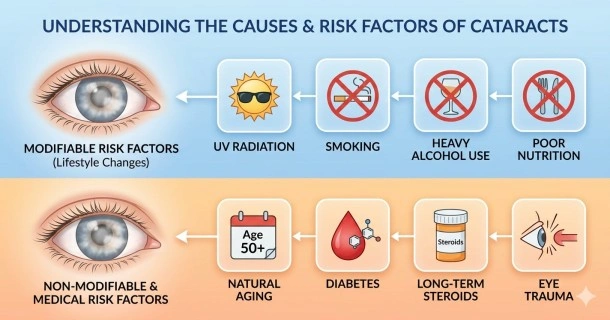
Understand the primary causes of cataracts and the key risk factors that accelerate lens clouding, including aging, diabetes, smoking, UV exposure, and long-term steroid use.
What Causes Cataracts? Understanding the Primary Risk Factors
The fundamental cause of most cataracts is the progressive breakdown and clumping together of natural structural proteins inside the eye's crystalline lens. While the natural aging process is the absolute leading cause of this cellular change, a combination of systemic metabolic diseases, environmental stressors, lifestyle habits, and trauma can significantly accelerate lens opacification.
Primary Causes and Risk Factors of Cataracts
Identifying the underlying catalysts for lens clouding allows individuals to modify their behaviors and shield their eyes from manageable risks:
- Natural Aging Process: Cellular senescence remains the most ubiquitous factor. Over time, metabolic byproducts pile up within the lens matrix, causing structural proteins to lose their organization and clarity.
- Diabetes Mellitus: Chronic hyperglycemia (high blood sugar) alters the osmotic balance within the lens capsule. The excess glucose converts into sorbitol, leading to fluid accumulation and accelerated opacification.
- Long-Term Corticosteroid Use: Taking systemic or topical steroidal medications for an extended duration noticeably spikes your risk, frequently triggering rapid-growing posterior subcapsular cataracts.
- Ocular Trauma or Injury: Blunt force trauma, deep lacerations, extreme chemical exposures, or thermal burns can break down the lens capsule fibers immediately or trigger localized swelling and clouding decades later.
- Unprotected Ultraviolet (UV) Exposure: Long-term exposure to high-intensity solar radiation (specifically UV-B rays) causes oxidative stress within the lens, degrading its transparent proteins.
- Lifestyle Triggers (Smoking & Alcohol Intake): Tobacco smoke contains dense heavy metals and toxins that deplete your body's vital stores of natural antioxidants, leaving the lens vulnerable to free-radical damage. Chronic, heavy alcohol consumption similarly impedes liver function and nutrient absorption, which is believed to impair lens cell health.
- Previous Surgical Procedures: Undergoing complex surgical interventions inside the eye for serious conditions like glaucoma or retinal detachment can alter localized fluid dynamics, frequently speeding up cataract maturation.
- Genetic Predisposition: Congenital cataracts can be directly inherited through familial gene mutations that disturb early structural protein formation in the womb.
Frequently Asked Questions (FAQ)
Can you prevent a cataract from forming entirely?
Because aging is the root cause of lens clouding, cataracts cannot be fully prevented. However, you can delay their progression by wearing 100% UV-blocking sunglasses, quitting smoking, eating a diet rich in antioxidants, and meticulously managing systemic health conditions like diabetes.
Why does having diabetes make cataracts grow faster?
When blood sugar levels stay elevated, the excess sugar leaks into the clear aqueous humor fluid inside the front chamber of your eye. The eye lens absorbs this fluid, transforming the sugars into a compound called sorbitol. Sorbitol accumulates inside the lens, drawing in too much water and forcing the delicate lens fibers to swell, distort, and cloud over rapidly.
Can stress or staring at computer screens cause cataracts?
No. Everyday digital eye strain from computers, smartphones, or emotional stress does not alter the physical protein matrix of the crystalline lens. While screen use can cause dry eyes, fatigue, and temporary blurry vision, it does not act as a cause or accelerator of true cataract development.