
Worried about cataract surgery risks? Learn the warning signs of complications like PCO and retinal detachment, and understand the normal healing timeline.
Navigating Cataract Surgery Recovery: Expected Symptoms, Risks, and Complications
Cataract surgery is celebrated globally as one of the safest and most successful medical procedures performed today. While the vast majority of patients achieve crystal-clear vision without incident, understanding the normal recovery timeline, identifying potential complications, and knowing when to contact your ophthalmologist are essential steps for safeguarding your vision.
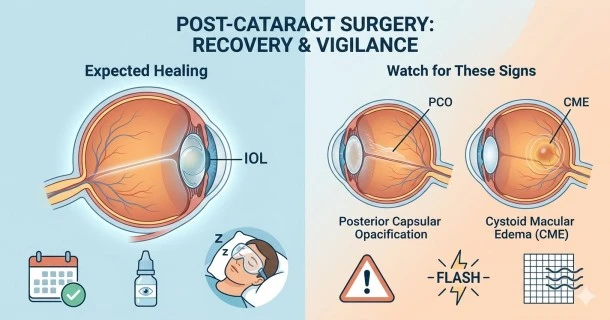
The standard postoperative healing period typically spans 4 to 8 weeks, during which your eye gradually stabilizes and adjusts to its new intraocular lens (IOL).
The Recovery Journey: What is Normal?
Immediately after surgery, your vision may appear blurry, wavy, or distorted. This is a standard response as your pupil dilates and the eye begins its natural healing process.
Typical Post-Operative Symptoms
- Mild Discomfort & Grittiness: It is very common to experience mild itching, a gritty "sand-in-the-eye" sensation, or minor discomfort for the first few days.
- Fluid Discharge: Slight clear or watery tearing is standard as the surface incisions heal.
- Vivid Colors: The world may suddenly look incredibly bright or heavily tinted blue because your new clear lens is no longer filtering out light like your old, cloudy, yellowed cataract did.
Vital Recovery Care Practices
- Protect the Eye: Your surgeon will likely advise you to wear a clear plastic shield or protective patch on the day of surgery and during sleep for the first week to prevent accidental rubbing or pressing.
- Medication Adherence: You will be prescribed a strict regimen of targeted eye drops—typically including antibiotics to prevent infection, and steroids or non-steroidal anti-inflammatory drugs (NSAIDs) to reduce swelling and manage eye pressure.
- Staged Timeline for Both Eyes: If you require surgery in both eyes, your doctor will generally space the procedures out by a few weeks to a month. This strategy ensures the first eye has reached a stable level of functional healing before operating on the second.
Recognizing Potential Cataract Surgery Complications
Although serious side effects are rare, cataract surgery is a major surgical procedure that carries inherent risks. Complications can arise due to structural vulnerabilities, pre-existing health conditions, or issues during the healing phase.
| Complication | What It Is | How It Is Managed |
|---|---|---|
| Posterior Capsular Opacification (PCO) | Often called a "secondary cataract." The back section of the natural lens capsule (which holds the new IOL) becomes cloudy months or years later, causing blurry vision to return. | Highly treatable. A quick, painless, in-office procedure called a YAG Laser Capsulotomy clears the cloudiness in minutes. |
| Cystoid Macular Edema (CME) | Swelling or fluid accumulation in the central part of the retina (the macula), leading to diminished or hazy central vision. | Addressed successfully using specialized anti-inflammatory eye drops or localized injections. |
| Endophthalmitis | A rare but severe bacterial or fungal infection inside the vitreous or aqueous fluid chambers of the eye. | Treated immediately with direct injections of intraocular antibiotics or, in advanced cases, a surgical procedure called a vitrectomy. |
| Retinal Detachment | A critical medical emergency where the light-sensitive tissue layer at the back of the eye pulls away from its underlying support structure. | Requires prompt surgical intervention (such as cryopexy, pneumatic retinopexy, or vitrectomy) to prevent permanent vision loss. |
| Ocular Hypertension or Glaucoma | A temporary or prolonged spike in internal eye pressure, sometimes exacerbated by the routine post-op steroid drops. | Monitored closely during follow-ups and managed via pressure-lowering eye drops or adjustments to medications. |
Red Flag Warning Signs
The risk of complications escalates if you struggle with systemic illnesses like diabetes or underlying ocular diseases like advanced age-related macular degeneration (AMD) or advanced glaucoma. Contact your ophthalmologist or seek emergency eye care immediately if you experience any of the following warning signs:
- Sudden or progressive vision loss or severe drop in visual clarity
- Persistent, throbbing eye pain that fails to improve with over-the-counter analgesics
- Rapidly increasing eye redness or thick, purulent discharge
- New or sudden flashes of light, or a shower of multiple floating spots (floaters) in your field of vision
- Systemic distress such as severe nausea, vomiting, or excessive coughing (which dangerous raises intraocular pressure)
Frequently Asked Questions (FAQ)
What is a "secondary cataract" (PCO), and how common is it?
Posterior Capsular Opacification (PCO) is the most frequent late complication of cataract surgery, affecting up to 20% of patients months or years after their operation. It occurs when remaining microscopic lens cells grow across the back of the clear capsule holding your new lens. It is safely, quickly, and painlessly treated in an outpatient clinic using a YAG laser.
Can cataract surgery complications cause permanent blindness?
While catastrophic vision loss is exceptionally rare, severe complications like untreated retinal detachment or aggressive internal eye infections (endophthalmitis) can impair vision permanently if left ignored. Adhering to your check-up schedule and seeking immediate help for red-flag symptoms drastically minimizes this risk.
Why is my vision still blurry one week after cataract surgery?
Minor residual blurriness is normal during the first few weeks. The eye needs time to recover from surgical trauma, inflammation, and fluctuations in eye pressure. Additionally, your eye's refractive power changes as it heals; you will receive a final prescription for reading or distance glasses once the eye has completely stabilized, usually around the 6-to-8-week mark.