
Discover the primary causes and hidden triggers of chronic dry eyes. Learn how age, hormones, medications, LASIK surgery, and screen use disrupt your tears.
Understanding Dry Eye Causes and Hidden Triggers
Dry eye syndrome is primarily driven by functional defects within the aqueous (water) layer of the protective tear film or blockages in the lipid (oil) glands. When these layers fail, tears break up quickly or are produced in inadequate volumes.
A wide array of systemic, biological, and environmental factors can disrupt your tear system. Understanding these distinct root causes is vital for managing the condition effectively.
Primary Biological and Medical Causes
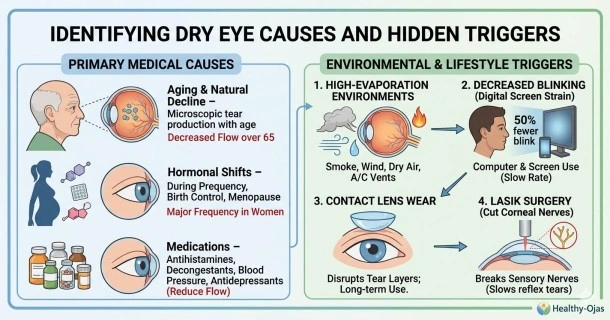
1. The Natural Aging Process
Tear production declines as a standard aspect of getting older. The vast majority of individuals over the age of 65 will notice a persistent decline in eye moisture and comfort.
2. Hormonal Shifts (Gender Differences)
Women are statistically much more likely to experience chronic dry eye syndrome than men. This high frequency is linked directly to major estrogen and progesterone fluctuations that occur during pregnancy, while taking oral birth control pills, or throughout menopause.
3. Prescription and Over-the-Counter Medications
Many common pharmaceutical drugs chemically reduce the amount of natural moisture your glands can produce. Key culprits include:
- Antihistamines and decongestants used for allergies.
- Blood pressure medications (especially beta-blockers and diuretics).
- Antidepressants and anti-anxiety treatments.
4. Chronic Medical Conditions
Your tear film health is connected to your body's overall systemic systems. You are more likely to develop chronic dry eye if you have underlying conditions such as:
- Autoimmune Diseases: Conditions like rheumatoid arthritis, Sjögren's syndrome, and lupus attack tear-producing tissue.
- Metabolic Issues: Diabetes can cause nerve changes that affect standard tear stimulation.
- Thyroid Disorders: Thyroid problems can disrupt the eye surface and cause eyelid positioning issues.
- Eyelid Inflammation: Conditions like blepharitis block oil glands, while outward-turning (ectropion) or inward-turning (entropion) eyelids alter how tears spread across the eye surface.
Environmental and Lifestyle Triggers
1. High-Evaporation Environments
Your surroundings can physically strip away moisture from the eye surface faster than your glands can keep up. Regular exposure to cigarette smoke, strong winds, low humidity, or dry indoor heating/air conditioning vents rapidly drives up tear evaporation rates.
2. Decreased Blink Rates (Digital Eyestrain)
When staring intently at computer screens, smartphones, or televisions for prolonged periods, human blink rates automatically drop by up to 50%. This lack of regular blinking prevents a fresh protective layer of tears from spreading over the cornea, causing fast-forming dry patches.
3. Contact Lens Wear and Eye Surgery
- Contact Lenses: Long-term use of contact lenses can restrict oxygen supply and disrupt the delicate surface tear layers, resulting in chronic irritation.
- LASIK and Refractive Surgery: Vision correction procedures like LASIK surgery temporarily cut corneal nerve loops that tell the brain to make tears. This often leads to a temporary decrease in tear production for several months following surgery.
Frequently Asked Questions (FAQs)
Why does LASIK surgery cause dry eyes?
During LASIK surgery, a micro-laser reshapes the cornea, which temporarily breaks the microscopic sensory nerves on the eye's surface. Under normal conditions, these nerves tell your brain when the eye is dry so it can produce more tears. Until these nerves fully heal—which can take several months—your eye fails to trigger adequate automatic tear production.
How does screen use directly contribute to dry eyes?
Staring at digital devices triggers a state known as Computer Vision Syndrome or Digital Eyestrain. Normally, you blink about 15–20 times per minute. When reading text or playing a game on a screen, you tend to look more intently, which slows your blink rate down significantly. This allows the air to dry out the exposed surface before a refreshing blink can replenish it.
What is the link between blepharitis and dry eye syndrome?
Blepharitis is a chronic inflammation of the eyelids, often concentrated around the eyelash follicles where the meibomian oil glands reside. When these glands get blocked or inflamed, they stop producing the outer oil layer of the tear film. Without this necessary oily barrier, the underlying water layer of your tears evaporates almost instantly, leaving your eyes irritated and dry.