Learn how eye specialists perform a dry eye diagnosis. Discover the essential tests used to evaluate your blink habits, tear quantity, and tear quality.
How Is Dry Eye Diagnosed? Comprehensive Diagnostic Tests
Dry eye syndrome is diagnosed through a comprehensive eye examination administered by an optometrist or ophthalmologist. Because symptoms often overlap with allergies, testing places a strict emphasis on evaluating both the absolute quantity and the chemical quality of the tears your glands produce.
To confirm a chronic diagnosis and outline an effective treatment protocol, an eye specialist will systematically perform the following four core diagnostic steps.
The 4 Core Steps to Diagnose Dry Eyes
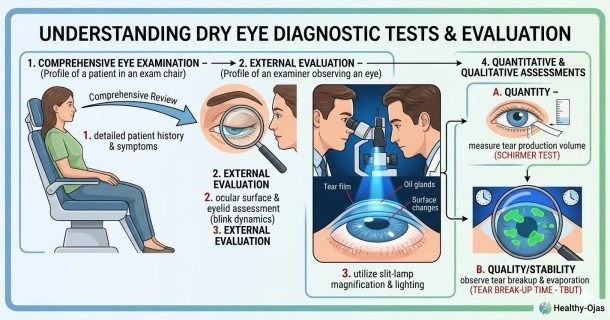
1. Detailed Patient History
The doctor will gather a thorough health overview to uncover hidden lifestyle or medical triggers. This includes evaluating:
- Specific dry eye symptoms you are experiencing and their daily frequency.
- The presence of systemic health conditions like diabetes, thyroid issues, or autoimmune disorders.
- All current prescription or over-the-counter medications taken.
- Environmental exposures, such as smoky rooms, windy climates, or excessive digital screen time.
2. External Eye Examination
The specialist will perform an external evaluation focused intently on your eyelid structures and personal blink dynamics. The doctor observes how completely your eyelids close during a natural blink, as incomplete blinking prevents tears from spreading evenly across the cornea.
3. Slit-Lamp Evaluation of Eyelids and Cornea
Using a specialized high-powered biomicroscope called a slit-lamp, which delivers a concentrated bright light and magnification lens, the doctor will visually inspect the delicate structural boundaries of the eye. This check allows them to spot lid tissue inflammation (blepharitis), clogged oil glands, or microscopic structural changes on the clear front surface of the cornea.
4. Advanced Tear Film Assessment (Quantity and Quality)
The diagnostic core of the exam lies in physically checking your tear film dynamics to uncover abnormalities. This step typically includes two classic medical assessments:
- Testing Tear Quantity (Volume): Doctors frequently use the Schirmer Test, where a thin strip of specialized paper is gently placed inside the lower eyelid to measure how much liquid your tear glands produce over five minutes.
- Testing Tear Quality (Stability): Doctors measure your Tear Break-Up Time (TBUT). A specialized, harmless diagnostic dye is instilled into the eyes. Under a blue slit-lamp light, this dye highlights the tear flow, showing exactly how many seconds it takes for dry patches to form on the surface after a blink. This test clearly exposes if your tears are evaporating too fast due to a lack of protective oil.
Using the combined data gathered from these specific tests, your optometrist can definitively confirm if you have dry eye syndrome and recommend targeted treatment options to protect your long-term vision.
Frequently Asked Questions (FAQs)
What is the Schirmer test for dry eyes, and does it hurt?
The Schirmer test is a standard diagnostic method used to measure the volume of your watery tears. The doctor places the tip of a small, sterile paper strip underneath your lower eyelid. You close your eyes for five minutes, and the doctor measures how far the moisture travels down the paper. While it can cause a mild tickling or scratchy sensation that makes your eyes water, it is not painful.
Why does the eye doctor put colored drops in my eye during a dry eye test?
Eye doctors use specialized, temporary diagnostic dyes (like fluorescein or lissamine green) to make your transparent tear film visible under a blue light. These drops do not change your vision. Instead, they allow the doctor to observe exactly how your tears flow, how quickly they evaporate, and if insufficient tear volume has caused any microscopic scratches or damage to the surface cells of your cornea.
Can a regular vision test detect chronic dry eye syndrome?
No. A standard routine eye exam or school vision screening focuses entirely on visual acuity (reading a wall letter chart) and checking for glasses prescriptions. It does not check your tear production volume, tear chemistry, or meibomian gland health. Diagnosing dry eye requires a dedicated dry eye evaluation with specialized light filters, magnification, and tear-tracking dyes.