
Explore the 4 primary treatment options for dry eye syndrome. Learn how artificial tears, punctual plugs, prescription drops, and lid therapy relieve chronic dryness.
Effective Dry Eye Treatment Options for Lasting Relief
Managing dry eye syndrome (keratoconjunctivitis sicca) focuses on restoring a stable, healthy tear film to protect the eye surface, minimize ongoing irritation, and prevent long-term vision damage.
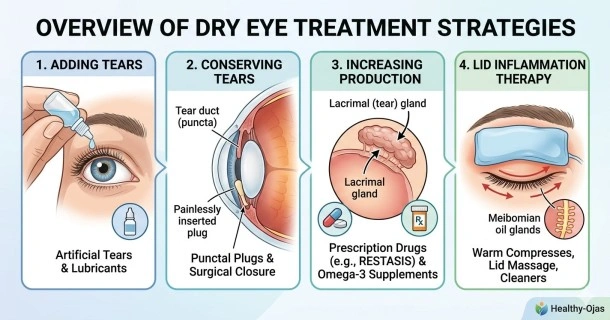
Depending on the underlying cause—whether it is low tear volume or rapid tear evaporation—eye specialists utilize four primary treatment strategies to add, conserve, or actively stimulate natural tear production.
1. Adding Tears (Artificial Tear Solutions)
For mild to moderate cases, supplementing your natural moisture with over-the-counter (OTC) lubricants is often the first step in care.
- Preservative-Free Advantages: If you need to apply drops frequently throughout the day, choosing preservative-free artificial tears is highly recommended. Preservatives used in multi-dose bottles can cause cellular irritation and worsen surface inflammation with heavy use.
- Advanced Limitations: While artificial tears offer quick, temporary relief, they only mask the issue. If your chronic symptoms persist, advanced clinical steps are required to address the root imbalance.
2. Conserving Tears (Punctal Occlusion)
When adding fluids isn't enough, doctors can keep your natural tears on the eye surface longer by closing the drainage path.
- Temporary Plugs: Small, biocompatible silicone or gel-like devices called punctal plugs are painlessly inserted into the tiny tear ducts in the corners of your eyelids. These restrict outflow so your tears remain on the cornea longer. They can be removed by a clinician if your drainage needs change.
- Surgical Closure: For severe, permanent cases, a surgical procedure called punctal cautery can permanently seal the drainage ducts using heat to secure long-term tear conservation.
3. Increasing Natural Tear Production
If your underlying tear volume is low due to chronic inflammation, your doctor can prescribe specialized medications to help your tear glands work more efficiently.
- Prescription Eye Drops: Medications like Restasis (cyclosporine ophthalmic emulsion, 0.05%) are specifically approved to downregulate chronic surface inflammation linked to dry eye syndrome. Reducing this swelling allows the lacrimal glands to safely recover their natural fluid production rates.
- Nutritional Supplements: Doctors frequently recommend high-quality Omega-3 fatty acid supplements alongside medical drops to support healthy oil gland secretions from the inside out.
4. Treating Eyelid Inflammation (Blepharitis & Meibomian Gland Health)
If your dry eye is evaporative—meaning your tears lack an outer oil shield—treatment must target the inflamed eyelids and oil glands contributing to the breakdown.
- Lid Hygiene Protocols: Utilizing daily warm compresses and gentle eyelid massages liquefies stagnant, hardened oils inside the meibomian glands. Following up with specialized hypochlorous acid eyelid cleaners effectively reduces bacterial buildup along the lash line.
- Anti-Inflammatory Care: Short-term prescription corticosteroid drops or medicated ointments may be utilized clinically to rapidly suppress severe eyelid or surface flare-ups.
Specialized Blink Practices
While popular internet trends suggest exercises like candle gazing can cure dry eyes, there is no clinical evidence to support them. Instead, optometric research supports target blinking exercises to combat screen strain.
When looking at digital screens, we tend to perform incomplete blinks, where the upper and lower eyelids fail to touch. Practice closing your eyes completely, squeezing them tightly for two seconds, and opening them widely. This physical squeezing action helps manually pump vital oils out of your meibomian glands, reinforcing your natural tear stability.
Frequently Asked Questions (FAQs)
Why should I choose preservative-free eye drops over standard drops?
Standard artificial tears in multi-dose bottles contain chemical preservatives (like benzalkonium chloride) to prevent bacterial growth once opened. However, if you apply these drops more than four to six times a day, the continuous exposure to these chemicals can break down your natural tear film cells and cause increased surface burning. Preservative-free drops come in single-use vials and are much gentler on sensitive corneas.
What are punctal plugs, and how do they conserve tears?
Punctal plugs are microscopic, biocompatible devices roughly the size of a grain of rice. Your eye doctor inserts them directly into the puncta—the tiny drainage openings located in the inner corners of your eyelids. By blocking these escape channels, the plugs act like a tiny dam, forcing your natural tears and artificial lubricants to pool and stay on your eye surface much longer.
How long does it take for prescription drops like Restasis to work?
Unlike quick-acting artificial tears, prescription anti-inflammatory drops like Restasis do not provide instant lubrication. Restasis works over time by systematically reducing chronic inflammation inside your tear glands so they can heal and function normally. Most patients begin to notice a real, measurable increase in their natural tear production after three to six months of consistent daily use.