
Learn the differences between bacterial, viral, and fungal eye infections. Discover symptoms, risk factors, and when to seek urgent medical treatment.
Complete Guide to Eye Infections: Types, Symptoms, and Treatments
An eye infection occurs when harmful microorganisms—such as bacteria, viruses, fungi, or parasites—invade any part of your eyeball or the surrounding tissue. Because your eyes are continuously exposed to the environment, understanding infection types and symptoms is vital to protecting your vision.
The Eye's Natural Defense System
Your body has natural mechanisms built to shield the eye's delicate front surface from dust and pathogens:
- Basal and Reflex Tears: Constant blinking flushes away debris while tear fluid contains natural enzymes that combat invading microbes.
- Eyelids and Eyelashes: The physical sweeping motion of your eyelids wipes the surface clean, acting like windshield wipers to block incoming germs.
When these protective barriers are compromised—due to eye trauma, surgical incisions, or poor hygiene—pathogens can quickly multiply.
Common Types of Eye Infections
1. Conjunctivitis (Pink Eye)
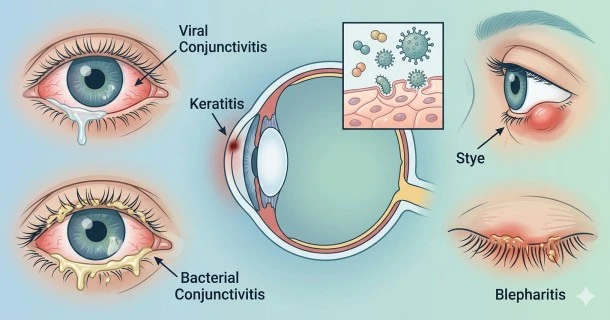
Pink eye is an inflammation or infection of the conjunctiva, the transparent membrane covering the white part of your eye. It is highly contagious and spreads easily via surface contact or respiratory droplets.
- Viral Conjunctivitis: Typically produces a watery, thin discharge and is caused by viruses like adenoviruses.
- Bacterial Conjunctivitis: Produces a thick, yellow-green pus-like discharge that causes your eyelids to stick together overnight.
2. Keratitis (Corneal Infection)
Keratitis is an inflammation or infection of the cornea, the clear dome on the front of the eye. This condition is frequently linked to extended contact lens use, wearing lenses while swimming, or minor eye injuries. Ignoring keratitis can lead to a corneal ulcer, which is a vision-threatening medical emergency.
3. Blepharitis
Blepharitis involves chronic inflammation of the eyelids, typically right where the eyelashes grow. It occurs when the tiny oil glands at the base of the lashes become clogged, leading to flaky, crusty, or greasy buildup around your eyelids.
4. Stye (Hordeolum)
A stye presents as a painful, red, tender bump near the edge of your eyelid. It mimics a pimple and develops when an oil gland or eyelash follicle becomes infected by localized staphylococcal bacteria.
5. Cellulitis (Periorbital or Orbital)
- Periorbital Cellulitis: A bacterial infection affecting the eyelid and surrounding skin. It causes marked swelling and redness but does not affect the eyeball itself.
- Orbital Cellulitis: A deeper, severe infection penetrating the tissue around the eyeball. This is an acute emergency requiring immediate hospitalization and intravenous antibiotics.
6. Dacryocystitis
This condition is an infection of the tear drainage system, usually triggered by a blocked tear duct. It causes a painful, fluid-filled swelling near the inner corner of the eye closest to the nose.
Warning Symptoms of an Eye Infection
If you experience any combination of the following indicators, consult an eye specialist promptly:
- Persistent redness or pink discoloration of the whites of the eyes
- Deep, throbbing eye pain or grittiness
- Continuous watery discharge or thick, crusty pus
- Swollen, warm, or tender eyelids
- Extreme sensitivity to light (photophobia)
- Sudden blurry or hazy vision
Medical Treatments & Management
Treatment paths strictly depend on what type of pathogen is causing your issue:
- Antibiotic Therapies: Doctors prescribe targeted antibiotic eye drops (such as chloramphenicol) or topical ointments to kill bacteria rapidly.
- Antiviral Medications: While mild viral infections clear up on their own, serious viral conditions (like Herpes Simplex Keratitis) require specialized antiviral drops or oral pills.
- Proper Hygiene Measures: Discontinue wearing contact lenses immediately until the infection heals completely. Clean crusty eyes gently using a fresh cotton pad soaked in cooled, boiled water for each eye.
Frequently Asked Questions (FAQ)
How can I tell if my eye infection is bacterial or viral?
The type of discharge is often the main clue. Bacterial infections usually produce a thick, yellowish-green pus that glues your eyelids shut overnight. Viral infections tend to produce thin, clear, watery fluid and frequently accompany common cold symptoms.
Can I treat an eye infection at home without seeing a doctor?
While mild irritation or viral conjunctivitis can be managed with cold compresses and artificial tears, you should never self-diagnose an eye infection. Deep infections like keratitis or orbital cellulitis require prescription medication to prevent permanent vision loss.
How do contact lenses cause eye infections?
Wearing lenses for too long, sleeping in them, or using tap water to clean them creates an ideal environment for bacteria and amoebas to grow. This can damage your cornea and lead to severe conditions like Acanthamoeba keratitis.