
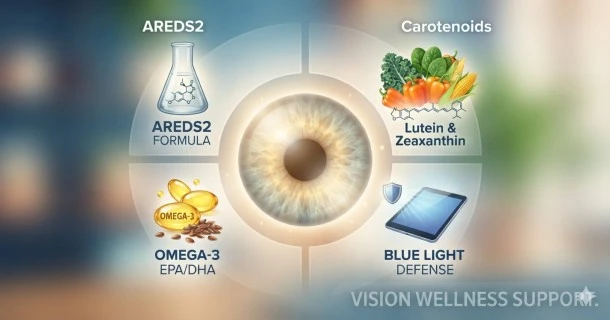
Explore the science behind eye supplements. Learn how the AREDS2 formulation, lutein, and zeaxanthin support macular health, dry eyes, and combat eye strain.
The Science of Eye Supplements: Evidence-Based Vitamins for Vision Health
Nutritional eye supplements play a critical role in preserving vision, supporting cellular health, and slowing the progression of specific age-related eye conditions. While a balanced diet rich in leafy greens and colorful vegetables is foundational, specific therapeutic doses of vitamins and antioxidants cannot always be achieved through modern food sources alone.
When combined with healthy lifestyle habits, evidence-based vision supplements can help defend against chronic ocular diseases.
What Are Vision Supplements?
Eye supplements are targeted formulations designed to bridge nutritional gaps and deliver precise, clinically studied levels of vitamins, minerals, and carotenoids directly to ocular tissues.
However, dietary supplements are not a replacement for a balanced diet, nor can they neutralize the impact of systemic metabolic conditions or poor dietary choices. Instead, they work synergistically with proper nutrition to optimize the eye's natural defense mechanisms.
Clinically Proven Eye Supplements & Formulations
The human eye relies on specific antioxidants to neutralize oxidative stress and filter high-energy blue light. Clinical research has identified several key nutrients that directly support vision longevity:
1. The AREDS2 Formulation for Macular Health
The landmark Age-Related Eye Disease Study 2 (AREDS2), conducted by the National Eye Institute (NEI), proved that a highly specific combination of micronutrients reduces the risk of intermediate age-related macular degeneration (AMD) progressing to the advanced stage by approximately 25%.
The exact daily AREDS2 formula ingredients consist of:
- Vitamin C: 500 mg
- Vitamin E: 400 IU
- Zinc (Zinc Oxide): 80 mg
- Copper (Cupric Oxide): 2 mg (added to prevent copper-deficiency anemia caused by high zinc intake)
- Lutein: 10 mg
- Zeaxanthin: 2 mg
Note: The original AREDS formula contained beta-carotene, which was completely replaced by lutein and zeaxanthin in AREDS2 after clinical data proved beta-carotene significantly increased the risk of lung cancer in smokers and former smokers.
2. Lutein and Zeaxanthin for Blue Light & Eye Strain
Lutein and zeaxanthin are xanthophyll carotenoids that naturally accumulate in the macula to form the macular pigment. They act as internal "blue light blockers," absorbing harmful short-wavelength light from digital screens and sunlight.
- Screen Time and Eye Fatigue: Recent clinical trials show that targeted lutein and zeaxanthin supplementation helps improve visual performance, enhances contrast sensitivity, reduces glare, and accelerates photo-stress recovery time for regular digital screen users.
3. Essential Fatty Acids (Omega-3s) for Dry Eye Support
While omega-3 fatty acids did not show a statistical benefit for advanced AMD progression in the AREDS2 trial, they remain a foundational element for managing dry eye disease. Docosahexaenoic acid (DHA) and eicosapentaenoic acid (EPA) support the function of the meibomian glands, improving the lipid layer of the tear film and minimizing tear evaporation.
4. Additional Ocular Micro-Nutrients
- Vitamin A & Riboflavin (Vitamin B2): Crucial for maintaining a healthy cornea and supporting rhodopsin, the protein responsible for night vision.
- Selenium & N-Acetyl Cysteine (NAC): Support endogenous glutathione production, acting as powerful local antioxidants within the lens and retina.
Supplement Matching by Eye Condition
To optimize your vision health strategy, it is essential to align specific nutrients with your diagnosed conditions or wellness goals:
| Eye Condition / Symptom | Primary Recommended Nutrients | Clinical Purpose |
| Age-Related Macular Degeneration (AMD) | Complete AREDS2 Formulation (Lutein, Zeaxanthin, Zinc, Copper, Vitamins C & E) | Slows the progression of intermediate or unilateral dry AMD to advanced stages. |
| Dry Eye Disease (DED) | Omega-3 Fatty Acids (EPA/DHA), Lutein | Enhances tear film stability, improves Schirmer tear test metrics, and dampens ocular surface inflammation. |
| Digital Eye Strain & Fatigue | Lutein, Zeaxanthin, Astaxanthin | Filters high-energy blue light, improves glare recovery, and optimizes contrast sensitivity. |
| Glaucoma & Optic Nerve Protection | Antioxidants, Alpha-Lipoic Acid, CoQ10, Ginkgo biloba | Mitigates local oxidative stress and supports cellular health in the retina and optic nerve (Does not reduce intraocular pressure). |
| Early Lens Changes (Cataracts) | Vitamins C and E, Carotenoids | Broad antioxidant support to help protect structural lens proteins from UV-induced free radical damage. |
Clinical Safety, Considerations, and Interventions
Vision supplements contain highly concentrated doses of vitamins and minerals that can interact with systemic health profiles:
- Chronic Zinc Exposure: The high level of zinc (80 mg) in the AREDS2 formulation requires careful medical supervision, as excessive zinc intake can impair copper absorption and disrupt immune function. Always ensure copper is included in your formula to prevent secondary anemia.
- Population Restrictions: High-dose isolated carotenoid or vitamin regimens may not be safe for pregnant or breastfeeding individuals, or pediatric populations without specific clinical indications.
- Label Verification: Commercial eye vitamins vary drastically in their ingredient ratios. Make sure to double-check the physical label of any retail product to ensure it aligns precisely with clinical dosages, such as the exact AREDS2 metrics, rather than generic multivitamin blends.
Frequently Asked Questions (FAQs)
Can eye supplements improve my eyesight or cure blurry vision?
No, eye supplements cannot reverse existing refractive errors (like nearsightedness or farsightedness) or cure structural conditions. Their primary clinical purpose is protective: they help slow the progression of specific degenerative diseases like AMD, enhance contrast sensitivity under glare conditions, and support tear quality to resolve dryness-induced blurriness.
Why was beta-carotene removed from the original AREDS formula?
Large-scale clinical trials demonstrated that high doses of beta-carotene significantly increased the risk of developing lung cancer in individuals who smoke cigarettes or have a history of heavy smoking. The AREDS2 study successfully substituted beta-carotene with lutein and zeaxanthin, providing equal or superior macular protection while eliminating the lung cancer risk.
Should I take eye vitamins if I have normal vision and no eye disease?
If you have a healthy, varied diet and no signs of eye disease, high-dose specialized formulas like AREDS2 are generally not recommended. However, if you experience significant digital screen eye strain or mild dry eye symptoms, a general eye health supplement containing modest amounts of lutein, zeaxanthin, or omega-3 fatty acids may support visual comfort and tear production.