
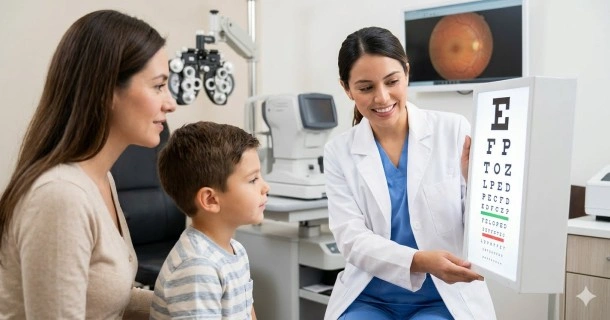
Discover why regular eye exams are vital for your health. Learn how a routine eye checkup spots asymptomatic diseases, aids children's learning, and preserves vision.
The Importance of Regular Eye Exams: Why You Need Routine Vision Evaluations
Many people assume a routine eye checkup is only necessary if their vision becomes blurry or their glasses prescription expires. However, according to clinical insights from the American Academy of Ophthalmology (AAO) and the American Optometric Association (AOA), a comprehensive eye test is a fundamental medical valuation.
Your eyes do not usually hurt when chronic conditions begin to brew. Regular clinical exams serve as your first line of defense in protecting permanent visual function and tracking underlying changes in your systemic biological health.
5 Crucial Reasons to Schedule an Eye Examination
1. Early Detection of Silent, Blinding Ocular Diseases
Many devastating vision conditions are entirely asymptomatic in their initial stages. For example, glaucoma (often called the "silent thief of sight") inflicts irreversible damage on the optic nerve without pain or early warning signals. A timely tonometry test and retinal evaluation can catch these changes before permanent visual field dropouts manifest.
2. Identification of Systemic and Chronic Health Conditions
The microvasculature inside your eye offers a clear, direct view of your live blood vessels and neural tissues. A comprehensive dilated fundus examination allows optometrists and ophthalmologists to identify early vascular and structural markers for over 270 systemic diseases, including:
- Diabetes Mellitus: Indicated by early microaneurysms or vitreous floaters.
- Hypertension (High Blood Pressure): Revealed through arterial narrowing or cross-linking.
- Hypercholesterolemia: Visible as plaque build-ups or an arcus ring in the cornea.
- Neurological Conditions: Such as signs of multiple sclerosis or increased intracranial pressure.
3. Vital Academic Foundation for Pediatric Learning
A child's eyes are their primary tools for gathering information, making proper tracking and visual processing critical for development. The American Optometric Association (AOA) emphasizes that basic school vision screenings are not diagnostic; they routinely miss serious functional issues like amblyopia (lazy eye), strabismus (misalignment), or severe astigmatism. Undetected vision deficiencies are frequently misdiagnosed as behavioral or academic learning disabilities.
4. Direct Prevention of Age-Related Vision Loss
Biological aging naturally elevates the risk profile for progressive visual impairment. Conditions such as cataracts, age-related macular degeneration (AMD), and presbyopia scale heavily after age 40. Routine tracking intervals ensure your prescription lenses are optimized to stabilize safety, mobility, and independent quality of life as you age.
5. Preserving Visual Safety During Daily Activities
Diminished visual acuity directly compromises public safety. Poor contrast sensitivity, compromised peripheral vision, or an uncorrected refractive error can dangerously slow down reaction times while driving, operating heavy machinery, or participating in recreational sports.
Recommended Ocular Testing Frequency Guidelines
Unless explicitly directed otherwise by an eye specialist due to pre-existing conditions like diabetes, the clinical consensus for healthy populations follows clear intervals:
| Patient Demographic Population Group | Recommended Clinical Testing Frequency | Primary Diagnostic Objectives |
| Infants (6 to 12 months) | At least once during infancy | Screening alignment, muscle movements, and congenital issues. |
| Children & Teens (Ages 1 to 17) | Minimum of every 2 years | Tracking refractive progression and supporting academic metrics. |
| Asymptomatic Adults (Ages 18 to 39) | Every 2 years (or annually if using contacts) | Correcting refractive shift and screening baseline eye health. |
| Adults Navigating Changes (Ages 40 to 59) | Every 2 to 4 years | Intercepting early presbyopia, cataracts, and glaucoma risks. |
| Seniors & High-Risk Individuals (Ages 60+) | Annually (Every 1 to 2 years) | Monitoring for age-related macular degeneration and chronic issues. |
Frequently Asked Questions (FAQ)
Why should I get an eye exam if my vision feels perfectly clear?
Many vision-threatening conditions, such as early-stage glaucoma or retinal tears, develop quietly without affecting your central visual clarity or causing physical pain. Waiting until your vision fails can mean dealing with irreversible damage.
Can an optometrist tell if I have high blood pressure or diabetes?
Yes. Because the retina is the only place in your body where blood vessels can be seen directly without surgery, an eye doctor can spot tiny bleeding points, vessel narrowing, or fluid leaks that indicate systemic hypertension or diabetes.
Are a school vision screening and a comprehensive clinical eye test the same?
No. School or workplace screenings generally only measure basic visual distance. They do not evaluate internal eye structures, fluid pressure, binocular tracking coordination, or look for underlying eye diseases.
How does poor eyesight affect a child’s performance in school?
Up to 80% of what a child learns in the classroom is presented visually. If a child suffers from an uncorrected tracking or refractive problem, they may experience frequent headaches, fatigue, and difficulty focusing, which can quickly lead to poor grades and low classroom engagement.