Learn how to reduce digital eye strain naturally. Discover science-backed family eye care tips, vision habits, and the truth about eye exercises.
Natural Eye Care and Home Remedies: Evidence-Based Habits for Family Vision Health
Maintaining sharp vision and supporting long-term ocular health requires a combination of proactive family eye care, proper environmental adjustments, and optimal nutrition. While popular folklore often promotes unverified "quick fixes" for vision correction, true holistic eye care relies on shielding the eyes from daily oxidative stress, managing strain, and supporting systemic health.
Implementing practical, science-backed habits at home can significantly alleviate discomfort and protect your family's visual longevity.
The Core Foundations of Daily Eye Health
The eyes do not operate in isolation; they are deeply impacted by systemic vascular health, metabolic function, and environmental fatigue. Modern lifestyles heavily prioritize near-focus activities, making daily environmental management our first line of defense against vision fatigue.
1. Managing the Mechanics of Digital Eye Strain
The human visual system evolved primarily for distance viewing, a state where the focusing (ciliary) muscles inside the eye are completely relaxed. Prolonged close-up tasks—such as reading, working on computers, or smartphone usage—force these muscles to contract continuously, leading to accommodative fatigue and dry eyes.
To reduce eye strain naturally, adopt these strict environmental habits:
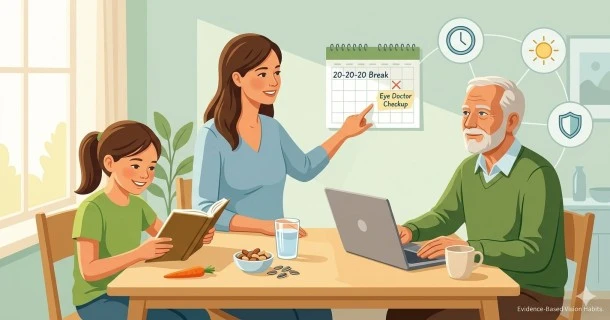
- The 20-20-20 Rule: For every 20 minutes of continuous close work, look at an object at least 20 feet away for a minimum of 20 seconds. This allows the intraocular ciliary muscles to relax completely and lowers accommodative tension.
- Conscious Blinking: When staring at digital screens, human blink rates drop by up to 50%, rapidly destabilizing the tear film. Consciously increase your blinking rate to coat the cornea evenly in natural lipids and moisture.
- Task Lighting and Rest: Avoid reading or working on screens in low-light environments, which forces excessive pupillary dilation and increases perceived strain. Never push through heavy fatigue; rest is vital for neural visual processing.
2. UV Protection and Healthy Sun Exposure
While outdoor time is clinically proven to help prevent the onset and progression of myopia (nearsightedness) in children, direct exposure to intense solar rays requires protection.
- Safe Sunlight Habits: Enjoying ambient morning or late afternoon sunlight outdoors supports regular circadian rhythms and overall wellness.
- Protecting from UV Harm: Never look directly at the sun. When outdoors during peak daylight hours, always wear sunglasses with 100% UV protection to reduce the long-term risk of nuclear cataracts and macular damage.
Nutritional Therapeutics: Foods That Support Eyesight
A well-balanced diet provides the biochemical blocks necessary to protect delicate retinal structures and maintain optimal ocular microcirculation. Systemic conditions caused by a highly processed diet, such as Type 2 diabetes or hypertension, can directly trigger severe eye diseases like diabetic retinopathy or retinal vascular occlusions.
Incorporate these best foods for eyesight into your family's daily meals:
| Food Source | Active Eye Nutrients | Clinical Benefit to Vision |
| Sunflower Seeds & Nuts | Vitamin E & Zinc | High antioxidant capacity that shields fatty acids in the retina from oxidative breakdown. |
| Dark Leafy Greens & Parsley | Lutein & Zeaxanthin | Builds up the macular pigment density, acting as an internal filter against harmful blue light. |
| Carrots & Sweet Potatoes | Beta-Carotene (Pro-Vitamin A) | Essential compound for rhodopsin synthesis, the pigment needed for low-light and night vision. |
| Cold-Water Fish (Salmon, Mackerel) | Omega-3 Fatty Acids (EPA/DHA) | Supports the meibomian glands to optimize tear quality and naturally soothe dry eyes. |
Dietary Intakes to Moderate
Diets high in refined sugars and excessive sodium negatively impact microvascular networks over time. Chronic high blood sugar damages the fragile capillaries supplying the retina, while systemic fluid retention can alter vascular pressure profiles. Prioritize whole, unrefined foods to support clean systemic blood flow.
Clarifying Common Eye Care Misconceptions
Separating clinical fact from dangerous internet myths is crucial to preventing permanent, accidental self-inflicted eye damage.
The Severe Danger of Household Eye Washes (e.g., Lemon Juice)
Under no circumstances should you ever put lemon juice, diluted lemon washes, or homemade herbal concoctions into your eyes. Lemon juice is highly acidic (citric acid) and causes immediate chemical irritation, conjunctival inflammation, and potentially permanent corneal epithelial burns. Ocular safety mandates that only sterile, pH-balanced ophthalmic solutions or artificial tears explicitly labeled for eye use be introduced to the ocular surface.
The Truth About Eye Exercises and Massages
There is no clinical medical evidence showing that eye exercises, acupressure, or external eye massages can reshape an elongated or flattened eyeball to cure structural refractive errors like nearsightedness (myopia), farsightedness (hyperopia), or age-related reading vision loss (presbyopia). Structural focus issues require corrective lenses, orthokeratology, or refractive surgery.
However, targeted orthoptic exercises can successfully treat specific binocular coordination issues, like convergence insufficiency, when directed by an eye care practitioner.
Frequently Asked Questions (FAQs)
Can home remedies or exercises eliminate my need for prescription glasses?
No. Most common vision deficiencies, such as myopia or astigmatism, are caused by physical structural properties—such as the axial length of your eyeball or the specific curvature of your cornea. Eye exercises only flex the external tracking muscles; they cannot change the internal geometric shape of your eye or eliminate the medical need for corrective lenses.
What should I do immediately if an irritating substance like lemon juice gets in my eye?
If an acidic or chemical substance accidentally contacts your eye, speed is critical. Immediately flush the open eye with a gentle, steady stream of clean, lukewarm tap water or sterile saline for at least 15 to 20 minutes continuously. Do not rub the eye. After thorough flushing, seek professional evaluation from an eye care doctor or urgent care center to assess the cornea for micro-injury.
How can I tell the difference between normal screen fatigue and a serious eye issue?
Normal digital eye strain usually resolves after taking a break from screens, resting the eyes, and ensuring proper ambient lighting. However, if you experience warning signs like sudden or progressive vision loss, persistent flashes of light, floating dark spots, severe local eye pain, or chronic redness, these are clinical indicators of potentially serious underlying conditions that require an immediate comprehensive eye examination.