
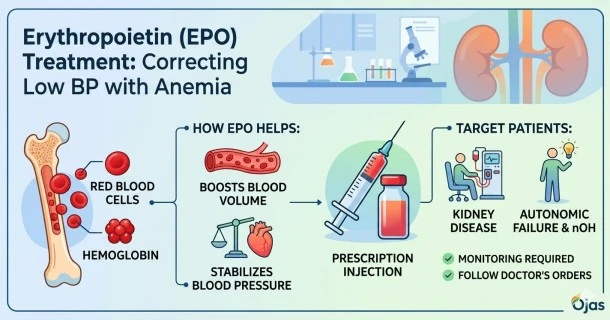
Learn how Erythropoietin (EPO) injections treat severe low blood pressure and orthostatic hypotension linked to chronic kidney disease, anemia, and autonomic failure.
Erythropoietin (EPO) for Anemia-Induced Low Blood Pressure
Prescription treatments for low blood pressure are specialized interventions, introduced only when frontline lifestyle adjustments—such as utilizing an interactive fluid tracker—or primary vasoconstrictors like Midodrine do not successfully stabilize a patient.
For a very specific subset of patients whose hypotension is compounded by severe, chronic anemia, physicians turn to Erythropoietin (EPO) or Erythropoiesis-Stimulating Agents (ESAs). Available under brand names like Epogen, Procrit, Eprex, and Aranesp (darbepoetin alfa), this hormone therapy provides targeted support for circulatory failure.
How Does Erythropoietin Work to Raise Blood Pressure?
Erythropoietin is a glycoprotein hormone naturally produced by the kidneys that signals your bone marrow to generate fresh red blood cells. When used as a prescription injection to correct chronic low blood pressure, it exerts its therapeutic effect through two primary physiological pathways:
- Viscosity and Intravascular Volume Expansion: By stimulating the production of red blood cells, EPO increases your hematocrit (the proportion of blood made up of red cells). This thickens the blood slightly (increasing blood viscosity) and directly expands the total circulating blood volume, raising baseline blood pressure.
- Direct and Indirect Vasoconstriction: EPO has a direct constricting effect on the smooth muscles lining your blood vessels. Additionally, it increases the tissue responsiveness of your blood vessels to your body's natural narrowing chemicals, such as norepinephrine.
- Correction of Tissue Hypoxia: Boosting your red blood cell count increases the oxygen-carrying capacity of your blood. This provides a steady supply of oxygen to your brain and vital organs, directly relieving chronic fatigue, lightheadedness, and orthostatic dizziness.
Clinical Indications: Who Qualifies for EPO Therapy?
Erythropoietin is never used as a generic first-line therapy for standard low blood pressure. It is strictly indicated for severe hypotension accompanied by chronic anemia stemming from:
- Chronic Kidney Disease (CKD): Damaged kidneys fail to produce natural erythropoietin, leading to severe anemia and secondary hypotension.
- Autonomic Failure and nOH: Patients with neurogenic orthostatic hypotension (nOH) often suffer from a mild, unexplained chronic anemia that further degrades their ability to maintain blood pressure when standing.
- Chemotherapy-Induced Anemia: Used selectively when low blood pressure undermines a patient's endurance during active oncology treatments.
Administration, Dosing, and Safety Protocols
How EPO is Administered
Erythropoietin is a biological medication that cannot be taken by mouth because stomach acids break it down. Instead, it is administered as a subcutaneous injection (under the skin) or an intravenous injection (directly into a vein, often during hemodialysis).
Strict Black-Box Safety Ceilings
Unlike standard blood pressure pills, EPO dosing requires regular blood tests to track your hemoglobin (Hb) levels.
- The Critical Safe Threshold: Clinicians aim to raise hemoglobin levels just enough to eliminate severe orthostatic dizziness, typically targeting a range between 10 g/dL and 11 g/dL.
- The Danger Zone: Raising hemoglobin levels above 11.5 to 12 g/dL is strictly avoided. Forcing the red blood cell count too high can make the blood excessively thick, significantly increasing the risk of life-threatening events such as blood clots, deep vein thrombosis (DVT), stroke, heart attack, or sudden cardiovascular death.
Potential Side Effects and Contraindications
Because erythropoietin significantly alters your cardiovascular mechanics and blood composition, it carries notable clinical risks:
- Uncontrolled Hypertension: EPO can occasionally raise blood pressure too effectively, causing a sudden transition into severe high blood pressure or a hypertensive crisis.
- Flu-Like Symptoms: Minor side effects can include a temporary cough, body aches, chills, and mild irritation at the injection site.
- Absolute Contraindications: EPO must never be administered to individuals with uncontrolled high blood pressure, or those with known hypersensitivities to mammalian cell-derived products or human albumin.
Frequently Asked Questions (FAQs)
Can erythropoietin be used as a quick remedy for sudden low blood pressure?
No. Erythropoietin cannot be used as an immediate fix for sudden drops in blood pressure. It takes several weeks of consistent injections for your bone marrow to produce enough new red blood cells to alter your blood volume. For sudden orthostatic dizziness or acute drops, fast-acting interventions like consuming a targeted caffeine dose or drinking a cold water bolus are clinically preferred.
Why do I need frequent blood draws while undergoing EPO therapy?
Regular blood draws are vital to monitor your exact hemoglobin and hematocrit percentages. Because pushing your hemoglobin levels above 12 g/dL significantly increases your risk of experiencing a stroke, blood clot, or heart failure, your physician must track these numbers closely to safely adjust your prescription dosage.
Is erythropoietin the right treatment if my low blood pressure is caused by a bleeding ulcer?
No. Erythropoietin is strictly contraindicated and unsafe for treating low blood pressure caused by active, acute blood loss, such as a bleeding stomach ulcer. Hypotension from active bleeding requires immediate emergency medical intervention, direct fluid resuscitation, or a packed red blood cell transfusion to stabilize your circulatory system safely.