
Can pressing specific points raise blood pressure? Discover traditional acupressure points for hypotension support, anatomical mapping, and vital clinical safety rules.
Acupressure for Low Blood Pressure: 7 Traditional Points and Safety Practices
Acupressure for low blood pressure (hypotension) is a complementary therapy rooted in Traditional Chinese Medicine (TCM). It involves applying pressure to specific bodily areas to support circulation, stimulate the nervous system, and ease symptoms like fatigue and dizziness.
Medical Context: While traditional philosophy links illness to blocked Qi (vital energy) along meridians, modern biomedical science views acupressure as a way to modulate the autonomic nervous system, support microcirculation, and promote relaxation rather than curing systemic disease. Acupressure should complement, not replace, medical treatment and hydration.
7 Traditional Acupressure Points for Hypotension Support
Self-care should rely strictly on firm, gentle finger pressure for 1–2 minutes; invasive needling requires a licensed professional.
Head and Upper Extremities
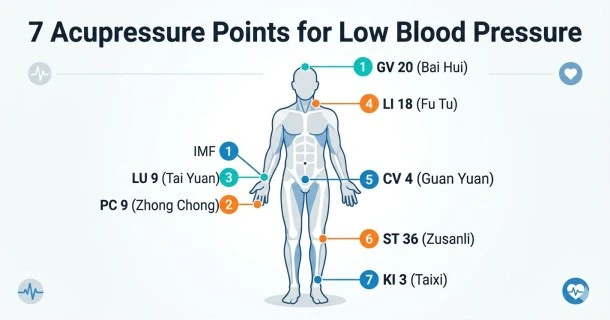
- GV 20 (Bai Hui): Located at the vertex of the head (midline meeting point of an imaginary line from the ear tips). Used traditionally to ease lightheadedness and vertigo.
- PC 9 (Zhong Chong): Located at the center of the middle finger tip, traditionally used for acute stimulation and alertness.
- LU 9 (Tai Yuan): Located on the anterior wrist crease on the radial artery's radial side, supporting upper-body circulation.
Neck and Abdomen
- LI 18 (Fu Tu): Located on the lateral neck level with the Adam's apple. Safety Warning: Avoid firm pressure due to proximity to the carotid artery and vagus nerve.
- CV 4 (Guan Yuan): Located about three cun below the belly button on the lower abdomen midline, used to support overall vitality.
Lower Extremities
- ST 36 (Zusanli): Four finger-widths below the kneecap and lateral to the shinbone, used for fatigue and resilience.
- KI 3 (Taixi): Located midway between the inner ankle bone and Achilles tendon, used to relieve exhaustion.
Safety Guidelines
- No Self-Needling: Deeper needle insertions are strictly for trained acupuncturists to avoid infection or tissue damage.
- Avoid Vulnerable Zones: Heavy pressure on the neck (LI 18) can trigger the vagus nerve, dropping blood pressure further and causing fainting.
- Rest During Dizziness: Stop immediately and sit or lie down if lightheadedness occurs during point location.
Frequently Asked Questions (FAQ)
Q: Can acupressure instantly raise a dangerously low blood pressure reading?
A: No. It is a complementary practice for mild symptom relief and cannot correct acute or severe drops in blood pressure, which require emergency care.
Q: Is it safe to combine acupressure with other natural remedies for hypotension?
A: Mild finger pressure generally pairs well with lifestyle adjustments like hydration, but herbal remedies or major dietary changes should be cleared by a physician.
Q: How long does it take to see results from using acupressure for low blood pressure?
A: Results vary; while relaxation or temporary dizziness relief can happen immediately, managing chronic hypotension requires resolving the root medical cause.