Discover how complementary and alternative medicine (CAM) like herbs, yoga, and acupressure can support low blood pressure management alongside standard medical care.
Natural Remedies for Low Blood Pressure: Safe Complementary Therapies
Low blood pressure (hypotension) is generally defined as a reading below 90/60 mm Hg. While asymptomatic low blood pressure is often a sign of good cardiovascular health, drops in blood pressure that cause dizziness, fainting, or fatigue require careful management.
Complementary and Alternative Medicine (CAM) offers several supportive strategies to help optimize circulation, balance the nervous system, and improve overall vitality. However, alternative therapies should be integrated thoughtfully alongside conventional medical care to ensure safety and effectiveness.
The 3 Approaches to Holistic Management
When addressing low blood pressure naturally, it helps to understand how different health practices can be combined:
- Alternative Medicine: Using non-mainstream therapies instead of conventional medicine. Caution: Relying solely on alternative therapies for severe or symptomatic hypotension can be dangerous.
- Complementary Medicine: Using non-mainstream approaches together with conventional medicine. For example, practicing yoga while following a doctor-prescribed treatment plan.
- Integrative Medicine: A highly coordinated approach that blends conventional medical treatments and complementary therapies in a safe, evidence-based manner to treat the whole person.
For the safest and most efficient outcomes, an integrative approach combined with foundational lifestyle adjustments is highly recommended.
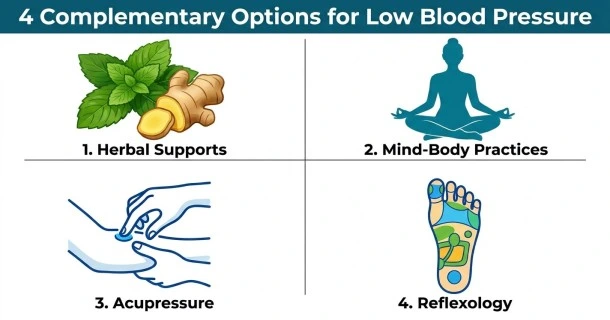
4 Complementary Options for Low Blood Pressure
If you want to support your cardiovascular system naturally, these four categories of complementary therapies may help improve symptoms when paired with a healthy lifestyle:
1. Herbal Supports
Certain herbs are traditionally used to support circulation and vitality. However, because herbs contain active biochemical compounds, they can interact with medications or impact underlying organ function.
- Common Herbs: Ginger, cinnamon, turmeric, and hawthorn berry are frequently utilized for their circulatory benefits.
- Safety Check: Always consult a healthcare professional before starting an herbal regimen. Long-term, unmonitored use of herbs can stress the liver or kidneys.
2. Mind-Body Practices (Yoga & Pranayama)
Yoga and controlled breathing exercises (Pranayama) help regulate the autonomic nervous system, which manages the body's stress response and blood pressure stabilization.
- Gentle Poses: Poses that avoid sudden head movements or intense inversions—such as Viparita Karani (Legs-up-the-Wall pose) or Savasana (Corpse pose)—can promote relaxation and steady circulation.
- Breathing Techniques: Practices like Anulom Vilom (Alternate Nostril Breathing) support systemic balance.
- Safety Check: Move slowly when transitioning between poses. Rapidly standing up from a seated or lying position can trigger orthostatic hypotension (a sudden drop in blood pressure), causing dizziness.
3. Acupressure
Acupressure involves applying physical pressure to specific points on the body to stimulate blood flow and balance bodily energy.
- How it Helps: Practitioners utilize acupressure to help mitigate chronic fatigue, dizziness, and sluggish circulation associated with mild hypotension.
- Safety Check: Acupressure is non-invasive, but it should be performed by a certified practitioner and never used as a replacement for emergency medical care if you feel faint.
4. Reflexology
Reflexology is a therapy involving the application of pressure to specific zones on the feet, hands, or ears that correspond to different body organs.
- How it Helps: It is used as a low-risk, relaxing therapy to improve systemic circulation and induce deep relaxation, supporting overall cardiovascular wellness.
How to Safely Design Your Treatment Plan
If you are interested in exploring natural therapies to raise low blood pressure, follow these steps to protect your health:
- Consult Your Doctor First: Identify the root cause of your low blood pressure. Hypotension can stem from dehydration, nutritional deficiencies, heart conditions, or endocrine issues.
- Establish Baseline Lifestyle Changes: Simple modifications—such as increasing fluid intake, wearing compression stockings, and eating smaller, more frequent meals—are often the most effective first steps.
- Introduce One Therapy at a Time: If adding a complementary therapy like yoga or acupuncture, introduce it gradually. This allows you to monitor how your body responds and ensures you do not trigger sudden dizziness or adverse reactions.
- Track Your Symptoms: Keep a daily log of your blood pressure readings and symptoms to share with your healthcare provider.
Frequently Asked Questions (FAQ)
Q: Can low blood pressure be cured completely with alternative medicine?
A: There is no single "cure" for low blood pressure, as treatment depends entirely on the underlying cause. While complementary therapies like yoga and lifestyle changes can significantly improve symptoms and stabilize blood pressure, they should be used to support—not replace—a proper medical diagnosis and treatment plan from a doctor.
Q: Is homeopathy a safe first choice for treating hypotension?
A: While homeopathic remedies are highly diluted and generally carry a low risk of direct side effects, they lack robust clinical evidence proving they can actively raise blood pressure. Relying on them exclusively to treat symptomatic hypotension is not recommended. Always prioritize proven lifestyle modifications, such as proper hydration, and consult a physician.
Q: Are there any immediate natural remedies for a sudden drop in blood pressure?
A: If you experience a sudden episode of low blood pressure accompanied by dizziness or lightheadedness, immediately sit or lie down and elevate your legs slightly to increase blood flow to the brain. Drinking a glass of water or consuming a small, salty snack can also help stabilize pressure quickly. Seek medical attention if symptoms persist or if you lose consciousness.