Learn how to raise low blood pressure naturally and safely. Discover evidence-based home remedies, fluid guidelines, and physical counter-maneuvers for orthostatic hypotension.
Natural Home Remedies for Low Blood Pressure (Hypotension) Management
Low blood pressure (hypotension) is clinically defined as a blood pressure reading below 90/60 mm Hg. While asymptomatic low blood pressure is generally safe, frequent bouts of dizziness, lightheadedness, or fainting require proactive management to prevent falls and improve your daily quality of life.
If you experience postural drops in blood pressure (orthostatic hypotension)—where your blood pressure plunges when you stand up—medical guidelines recommend non-pharmacological lifestyle modifications as your very first line of defense.
Here are 10 highly effective, evidence-based home remedies and strategies to safely stabilize your blood pressure.
1. Increase Intravascular Fluid Volume (Hydration)
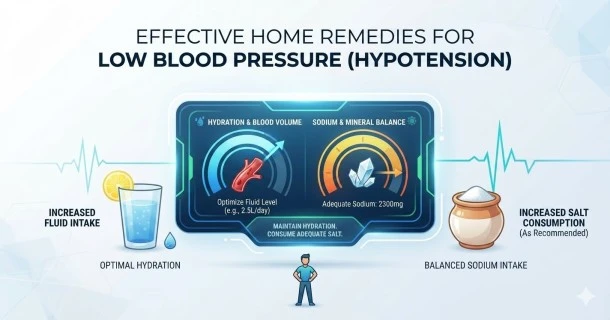
Dehydration is one of the most prominent triggers of sudden drops in blood pressure, as it actively decreases your total circulating blood volume. Drinking 2 to 2.5 litres of water daily expands plasma volume, ensuring your vital organs receive a steady supply of oxygen. For an immediate pressor effect, drinking a 500 mL bolus of cold water can spike your blood pressure within 5 to 10 minutes.
2. Strategic Dietary Sodium Expansion
While a low-sodium diet is vital for managing hypertension, individuals suffering from symptomatic low blood pressure often benefit from a moderate increase in dietary salt. Sodium acts as a water magnet, retaining fluids in your bloodstream to elevate blood volume. You can safely increase your intake by adding a pinch of high-quality salt to home-cooked meals, or eating small, salty snacks like pickles, olives, or low-fat crackers.
- Note: Always consult a doctor before dramatically shifting your salt intake, especially if you have pre-existing kidney or heart issues.
3. Transition to Small, Low-Carbohydrate Heavier Meals
Many people experience postprandial hypotension, which is a sharp drop in blood pressure occurring within two hours of eating. This happens because blood rushes to your digestive tract (splanchnic bed) to process heavy meals. Switching to smaller, more frequent meals throughout the day—and limiting rapidly digesting carbohydrates—keeps your blood pressure steady by avoiding major digestive blood pooling.
4. Deploy Physical Counter-Maneuvers
When you feel lightheaded upon standing, your body's baroreceptors are struggling to compensate for gravity. You can manually pump blood back toward your heart and brain by practicing simple physical counter-maneuvers. Crossing your legs while sitting, tensing your calf and thigh muscles, or clenching your fists before and during standing forces pooled blood out of your lower extremities.
5. Utilize Gradual Postural Transitions
Abruptly bouncing out of bed or jumping up from a deep squat can pool blood in your legs and pelvis, causing sudden dizziness. Prevent orthostatic hypotension by moving slowly through intermediate stages. Sit on the edge of your bed for 30 to 60 seconds, flex your calf muscles to activate your skeletal muscle pump, and only then slowly transition to a standing position.
6. Wear Medical-Grade Compression Stockings
If your work requires prolonged standing, gravity will naturally pool your blood downward. Waist-high compression stockings or abdominal binders apply gentle mechanical pressure to your lower body. This constriction narrows your peripheral veins, encouraging blood to flow upward and preventing dramatic daytime blood pressure drops.
7. Correct Underlying Nutritional Deficiencies
Long-term low blood pressure accompanied by persistent fatigue can point to nutritional anemia. A deficiency in Vitamin B12 or Folate restricts your body's ability to produce healthy red blood cells, resulting in diminished oxygen delivery and low blood pressure. Integrate B12-rich options like eggs and fortified cereals alongside folate-heavy lentils and leafy greens to keep your vascular tone healthy.
8. Use Strategic, Monitored Caffeine Intake
A morning cup of caffeinated coffee or tea can offer a temporary, quick boost to your blood pressure. Caffeine stimulates the cardiovascular system and blocks hormones responsible for keeping your blood vessels widened. However, use caffeine mindfully as a rescue option rather than a heavy habit, as excess consumption can act as a diuretic and inadvertently worsen dehydration.
9. Elevate the Head of Your Bed
Many hypotension sufferers experience their worst symptoms first thing in the morning. Sleeping flat on your back encourages your kidneys to excrete fluids overnight, leading to morning volume depletion. Propping the head of your bed up by 10 to 20 centimeters (using bed risers or a wedge pillow) tricks your body into retaining fluids, drastically reducing morning dizziness.
10. Avoid Extreme Heat and Limit Alcohol
Both alcohol and hot environments act as potent vasodilators, meaning they widen your blood vessels and cause your blood pressure to tank. Avoid taking very hot showers, baths, or entering saunas, as overheating will aggravate orthostatic intolerance. Additionally, limit or completely cut out alcohol, which both relaxes blood vessels and promotes fluid loss.
Are You Getting Enough Fluids and Sodium?
Managing low blood pressure requires finding your sweet spot with daily hydration and mineral balance. Guessing your daily intake can make it difficult to stabilize your symptoms effectively.
Use our Interactive Daily Fluid & Sodium Tracker below to log your water and salt intake in real time. This tool calculates your clinical baselines, tracks your progress, and alerts you safely when you approach healthy daily maximums.
- Log your water glass by glass to hit your 2.5L plasma volume goal.
- Track hidden sodium to maintain a healthy vascular volume.
- Monitor safe boundaries with built-in medical safety alerts.
Scroll down to start tracking your daily progress and take control of your orthostatic health today!
Interactive Fluid & Sodium Tracker
Log your daily metrics to manage your intravascular volume. Ensure you don't cross safe medical boundaries.
💧 Daily Hydration Volume
0 / 2500 mL +250 mL (Glass) +500 mL (Bolus) Reset🧂 Daily Dietary Sodium
0 / 2300 mg +250 mg (Pinch) +500 mg (Snack) Reset .bp-tracker-wrapper { background: #f4f7f6; border: 2px solid #e0e7e5; border-radius: 12px; padding: 24px; margin: 30px auto; max-width: 650px; font-family: -apple-system, BlinkMacSystemFont, "Segoe UI", Roboto, Helvetica, Arial, sans-serif; box-shadow: 0 4px 6px rgba(0,0,0,0.05); } .bp-tracker-wrapper h3 { margin-top: 0; color: #1a3636; font-size: 22px; border-bottom: 2px solid #d3dedc; padding-bottom: 10px; } .tracker-intro { font-size: 14px; color: #5c6e6b; margin-bottom: 20px; line-height: 1.4; } .tracker-dashboard { display: flex; gap: 20px; flex-wrap: wrap; } .tracker-card { background: #ffffff; border: 1px solid #d3dedc; border-radius: 8px; padding: 16px; flex: 1; min-width: 250px; box-sizing: border-box; } .tracker-card h4 { margin: 0 0 12px 0; font-size: 16px; color: #2c4a45; } .metric-display { font-size: 24px; font-weight: bold; color: #111; margin-bottom: 12px; } .progress-bar-bg { background: #e9ecef; border-radius: 4px; height: 12px; width: 100%; margin-bottom: 16px; overflow: hidden; } .progress-bar-fill { height: 100%; width: 0%; transition: width 0.4s ease, background-color 0.3s ease; } .fluid-card .progress-bar-fill { background: #3498db; } .sodium-card .progress-bar-fill { background: #f39c12; } .control-buttons { display: flex; flex-direction: column; gap: 8px; } .control-buttons button { background: #2c4a45; color: #fff; border: none; padding: 8px 12px; border-radius: 4px; cursor: pointer; font-size: 13px; font-weight: 500; transition: background 0.2s; } .control-buttons button:hover { background: #406b64; } .control-buttons .btn-reset { background: #e74c3c; } .control-buttons .btn-reset:hover { background: #c0392b; } .alert-box-hidden { display: none; } .alert-box-visible { display: block; margin-top: 20px; padding: 12px 16px; border-radius: 6px; font-size: 14px; font-weight: 500; line-height: 1.4; border: 1px solid; } .alert-warning { background-color: #fff3cd; color: #856404; border-color: #ffeeba; } .alert-success { background-color: #d4edda; color: #155724; border-color: #c3e6cb; } (function() { var trackerData = { fluid: { current: 0, target: 2500, maxAlerted: false }, sodium: { current: 0, target: 2300, maxAlerted: false } }; window.adjustMetric = function(type, amount) { var metric = trackerData[type]; metric.current += amount; updateUI(type); }; window.resetMetric = function(type) { trackerData[type].current = 0; trackerData[type].maxAlerted = false; updateUI(type); }; function updateUI(type) { var metric = trackerData[type]; document.getElementById(type + '-current').innerText = metric.current; var percentage = Math.min((metric.current / metric.target) * 100, 100); document.getElementById(type + '-progress').style.width = percentage + '%'; checkMedicalThresholds(); } function checkMedicalThresholds() { var alertBox = document.getElementById('tracker-alert-box'); if (trackerData.sodium.current > 2300) { alertBox.className = 'alert-box-visible alert-warning'; alertBox.innerHTML = '⚠️ Medical Limit Notice: Dietary sodium intake has crossed 2,300 mg. Unless explicitly directed by your cardiologist or physician to consume higher levels for orthostatic shock prevention, do not exceed 2,300 mg daily to preserve long-term kidney and vascular wellness.'; } else if (trackerData.fluid.current >= 2500) { alertBox.className = 'alert-box-visible alert-success'; alertBox.innerHTML = '✅ Target Met: Excellent volume expansion! You have reached your recommended 2.5 Litres of clinical daily fluid targets to assist postural stabilization.'; } else { alertBox.className = 'alert-box-hidden'; alertBox.innerHTML = ''; } } })();Frequently Asked Questions (FAQs)
What is the fastest way to raise low blood pressure at home?
The quickest medical intervention at home is to drink a large 500 mL glass of cold water and lie flat on your back with your legs elevated above your heart level. The water bolus triggers a rapid pressor effect within minutes, while elevating your legs immediately redirects pooled blood back into central circulation to relieve dizziness.
Can herbal supplements like Tulsi, Licorice, or Ginseng cure hypotension?
While traditional practices utilize herbs like Holy Basil (Tulsi) or Licorice root, there is a lack of conclusive clinical evidence proving they can safely or effectively cure hypotension. Licorice root can raise blood pressure by altering cortisol metabolism, but it carries a high risk of causing dangerous potassium depletion and heart rhythm issues if unmonitored. Focus on validated first-line lifestyle changes like hydration and sodium management instead.
When is low blood pressure considered a medical emergency?
Low blood pressure becomes a critical emergency if it drops suddenly and is accompanied by signs of systemic shock. Seek immediate emergency care if you or someone else experiences:
- Fainting (syncope) or complete loss of consciousness
- Cold, clammy, and unusually pale skin
- Rapid, shallow breathing
- Confusion, disorientation, or sudden chest pain