Discover clinical lifestyle changes to raise blood pressure naturally. Learn how to manage orthostatic hypotension with evidence-based adjustments to diet, hydration, and daily movement.
Non-Pharmacological Treatment for Orthostatic Hypotension: 10 Evidence-Based Lifestyle Changes
Orthostatic hypotension non-pharmacological treatment is the first-line therapy used to raise blood pressure naturally and manage debilitating low BP symptoms. Clinical management strategies focus on preventing a sudden drop in blood pressure when changing positions, increasing central blood volume, and eliminating environmental triggers.
10 Clinical Lifestyle Changes to Raise Blood Pressure
Implementing targeted, non-medicinal strategies can dramatically reduce episodes of dizziness, syncope (fainting), and fatigue.
1. Increase Dietary Sodium Intake
Many cases of low blood pressure stem from a reduction in total intravascular volume. Increasing sodium intake helps expand plasma volume and directly improves orthostatic tolerance. Patients may be advised by their physician to consume between 6 to 10 grams of salt daily, provided they do not have underlying cardiovascular comorbidities.
2. Implement Bolus Water Drinking
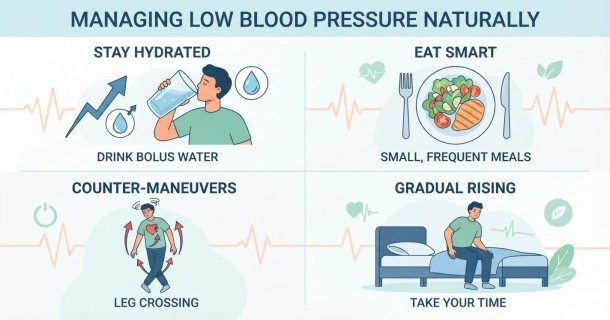
Rapidly drinking plain water serves as an effective acute rescue measure for low blood pressure. Consuming 500 mL of cold water within a 2-to-3-minute window triggers a sympathetic nervous system reflex. This reflex raises systolic blood pressure significantly within 5 to 10 minutes, providing relief that lasts up to an hour.
3. Eat Small, Low-Carbohydrate Meals
A large drop in blood pressure after eating is known as postprandial hypotension. To minimize pooling of blood in the digestive tract, switch to smaller, more frequent meals throughout the day. Restricting high-carbohydrate foods like white rice, bread, and pasta also helps stabilize post-meal blood pressure.
4. Eliminate or Limit Alcohol
Alcohol acts as a diuretic and vasodilator, which causes blood vessels to widen and fluids to drain from the body. Even moderate alcohol consumption can exacerbate postural drops in blood pressure and should be avoided by individuals prone to hypotension.
5. Utilize Abdominal Binders and High Compression Garments
While standard compression stockings are commonly used, clinical trials suggest that abdominal compression is significantly more effective at reducing blood pooling. Utilizing an abdominal binder or waist-high, custom-fitted compression garments with pressures of 30–40 mmHg prevents blood from pooling in the lower extremities.
6. Perform Physical Counter-Maneuvers
If you begin to feel lightheaded while standing, immediate physical maneuvers can stabilize your blood pressure. Cross your thighs tightly in a scissors fashion, clench your buttocks, or place one foot on a chair and lean your torso forward. These actions mechanically force pooled blood from the legs back up toward the heart.
7. Practice Gradual Postural Transitions
Avoid abrupt vertical movements. When waking up, practice changing your position in phases. Sit upright on the edge of the bed for a few minutes, perform gentle lower-limb muscle contractions to stimulate circulation, and then slowly stand up.
8. Elevate the Head of Your Bed
Sleeping with the head of your bed elevated by 6 to 9 inches (approximately 15 to 20 centimeters) alters gravity’s effects during the night. This non-pharmacological adjustment minimizes nighttime fluid excretion (natriuresis) and decreases morning dizziness.
9. Avoid Core Temperature Triggers
High environmental heat causes peripheral vasodilation, which widens surface blood vessels and drops blood pressure. Avoid spending prolonged time in hot weather, taking hot showers or baths, or using saunas, as these environments can quickly induce fainting spells.
10. Engage in Recumbent Physical Activity
Physical conditioning prevents the cardiovascular weakening that makes orthostatic hypotension worse. Instead of standing exercises, focus on recumbent or horizontal physical activities. Swimming, rowing machines, and recumbent stationary bicycling allow you to build cardiovascular tolerance without triggering orthostatic stress.
Frequently Asked Questions (FAQ)
What is the most effective non-pharmacological treatment for orthostatic hypotension?
Clinical studies show that rapid bolus water drinking (consuming 500 mL of cold water within 3 minutes) is one of the most effective immediate first-line non-pharmacological treatments, often outperforming lower-limb compression stockings alone.
How can I raise my blood pressure quickly during a dizzy spell?
You can quickly stabilize a sudden drop in blood pressure by executing physical counter-maneuvers. Cross your legs while standing, tense your thigh and gluteal muscles, or sit down and lean forward to force blood back toward your heart and brain.
Why does my blood pressure drop so drastically after I eat?
This condition is called postprandial hypotension. It occurs when a large volume of blood shifts to your digestive organs to aid metabolism. You can manage this naturally by switching to smaller, low-carbohydrate meals and avoiding alcohol.
Does elevating the bed actually help with low blood pressure?
Yes. Elevating the head of the bed by 6 to 9 inches reduces the pressure load on your kidneys while you sleep. This prevents your body from over-filtering fluids overnight, allowing you to retain an adequate blood volume to prevent morning dizziness.