Can foot massage help hypotension? Discover the 6 traditional reflexology zones for low blood pressure, medical facts on circulation, and safety risks.
Foot Reflexology for Low Blood Pressure: 6 Traditional Zones and Safety Facts
Reflexology for low blood pressure (hypotension) is a popular complementary therapy focused on applying targeted pressure to specific reflex zones on the feet, hands, or ears. Proponents of reflexology utilize it to promote deep relaxation, stimulate systemic blood flow, and relieve mild symptoms associated with hypotension, such as chronic fatigue and occasional lightheadedness.
Important Medical Correction: The original text incorrectly claimed that reflexology can manipulate the renin-angiotensin system to cause vasodilation and deliberately drop blood pressure—which would dangerously worsen hypotension.
From a modern medical standpoint, reflexology does not directly change your vascular diameter or alter hormone pathways to cure a medical condition. Instead, its primary physiological benefit is reducing sympathetic nervous system dominance (stress), lowering cortisol levels, and safely encouraging systemic microcirculation to help the body maintain its natural circulatory equilibrium.
If you are using reflexology alongside proper hydration and medical care, practitioners focus on these six primary reflex zones on the foot:
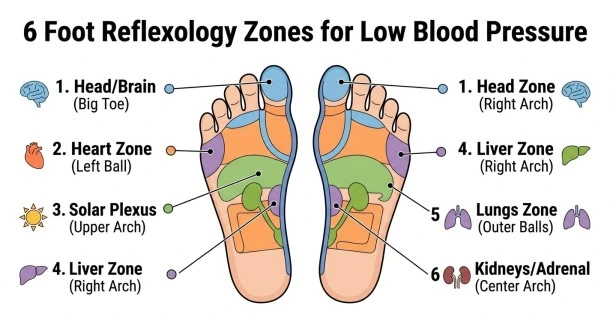
6 Foot Reflexology Zones for Hypotension Support
When using reflexology to support healthy circulation, practitioners generally map out zones that correspond to the cardiovascular and nervous systems:
- Head and Brain Zone (Big Toe): Located on the pad of the big toe. This zone is massaged to help calm the central nervous system, manage the body's stress responses, and relieve tension headaches or mild dizziness.
- Heart Zone: Located on the ball of the left foot (under the metatarsals). Massaging this area is traditionally aimed at encouraging steady, balanced circulation throughout the body's arterial network.
- Solar Plexus Zone: Found just below the ball of the foot, centered in the upper arch. Often referred to in holistic health as a primary nervous system hub, stimulating this area induces deep physiological relaxation.
- Kidney and Adrenal Zone: Located in the center of the foot's arch. The adrenal glands produce hormones like adrenaline that regulate heart rate and vascular tone. Massaging this area is intended to counter fatigue brought on by chronic stress.
- Liver Zone: Located on the ball and mid-arch of the right foot. In reflexology, this area is stimulated to support overall metabolic function and clear system vitality.
- Lungs Zone: Located across the broad ball of both feet. This region is addressed to encourage deep, rhythmic respiration, which enhances blood oxygenation and helps steady the pulse.
Note on Sensations: If a specific zone feels tender, bruised, or numb during a massage, it does not mean the corresponding physical organ is failing. It simply indicates a localized tension spot that benefits from gentle, non-painful pressure.
Contraindications and Safety Warnings
While foot reflexology is highly non-invasive and relaxing, it is not safe for everyone. Avoid or delay reflexology if you have any of the following conditions:
- Active Injuries or Fractures: Do not apply pressure to healing bone fractures, sprains, or unhealed open wounds on the feet or ankles.
- Severe Circulatory Issues: If you suffer from Deep Vein Thrombosis (DVT), severe peripheral artery disease, or active phlebitis, leg and foot massage can dislodge a blood clot. Consult a vascular specialist first.
- Gout Attacks: Active gout inflammation in the feet causes extreme pain and should never be massaged.
- Pregnancy Precautions: Pregnant individuals must alert their therapist. Aggressive or deep stimulation of specific zones around the ankle and heel can theoretically induce uterine contractions.
Frequently Asked Questions (FAQ)
Q: Can reflexology replace my low blood pressure medication?
A: Absolutely not. Reflexology is strictly a complementary relaxation therapy. It cannot replace prescription medications or address serious underlying medical causes of hypotension, such as endocrine disorders, cardiac structural disease, or internal bleeding.
Q: What should I do if a reflexology point hurts during a session?
A: The massage should always remain within a comfortable, therapeutic range. If a point is highly painful, instruct your practitioner to lighten the pressure or skip the zone entirely. Pain triggers a stress response, which can cause your heart rate to spike or make you feel faint.
Q: Can a simple foot massage at home help raise low blood pressure?
A: A gentle home foot massage will not actively force your blood pressure numbers up, but it is excellent for improving local blood flow to cold extremities, easing physical anxiety, and reducing lightheadedness caused by sudden stress. Pair the massage with a large glass of water for the best results.