Learn about the caffeine effect on low blood pressure. Discover how to use coffee or tea to trigger short-term vasoconstriction and safely manage acute hypotension symptoms.
Caffeine Effect on Low Blood Pressure: Clinical Benefits & Therapeutic Timing
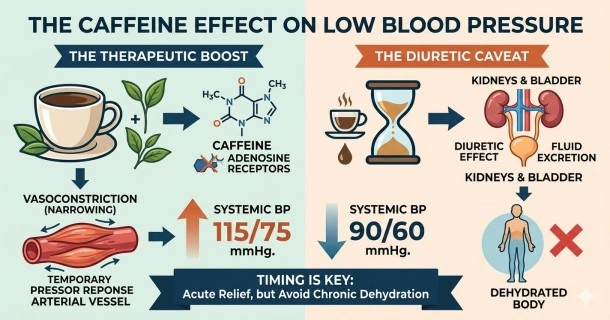
Understanding the caffeine effect on low blood pressure is crucial for individuals looking to utilize coffee or tea as a temporary, non-pharmacological rescue therapy. Thanks to the temporary vasoconstrictive properties of caffeine for hypotension, targeted consumption can provide a fast, acute increase in systemic blood pressure, effectively mitigating sudden symptoms of dizziness, lethargy, and postprandial (post-meal) orthostatic drops.
The Vascular Mechanism: How Caffeine Temporarily Elevates Blood Pressure
Caffeine operates as a natural central nervous system stimulant that interacts directly with the cardiovascular infrastructure. While it does not alter long-term baselines or cause chronic vascular disorders, its acute effects are highly reliable for individuals prone to symptomatic drops.
[Ingestion of Caffeinated Beverage]
                 │
                 ▼
[Blocks Adenosine Receptors (Prevents Arterial Widening)]
                 │
                 ▼
[Triggers Adrenal Release of Adrenaline (Epinephrine)]
                 │
                 ▼
    [Acute Vasoconstriction of Blood Vessels]
                 │
                 ▼
[Short-Term, Dramatic Boost in Systemic Blood Pressure]
This rapid physiological increase is driven by two primary mechanisms:
- Adenosine Inhibition: Caffeine blocks adenosine, a hormone responsible for keeping blood vessels naturally widened and relaxed. By inhibiting this hormone, blood vessels constrict.
- Adrenal Stimulation: It prompts the adrenal glands to release higher amounts of adrenaline (epinephrine), which temporarily increases heart rate and elevates systemic vascular resistance.
Clinical Application: How and When to Use Caffeine for Hypotension
To optimize caffeine as an acute therapeutic agent without causing long-term dehydration, its application must be deliberate and measured.
1. The Postprandial Timing Strategy
One of the most effective uses of caffeine is managing postprandial hypotension (blood pressure drops immediately after eating). Consuming a single cup of strong black coffee or black tea alongside or directly after a meal helps counteract the massive pooling of blood in your digestive organs, preserving cerebral blood flow.
2. Dosing and Substance Selection
- Target Dosage: A standard cup of brewed coffee (delivering roughly 80–100 mg of caffeine) is typically sufficient to initiate a vascular pressor response.
- Onset and Duration: Blood pressure metrics typically see a sharp elevation within the first 60 minutes of consumption. This acute vasoconstriction remains active for 3 to 4 hours before naturally tapering down.
- Polyphenol Defenses: Choosing dark, traditional options like high-quality black coffee, black tea, or green tea delivers a heavy load of polyphenols. These natural antioxidants lower C-reactive protein (CRP) markers and improve overall endothelial lining health.
3. The Diuretic Caveat: Avoiding the Low BP Trap
While caffeine is a helpful short-term vasoconstrictor, it is also a well-known diuretic. Overconsumption or failing to hydrate simultaneously will prompt the kidneys to flush fluids out of the body. This fluid depletion can cause mild systemic dehydration, which paradoxically drops your blood volume and leaves your blood pressure lower than before. Rule of Thumb: Always pair a caffeinated beverage with a full glass of plain water.
Frequently Asked Questions (FAQ)
What is the immediate caffeine effect on low blood pressure?
Caffeine provides a temporary, sharp boost to low blood pressure numbers by narrowing blood vessels (vasoconstriction) and prompting the adrenal glands to secrete adrenaline. This effect usually takes hold within an hour and helps quickly alleviate acute lightheadedness.
Can I drink coffee every day if I suffer from chronic low blood pressure?
Yes, you can consume coffee daily, but it should be done strategically. Since regular use can lead to caffeine tolerance—meaning your body's sharp vascular reaction may decrease over time—it is best utilized around your known daily symptom windows, such as right after large meals or first thing in the morning.
Why does over-consuming caffeine sometimes make my hypotension worse?
Because caffeine is a natural diuretic, drinking too much of it forces your body to excrete valuable fluids and electrolytes through urine. If you do not replace these lost fluids, your total blood volume drops, which will ultimately cause your blood pressure to bottom out later in the day.
Which is better for raising low blood pressure: coffee or tea?
A standard cup of black coffee contains a higher concentration of caffeine than tea, making it more effective for an immediate, rapid boost during an acute dizzy spell. However, both black and green teas are excellent options for a gentler, more sustained lift throughout the day.