What happens if high blood pressure goes untreated? Explore the 7 major clinical complications of hypertension, from heart failure to kidney damage.
Complications of High Blood Pressure: The Systemic Risks of Untreated Hypertension
Maintaining blood pressure within a healthy clinical range is essential for protecting the vascular network and long-term organ vitality. When systemic arterial pressure remains consistently elevated over time, a condition known as chronic hypertension, it places sustained mechanical stress on vascular walls. Left undiagnosed or poorly controlled, the chronic strain of high blood pressure complications can systematically damage vital organs, significantly increasing the risk of life-threatening events.
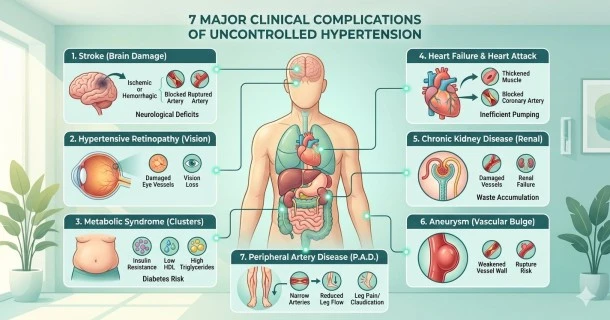
7 Major Clinical Complications of Uncontrolled Hypertension
The higher the blood pressure and the longer it goes unmanaged, the more extensive the structural damage to blood vessels becomes. Understanding these secondary complications highlights why proactive monitoring and consistent medical adherence are vital.
1. Coronary Artery Disease (CAD) and Atherosclerosis
- The Pathophysiology: Chronic high blood pressure inflicts micro-tears in the delicate endothelial lining of the arteries. This structural damage allows circulating lipids, inflammatory cells, and debris to collect inside the vessel walls, accelerating plaque formation (atherosclerosis).
- The Impact: As the coronary arteries narrow, blood flow to the cardiac muscle declines, causing chest pain (angina) or triggering an acute myocardial infarction (heart attack) if a plaque ruptures and forms a clot.
2. Heart Failure (HF)
- The Pathophysiology: Pumping blood against narrow, stiffened arterial pathways requires the heart muscle to work significantly harder than normal.
- The Impact: To cope with this increased systemic workload, the muscles of the heart's main pumping chamber thicken (left ventricular hypertrophy). Over time, this hypertrophied muscle becomes stiff, weak, and inefficient, leading to heart failure—a chronic condition where the heart cannot pump an adequate supply of oxygen-rich blood to fulfill the body's metabolic needs.
3. Ischemic or Hemorrhagic Stroke
- The Pathophysiology: Hypertension is the primary modifiable risk factor for stroke. The mechanical stress can cause narrow cerebral arteries to clot or completely occlude, cutting off blood supply to brain tissue (ischemic stroke).
- The Impact: Alternatively, the chronic pressure can weaken fragile blood vessels in the brain until they rupture, spilling blood into surrounding neural tissues (hemorrhagic stroke). Both types lead to localized brain cell death and potential neurological deficits.
4. Chronic Kidney Disease (CKD) and Renal Failure
- The Pathophysiology: The kidneys rely on a dense, delicate network of micro-blood vessels to filter metabolic waste products and excess fluids from the bloodstream. High blood pressure weakens and hardens these renal arteries.
- The Impact: Damaged, narrowed vessels can prevent the kidneys from filtering blood efficiently. This creates a dangerous cycle: failing kidneys cannot properly excrete fluids or regulate blood pressure hormones like renin, which drives systemic blood pressure even higher and accelerates progression toward end-stage renal disease (ESRD).
5. Vascular Aneurysms
- The Pathophysiology: Continuous mechanical pressure can degrade the structural integrity of an arterial wall over several years, causing a localized section of the vessel to weaken, dilate, and bulge outward.
- The Impact: These bulges, known as aneurysms, can form in any major artery, most notably the aorta. If an aneurysm ruptures, it causes massive, life-threatening internal bleeding that requires immediate emergency surgical intervention.
6. Hypertensive Retinopathy and Vision Impairment
- The Pathophysiology: The microvasculature supplying the retina is highly vulnerable to systemic pressure spikes. Uncontrolled hypertension causes these tiny vessels to thicken, narrow, or twist out of alignment.
- The Impact: This vascular damage can restrict essential blood flow to the retina, leak fluids, or cause localized hemorrhages. This condition, called hypertensive retinopathy, can result in blurred vision, retinal swelling, and permanent vision loss.
7. Metabolic Syndrome Clusters
- The Pathophysiology: Hypertension rarely occurs in isolation; it is deeply intertwined with metabolic syndrome—a cluster of co-occurring conditions that includes elevated triglycerides, low high-density lipoprotein (HDL) cholesterol, abdominal obesity, and insulin resistance.
- The Impact: Having high blood pressure alongside other components of metabolic syndrome multiplies your aggregate risk of developing type 2 diabetes, progressive vascular disease, and severe cardiac complications.
Preventative Action: Protecting Your Organs
The most dangerous aspect of high blood pressure is that it frequently lacks obvious physical warning signs, earning it the clinical title of "the silent killer." Protecting your organs from long-term damage requires proactive lifestyle measures:
- Consistent Medical Adherence: Take all doctor-prescribed anti-hypertensive medications exactly as directed. Never stop or reduce your dosage independently, even if your home readings look perfectly normal.
- Dietary and Lifestyle Modification: Transition to a heart-healthy diet low in processed sodium and high in potassium, fiber, and lean proteins. Incorporate consistent cardiovascular exercise, manage emotional stress, and limit alcohol intake.
- Routine Home Tracking: Utilize a validated, properly calibrated automated cuff to track your blood pressure at regular intervals. Keep a written log to share with your primary care provider during clinical checkups.
Frequently Asked Questions (FAQs)
Why is high blood pressure frequently called "the silent killer"?
Hypertension is referred to as "the silent killer" because it typically builds up internal vascular damage over several years without causing any noticeable day-to-day physical symptoms. Many individuals remain unaware that they have high blood pressure until an internal organ experiences a sudden, severe complication like a heart attack, stroke, or kidney damage.
Can organ damage caused by chronic hypertension be reversed?
Early-stage vascular stiffness and minor cardiac muscle thickening (hypertrophy) can sometimes be managed or reduced through aggressive, long-term blood pressure control and lifestyle modifications. However, advanced complications—such as extensive kidney scarring (nephrosclerosis), permanent retinal damage, or dead brain tissue from a stroke—cannot be structurally reversed once they occur.
How does high blood pressure directly lead to permanent kidney damage?
The kidneys filter blood through a delicate network of microscopic capillaries. Chronic high blood pressure hardens and narrows these vessels, cutting off the blood and oxygen supply required for the kidneys to function. As these filters are damaged and replaced by scar tissue, they lose their ability to filter wastes, leading to chronic kidney disease.