Discover how foot reflexology can support your hypertension management plan. Learn about crucial reflex points for stress reduction and vascular relaxation.
Reflexology for High Blood Pressure: A Supportive Tool for Stress and Vascular Relaxation
Managing hypertension (high blood pressure) effectively requires a comprehensive clinical approach, primarily centering around lifestyle adjustments, balanced nutrition, and doctor-prescribed medications. For individuals looking to integrate a supportive, non-invasive complementary practice, reflexology for high blood pressure serves as an excellent tool to encourage systemic relaxation and cardiovascular wellness.
Reflexology is a specialized manual wellness practice based on the principle that specific reflex zones on the feet, hands, and ears map directly to corresponding organs, glands, and physiological systems within the body. While reflexology cannot physically clear vascular pathways or alter genetic risk factors, modern clinical observation shows it is highly effective at inducing deep relaxation, dropping systemic stress, and supporting healthy peripheral blood circulation.
Note: Reflexology is a supportive, mind-body wellness practice and should never be used as a replacement for standard medical treatments, lifestyle changes, or blood pressure-lowering medications prescribed by your healthcare provider.
The Link Between Stress, Autonomic Tension, and Hypertension
The human circulatory system reacts dynamically to physical and emotional stress. Chronic psychological stress elevates sympathetic nervous system activity, causing blood vessels to constrict and increasing the physical workload on the heart.
When the body enters a sustained "fight-or-flight" response, the adrenal glands release higher levels of stress hormones like cortisol and adrenaline. This physical tension can cause temporary spikes in blood pressure and place long-term strain on vascular walls. Reflexology aims to interrupt this cycle by shifting the body into a parasympathetic state, encouraging systemic relaxation and optimizing natural circulatory efficiency.
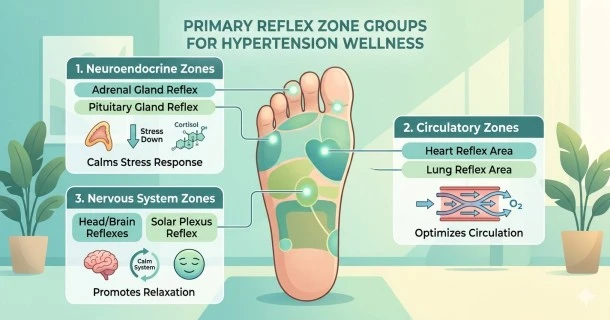
3 Primary Reflex Zone Groups for Hypertension Wellness
A comprehensive cardiovascular reflexology protocol generally organizes targeted reflex areas into specific, high-priority zones:
- The Neuroendocrine Zones: This includes the adrenal and pituitary gland reflex points located on the soles of the feet. Massaging the adrenal reflex helps moderate the body's acute stress response, calming the hormonal surges that directly impact vascular resistance.
- The Circulatory Zones: This involves the heart and lung reflex areas. Stimulating these zones promotes deep diaphragmatic breathing and localized relaxation, which helps optimize oxygen delivery and eases physical tension throughout peripheral blood vessels.
- The Nervous System Zones: This covers the head, brain, and spinal reflex points along the toes and medial borders of the feet. Calming these zones helps reduce overactive sympathetic nervous system activity and promotes systemic tranquility.
Clinical Safety Guidelines and Medical Precautions
While foot reflexology is gentle, safe, and generally well-tolerated, specific clinical conditions require direct caution or absolute avoidance:
- Absolute Medication Consistency: Never alter, reduce, or self-adjust your prescription blood pressure medication dosages based on home readings. Abrupt adjustments can trigger dangerous, rapid spikes in blood pressure known as rebound hypertension. All dosage changes must be managed directly by your physician.
- Pregnancy Precautions: Vigorous manual stimulation of specific reflex areas on the ankles and feet can potentially stimulate uterine activity. Pregnant individuals must avoid aggressive foot massage and consult a certified prenatal specialist or their OB-GYN before proceeding.
- Local Contraindications: Avoid applying manual pressure over open wounds, unhealed skin ulcers, active localized infections, fresh fractures, sprains, deep vein thrombosis (DVT), or active gout flares affecting the lower limbs.
Frequently Asked Questions (FAQs)
Can reflexology replace my daily blood pressure prescription?
No. Reflexology functions as a complementary therapy, not a standalone replacement for medical prescriptions. If your doctor has placed you on an anti-hypertensive drug regimen, you must continue taking it exactly as directed to prevent dangerous complications.
How often should I practice reflexology for blood pressure wellness?
For general stress management and cardiovascular relaxation benefits, practicing reflexology 2 to 3 times per week for about 15–20 minutes per session is highly beneficial. Consistency over a period of several months is key to helping your body successfully manage chronic stress.
Is it safe to practice reflexology alongside conventional pharmaceuticals?
Yes. Reflexology is a completely non-invasive, drug-free therapy that does not introduce any biochemical substances into your body, making it safe to practice alongside conventional pharmaceutical treatments. Make sure to double-check your physical medication labels to follow your exact routine.