
Discover the hidden health risks of untreated obstructive sleep apnea. Learn how frequent oxygen drops trigger high blood pressure, heart disease, stroke, and type 2 diabetes.
Sleep Apnea Complications: The Long-Term Health Risks of Untreated OSA
Obstructive sleep apnea (OSA) is far more than just a loud snoring problem. Left untreated, this chronic medical condition serves as a silent catalyst for severe, systemic health failures. When your airway collapses repeatedly throughout the night, your body suffers from frequent blood oxygen drops and chronic sleep fragmentation, forcing your cardiovascular and metabolic systems to operate under constant stress.
Understanding the long-term complications of untreated sleep apnea is vital for safeguarding your health. Fortunately, managing the condition through lifestyle changes, oral appliances, surgery, or CPAP therapy can successfully mitigate or even reverse many of these dangerous medical risks.
Cardiovascular Complications
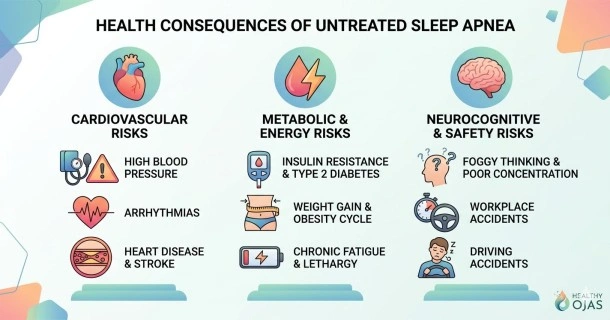
The cardiovascular system bears the heaviest burden from untreated obstructive sleep apnea. Every time breathing pauses, the sudden drop in blood oxygen triggers a primitive survival response.
- High Blood Pressure (Hypertension): The brain responds to a lack of oxygen by pumping out a surge of stress hormones (like cortisol and adrenaline). This constricts your blood vessels and raises your heart rate, causing chronic hypertension that is famously resistant to standard medications.
- Heart Attack and Coronary Artery Disease: The repetitive physical strain of trying to breathe against a closed airway, combined with systemic inflammation from low oxygen levels, damages blood vessels. This significantly increases your risk of suffering a heart attack.
- Stroke: Chronic sleep fragmentation and erratic blood pressure spikes can destabilize arterial plaques and alter cerebral blood flow, dramatically multiplying your risk of experiencing an ischemic stroke.
- Arrhythmias (Irregular Heartbeats): The sudden drops in oxygen levels can disrupt the heart's internal electrical system. This frequently causes atrial fibrillation (A-Fib) or other dangerous, irregular heart rhythms.
- Heart Failure: Sleep apnea forces the heart to pump much harder to compensate for oxygen deficits. Over time, this chronic overwork weakens or stiffens the heart muscle, directly causing or worsening congestive heart failure.
Metabolic and Endocrine Complications
Untreated sleep apnea fundamentally alters the chemical processes your body uses to produce and manage energy.
- Type 2 Diabetes and Insulin Resistance: Chronic sleep deprivation and elevated cortisol levels change how your body utilizes insulin. OSA causes your cells to become resistant to insulin, which raises blood sugar levels and makes type 2 diabetes much harder to manage.
- Obesity and Weight Gain: Sleep apnea creates a frustrating health cycle. While excess weight can cause OSA, the sleep deprivation it creates disrupts your hunger hormones (leptin and ghrelin). This leaves you with a sluggish metabolism and constant cravings, leading to further weight gain.
Neurocognitive and Cognitive Risks
Because sleep apnea destroys your deep, restorative sleep stages, its effects spill directly into your daily mental function and personal safety.
- Daytime Fatigue and Brain Fog: Severe daytime drowsiness compromises your short-term memory, concentration, and emotional stability.
- Workplace and Driving Accidents: Severe daytime exhaustion impairs your reflexes and situational awareness to a degree similar to alcohol intoxication. People with untreated OSA are up to five times more likely to be involved in a serious motor vehicle or workplace accident.
Frequently Asked Questions (FAQs)
How does untreated sleep apnea affect your heart?
Every time your breathing stops, your blood oxygen drops. This forces your brain to release stress hormones, which spike your heart rate and blood pressure. Over time, this continuous nighttime stress causes chronic high blood pressure, irregular heartbeats, and a much higher risk of heart attacks.
Can sleep apnea cause Type 2 diabetes?
Yes. The chronic stress and lack of deep sleep caused by sleep apnea increase insulin resistance. This means your body can no longer process glucose efficiently, which can trigger the onset of type 2 diabetes or make existing blood sugar levels difficult to control.
Are the long-term complications of sleep apnea reversible?
Many complications can be significantly reduced or reversed with consistent treatment. Using a CPAP machine, wearing custom oral appliances, losing weight, or undergoing airway surgery can restore regular oxygen levels, reduce blood pressure, and improve insulin sensitivity.