
Worried you might have sleep apnea? Explore the definitive checklist of common nighttime signs, daytime symptoms, and distinct warning signs in children.
Sleep Apnea Symptoms: A Complete Nighttime and Daytime Checklist
Recognizing the warning signs of sleep apnea is the first step toward getting an accurate clinical diagnosis and reclaiming your sleep health. Because this condition occurs while you are unconscious, identifying what are the signs of sleep apnea requires looking at both nighttime disruptions (often reported by a bed partner) and daytime consequences that impact your daily life.
Nighttime Sleep apnea Symptoms
Nighttime signs are primarily driven by the physical narrowing or temporary collapse of the upper airway during sleep.
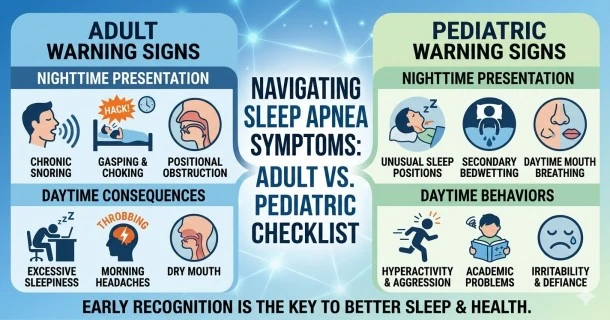
- Loud and Chronic Snoring: This is the most prevalent and recognizable warning sign. The snoring is typically frequent, heavy, and interrupted by periods of silence.
- Choking or Gasping Episodes: Following a brief pause in breathing, the sleeper will often experience a sudden, involuntary gasp, snort, or choking sound as the brain forces the airway to reopen.
- Positional Worsening: Snoring and breathing cessations are often loudest and most severe when a person is sleeping flat on their back, as gravity pulls the tongue and soft palate to the back of the throat.
- Frequent Nighttime Awakenings: While the individual rarely remembers these events, the body repeatedly shifts out of deep sleep to restore breathing, causing highly fragmented, unrefreshing rest.
Important Note: While heavy snoring is a major indicator, not everyone who snores has sleep apnea, and not everyone with sleep apnea snores.
Daytime Warning Signs of Sleep Apnea
The constant sleep fragmentation and oxygen drops that happen overnight directly lead to specific systemic daytime symptoms:
- Excessive Daytime Sleepiness (EDS): An overwhelming urge to fall asleep during quiet or inactive moments (such as while reading, watching television, or sitting in traffic).
- Frequent Morning Headaches: Caused by the recurrent drops in blood oxygen levels and the buildup of carbon dioxide in the bloodstream overnight.
- Dry Mouth or Throat: Waking up with a distinctly parched or sore throat, which is a frequent byproduct of heavy mouth-breathing and loud snoring during the night.
- Cognitive and Focus Difficulties: Chronic sleep deprivation damages the brain's executive functioning, causing visible memory lapses, learning problems, or difficulty concentrating on everyday tasks.
- Irritability and Mood Changes: Experiencing uncharacteristic mood swings, chronic irritability, anxiety, or symptoms of depression due to a lack of restorative deep sleep.
Sleep Apnea Symptoms in Children
Pediatric sleep apnea presents differently than adult sleep apnea. Instead of showing overt daytime sleepiness, sleep-deprived children often experience behavioral shifts:
- Hyperactivity and Defiance: Children often become hyperactive, aggressive, or unusually irritable as their bodies fight off exhaustion. This can sometimes be misdiagnosed as ADHD.
- Academic Problems: Decreased concentration levels lead directly to poor performance and falling grades in school.
- Unusual Sleeping Positions: Sleeping with the neck highly overextended or arched backward to help open up a narrow or crowded airway naturally.
- Secondary Bedwetting: Involuntary bedwetting at night in a child who was previously fully toilet-trained, caused by sleep disruptions shifting hormonal balances.
- Daytime Mouth Breathing: Constantly breathing through the mouth rather than the nose during daytime hours, which often points to enlarged tonsils or adenoids blocking the airway.
Frequently Asked Questions (FAQs)
What is the difference between normal snoring and sleep apnea snoring?
Normal snoring is usually soft, continuous, and does not interfere with the quality of your rest. Sleep apnea snoring is typically very loud, disrupted by sudden silences (which indicate a complete stop in breathing), and followed by abrupt choking, gasping, or snorting sounds as the airway clears.
Can I have sleep apnea if I do not snore at all?
Yes, it is entirely possible to have sleep apnea without snoring. This is especially true in Central Sleep Apnea (CSA), where the brain occasionally fails to send the proper signals to the breathing muscles, or in certain presentations of Obstructive Sleep Apnea where airflow is restricted without producing a loud vibration.
Why does sleep apnea cause headaches when you wake up in the morning?
Morning headaches are caused by repeated drops in blood oxygen saturation levels and a corresponding rise in carbon dioxide levels during the night. The imbalance causes the blood vessels in the brain to widen, leading to a dull, throbbing headache upon waking that usually fades after a few hours of normal daytime breathing.