
Learn how healthcare providers evaluate and diagnose insomnia. Explore the role of medical histories, physical exams, sleep diaries, and overnight polysomnograms.
How Is Insomnia Diagnosed? A Guide to Medical Tests and Sleep Studies
If you are struggling with a persistent lack of restful sleep, seeking a formal clinical assessment is essential to identifying the root cause of your sleep issues. Insomnia diagnosis is a comprehensive process that blends a detailed medical evaluation, lifestyle audits, personal sleep histories, and physical examinations.
While most cases are diagnosed via clinical conversations, your physician may recommend specialized insomnia diagnostic tests or diagnostic data tracking if an underlying medical issue or a co-occurring sleep disorder is suspected.
The Pillars of an Insomnia Clinical Evaluation
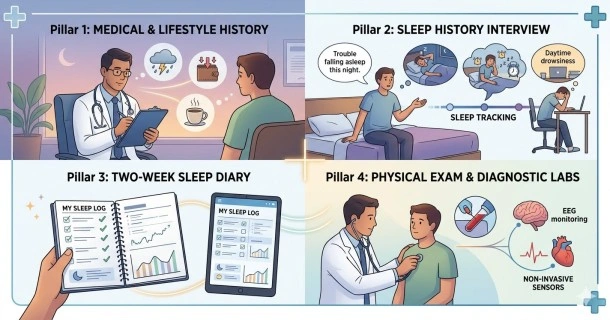
To build a tailored treatment strategy, your healthcare provider will evaluate your sleep struggles across four clinical pillars:
1. Detailed Medical and Lifestyle History
Because insomnia is frequently triggered by secondary health complications, your doctor will screen for underlying causes by reviewing your current health parameters:
- Active Health Complications: Chronic pain conditions like arthritis or acute physical injuries that prevent comfortable relaxation.
- Psychological Vulnerabilities: A history of clinical depression, persistent panic disorders, or generalized anxiety.
- External Life Stressors: Major personal challenges, such as work stress, financial pressure, or family disruptions.
- Chemical and Habits Audit: Daily consumption of central nervous system stimulants like caffeine, tobacco, or alcohol. Your doctor will also evaluate your work schedule, shift changes, and recent long-distance travel history.
2. Comprehensive Sleep History Tracking
To separate insomnia from other sleep issues, you will be asked to describe your bedtime habits and patterns in detail. Be prepared to answer questions such as:
- How long does it take you to initially fall asleep, and how many times do you wake up overnight?
- Do you snore loudly, gasp out of breath, or wake up feeling choked? (These are classic red flags for obstructive sleep apnea)
- How sleepy are you during routine daily tasks like working or driving?
3. Utilizing a Personal Sleep Diary
A highly effective diagnostic tool is a two-week sleep diary. In this log, you will record your exact bedtime, waking hours, night awakenings, and any daytime naps. Documenting your energy fluctuations throughout the day helps your physician identify systemic patterns in your sleep debt.
4. Physical Exam and Diagnostic Labs
Your physician will conduct a thorough physical examination to rule out structural, anatomical, or systemic conditions causing your sleep issues. They may also order diagnostic blood tests to screen for thyroid disorders (such as hyperthyroidism) or metabolic shifts that can manifest as persistent insomnia.
When Do You Need an Overnight Sleep Study?
A formal sleep center assessment, known as a polysomnogram (PSG), is not required to diagnose standard primary insomnia. However, an overnight study is recommended if your physician suspects your insomnia is being triggered by an entirely separate, co-occurring sleep disorder.
Performed overnight at a clinical sleep laboratory, a polysomnogram utilizes non-invasive electronic sensors to safely record your vital metrics while you are asleep:
- Brain Electrical Activity (EEG): Tracks your real-time transitions between light NREM and active REM stages.
- Cardiorespiratory Vitals: Monitors variations in heart rate, breathing stability, and physical blood pressure drops.
- Oxygen Saturation Levels: Measures blood oxygen percentages to ensure airway stability.
- Ocular and Muscle Movement: Evaluates eye movements and muscle tone to screen for restless legs syndrome or active parasomnias.
Frequently Asked Questions (FAQs)
How do doctors officially diagnose chronic insomnia?
Doctors primarily diagnose insomnia using a comprehensive medical history, lifestyle screening, and sleep habits interview. They look for long-term patterns of sleep disruption—such as trouble falling asleep or waking up unrefreshed—that impair your focus or energy during the daytime.
What should I expect during a physical exam for insomnia?
Your doctor will check your overall physical health to rule out separate medical problems. They will likely review your prescription drugs, examine your airway, and order diagnostic blood tests to ensure an overactive thyroid or an endocrine imbalance is not keeping you awake.
When is an overnight sleep study necessary for insomnia patients?
An overnight clinical sleep study (polysomnogram) is required only if your doctor suspects your insomnia is a symptom of another sleep condition, such as obstructive sleep apnea or restless legs syndrome. The test monitors your brainwaves, eye movements, oxygen drops, and muscle activity overnight to rule out these conditions.