
Struggling with sleepless nights? Discover scientifically proven home remedies for chronic insomnia, expert sleep hygiene tips, and natural CBT-I techniques to restore deep sleep without medication.
Natural Home Remedies for Chronic Insomnia: Scientifically Proven Solutions for Better Sleep
Struggling to fall asleep or tossing and turning all night can feel like an exhausting, lonely battle. While it is highly tempting to reach for a quick over-the-counter fix, global clinical guidelines state that the most effective, sustainable way to treat long-term sleep issues is through behavioral adjustments.
According to major medical organizations like the American College of Physicians, Cognitive Behavioral Therapy for Insomnia (CBT-I) is the recommended first-line treatment for chronic insomnia, outperforming sleep medications in long-term success.
If you want to know how to cure insomnia naturally without medication, practicing the core behavioral strategies outlined below can help re-train your brain to sleep soundly.
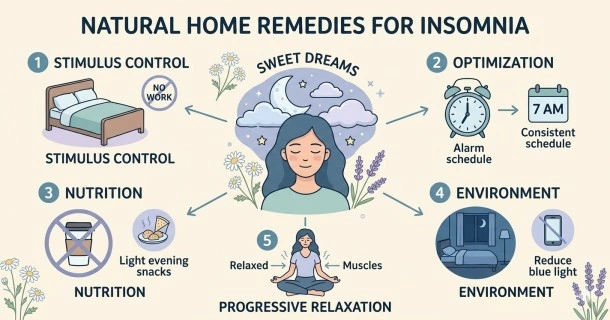
1. Master Stimulus Control (Re-associate Your Bed with Sleep)
When you regularly lie awake feeling frustrated, your brain mistakenly pairs your bed with stress and wakefulness. Stimulus control breaks this cycle by re-establishing the bed purely as a place for rest:
- The 20-Minute Rule: If you are unable to fall asleep or get back to sleep within roughly 20 minutes, get out of bed. Move to a dimly lit room and engage in a quiet, non-stimulating activity (like reading a physical book). Return to bed only when you feel genuinely drowsy.
- Reserve the Bedroom: Strictly limit your bed to only two activities: sleep and intimacy. Keep work, laptops, televisions, and stressful problem-solving entirely out of your sleeping space.
2. Practice Sleep Optimization and Hygiene
Minor daily choices heavily influence your biological clock. While sleep hygiene is rarely enough to cure chronic insomnia on its own, it serves as a critical foundation for healthy sleep cycles:
- Anchor Your Wake-Up Time: Set a strict alarm for the exact same time every day, including weekends. Consistency anchors your circadian rhythm, making it easier to predict bedtime drowsiness.
- Eliminate Daytime Naps: If you struggle with nighttime insomnia, avoid napping during the day. Napping diminishes your "sleep drive"—the internal biological pressure to sleep—leaving you wide awake at midnight.
- Hide the Clock: Continually checking the time during the night triggers mathematical anxiety ("If I don't sleep now, I will only get 4 hours"). Turn your clock away from view or place your phone across the room.
3. Implement Dietary and Chemical Boundaries
What you consume hours before bed directly impacts your deep-sleep architecture:
- The Afternoon Caffeine Cutoff: Caffeine blocks sleep-promoting chemicals in the brain and can linger in your system for up to 8 hours. Avoid coffee, energy drinks, and caffeinated sodas after 2:00 PM.
- Avoid the Alcohol Trap: While alcohol acts as a sedative that may help you pass out initially, it fractures your sleep cycle as your body metabolizes it. It leads to frequent middle-of-the-night awakenings and deprives you of restorative REM sleep.
- Lighter, Earlier Dinners: Avoid heavy, fatty, or highly acidic meals within 2 to 3 hours of bedtime to prevent physical discomfort and acid reflux. If you are hungry, choose a small, light snack.
4. Create an Environment Conducive to Sleep
Your bedroom should mimic a cool, dark cave to promote natural melatonin production:
- Cool Room Temperatures: The body needs to drop its core temperature slightly to initiate sleep. Aim to keep your bedroom thermostat set comfortably cool.
- The Blue-Light Ban: Smartphones, tablets, and computers emit intense blue light that signals your brain that it is still daytime. Power down all screens at least 60 minutes before bedtime.
5. Utilize Physiological Relaxation Techniques
Calming an overactive nervous system provides a physiological runway to smoothly transition into sleep:
- Progressive Muscle Relaxation (PMR): Systematically tense each muscle group (starting from your toes and working up to your face) for 5 seconds, then completely release the tension while exhaling deeply.
- Mindfulness Meditation: Focusing entirely on the rhythm of your natural breath anchors a racing mind, pulling your focus away from the anxiety of sleeplessness.
Frequently Asked Questions (FAQs)
What are the main types and possibilities behind chronic insomnia?
If you are consistently experiencing severe sleep disruption, medical professionals look at several distinct possibilities to pinpoint the root cause, including:
- Primary Insomnia / Conditioned Psychophysiological Insomnia: Sleep anxiety caused by the habits of worrying about sleep itself.
- Psychiatric Conditions: Underlying clinical anxiety, severe stress, or clinical depression.
- Co-occurring Medical or Neurological Issues: Underlying physical conditions such as Restless Legs Syndrome (RLS), sleep apnea, chronic pain conditions, or gastrointestinal issues like acid reflux.
What are the top treatment options for managing severe insomnia?
Evidence-based clinical care generally involves choosing between or combining three primary paths:
- Cognitive Behavioral Therapy for Insomnia (CBT-I): The premier non-pharmacological first-line approach that targets thoughts and behaviors.
- Mindfulness-Based Relaxation Therapies: Clinician-guided progressive relaxation, biofeedback, or structured meditation regimens.
- Pharmacological Management: Short-term prescription medications (such as orexin receptor antagonists, melatonin receptor agonists, or targeted sleep medications) utilized carefully under strict clinical oversight.
Can over-the-counter supplements or herbal remedies cure insomnia?
Natural supplements like melatonin, magnesium, valerian root, or chamomile tea are popular remedies that many people try. While some studies show they may help relax the body or slightly improve sleep quality, health organizations like the National Institute for Health and Care Excellence (NICE) note that evidence for their long-term effectiveness is limited. They are best used as occasional tools rather than standalone cures for chronic sleep disorders.