
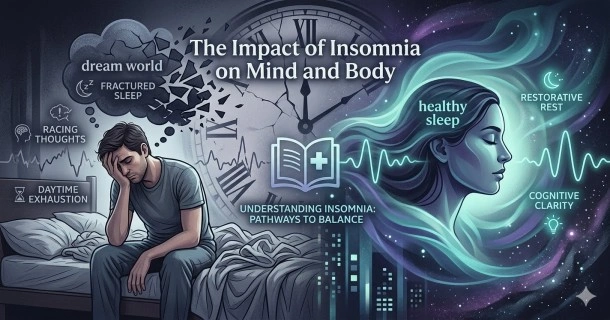
Learn what it truly means to be an insomniac. Discover the difference between acute and chronic insomnia, recognize key symptoms, and understand how sleep quality impacts you.
Understanding Insomnia: Symptoms, Duration, and What It Means to Be an Insomniac
Insomnia is a highly prevalent sleep disorder characterized by a persistent difficulty falling asleep, staying asleep, or waking up prematurely without the ability to drift back to sleep. This condition ranges in severity from a mild disruption to a profoundly debilitating issue, impacting roughly 20% to 30% of adults at various stages of their lives.
Sleep is one of the body's most deeply healing and revitalizing biological needs. When you are deprived of restorative rest, it alters your baseline health, immune efficiency, and cognitive function.
Defining Insomnia: It Is About Quality, Not Just Hours
A common misconception is that insomnia is defined strictly by a specific number of sleeping hours. However, sleep requirements vary naturally from person to person.
Instead, clinical medicine defines insomnia by the overall quality of your sleep and how you function during the day. If you regularly spend eight full hours in bed but still wake up feeling completely unrefreshed, drowsy, or plagued by daytime fatigue, you may be experiencing insomnia.
Types of Insomnia: Acute vs. Chronic
Clinical sleep medicine categorizes insomnia based on how frequently it occurs and how long the pattern persists:
- Acute Insomnia (Short-Term): This is a brief episode of sleeplessness that typically lasts from a few days up to less than three months. It is usually triggered by temporary external life stressors, such as job pressure, family difficulties, jet lag, or traumatic events.
- Chronic Insomnia (Long-Term): This is a formal medical condition where a patient experiences sleep disruption at least three nights a week for more than a consecutive month. Chronic insomnia impacts roughly 15% of the adult population and usually requires targeted professional evaluation, behavioral therapy, or medical treatment to resolve.
Core Signs That You May Be an Insomniac
If you consistently experience any of the following sleep patterns, it is a clear indicator that you should consider undergoing clinical evaluation:
- Initial Sleep Latency: Tossing and turning for hours, finding it incredibly hard to initially fall asleep when entering bed.
- Sleep Fragmentation: Falling asleep quickly but waking up repeatedly during the dead of night, struggling to piece together a solid sleep cycle.
- Terminal Insomnia: Falling asleep easily but waking up far too early in the morning without the physical ability to fall back asleep.
- Non-Restorative Sleep: Frequently waking up with a pronounced heavy, unrefreshed feeling, followed by persistent daytime exhaustion.
Frequently Asked Questions (FAQs)
What is the exact difference between acute and chronic insomnia?
Acute insomnia is a temporary phase of poor sleep lasting anywhere from a few days to a few weeks, almost always brought on by an immediate stressor like travel or work pressure. Chronic insomnia is defined as sleep difficulties that occur at least three nights a week and persist for more than a month, often requiring lifestyle changes or medical intervention to fix.
Can you still have insomnia if you sleep for 7 or 8 hours a night?
Yes. Insomnia is clinically judged by the quality of sleep and daytime impairment, not just the clock hours. If your sleep is highly fragmented or shallow, you will still experience daytime fatigue, brain fog, and drowsiness, which are classic signs of an underlying insomnia issue.
How common is chronic insomnia disorder in adults?
It is exceptionally common. While up to 30% of adults experience brief, mild sleep disruptions over their lifetimes, roughly 15% of all adults suffer from true chronic insomnia disorder, making it the single most prevalent sleep disorder worldwide.