
Can foot reflexology improve sleep quality? Discover the evidence-based reflexology points for insomnia, stress relief, and deep relaxation.
Foot Reflexology for Insomnia: Natural Relaxation for Better Sleep
Many people look to complementary therapies like foot reflexology for insomnia to ease daily stress, calm an overactive mind, and encourage natural, restful sleep.
Reflexology is a non-invasive holistic practice based on the principle that specific reflex zones on the feet, hands, and ears map directly to corresponding organs, systems, and glands within the body. While it is not a medical cure for underlying sleep pathologies, clinical studies suggest that target-specific stimulation of reflexology points for sleep disorders can reduce psychological hyperarousal, soothe musculoskeletal tension, and lower stress hormones—creating the ideal internal environment for deep sleep.
How Does Reflexology Help with Sleep Issues?
Chronic insomnia is frequently sustained by chronic stress, which traps the body in a state of sympathetic nervous system dominance (the "fight-or-flight" response). Reflexology acts as a therapeutic nervous system regulator by:
- Activating the Parasympathetic System: Gentle, firm compression on the nerve pathways of the feet triggers the "rest-and-digest" response, slowing the heart rate and relaxing muscle groups.
- Mitigating Cortisol Production: Focused reflex work balances endocrine system feedback loops, decreasing circulating levels of cortisol (the primary stress hormone).
- Alleviating Physical Discomfort: By improving localized microcirculation and releasing physical blockages, reflexology addresses secondary physical disruptors that interrupt sleep cycles, such as tension-induced shallow breathing or stress-related digestive tightness.
Step-by-Step Guide: Key Reflexology Zones for Sleep Optimization
To enhance sleep preparation, practice these techniques in a quiet, comfortable space roughly 30 minutes before bedtime. Sit comfortably, apply a small amount of natural lotion or oil, and use a firm, creeping thumb-walking or steady press-and-hold technique on both feet.
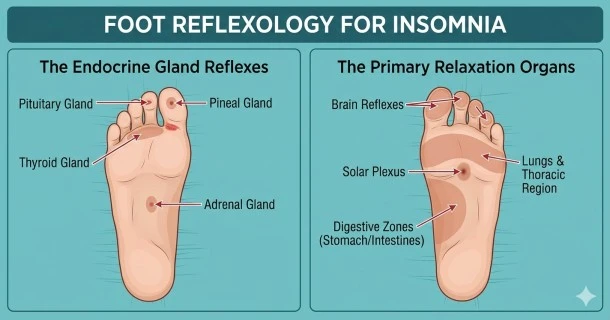
The Endocrine Gland Reflexes
The endocrine system regulates the body's internal biological clock and systemic hormone distribution. Balancing these zones helps stabilize circadian rhythms:
- Pituitary & Pineal Glands: Located at the exact center and fleshy pad of the big toe. Stimulating this zone supports overall hormonal balance and helps regulate the natural production of melatonin, the hormone responsible for sleep-wake cycle transitions.
- Thyroid & Parathyroid: Found at the base of the big toe, near the first joint. This area addresses metabolic equilibrium and systemic calm.
- Adrenal Glands: Positioned slightly above the center of the foot, just below the ball of the foot toward the inner side. Because the adrenals manage adrenaline and stress responses, this reflex area requires extra focus to calm a chronically high-stress lifestyle.
The Primary Relaxation Organs
- The Brain Reflex: Located across the tips of all five toes. Massaging these zones helps alleviate acute mental fatigue, calms racing thoughts, and mitigates bedtime anxiety.
- The Solar Plexus Reflex: Found in the slight hollow indentation centered directly below the ball of the foot (between the second and third metatarsal bones). Often called the "Calming Spirit" zone in traditional integrative medicine, pressing solar plexus reflexology for anxiety provides exceptional emotional grounding, promotes deep diaphragmatic breathing, and relieves acute stress panics.
- The Lungs & Thoracic Region: Located across the broad ball of the foot. Massaging this zone systematically releases tension in the chest wall, helping to transition the body into deep, unhurried respiratory cycles.
- The Digestive Zone (Stomach & Intestines): Positioned across the mid-arch area of the foot. Softly working this region helps pacify mild, stress-induced abdominal discomfort or gas accumulation that could otherwise lead to mid-night awakenings.
Critical Medical Safety, Limitations, and Warnings
While self-administered foot reflexology is exceptionally safe and highly supportive for general relaxation, it must be approached with realistic clinical expectations and proper boundaries:
- No Replacement for Standard Medical Care: Reflexology is a supportive relaxation therapy, not a standalone medical treatment. It cannot structurally reverse severe conditions like obstructive sleep apnea (which requires positive airway pressure support) or treat restless leg syndrome (RLS) and clinical depression. Persistent sleep issues must always be evaluated by a healthcare professional.
- Skin and Vascular Integrity: Do not apply deep pressure or friction over open wounds, active fungal infections, severe foot ulcers, active fractures, deep vein thrombosis (DVT), or highly inflamed varicose veins.
- Pregnancy Precautions: Pregnant individuals must exercise strict caution. Avoid forceful or intense compression around the inner and outer sides of the ankle bones (uterine and ovarian reflexes), as certain trigger points in these zones can historically stimulate localized pelvic blood flow. Stick strictly to light, general massage across the tops of the toes and the solar plexus area.
- The Pain Response Rule: If a particular reflex spot feels intensely sharp, painful, or completely numb, do not continuously force deep pressure upon it. A heavy, dull, or slightly tender sensation is normal, but sharp pain indicates you should ease up your pressure calibration.
Frequently Asked Questions (FAQs)
Can foot reflexology completely cure chronic insomnia?
No. Reflexology is not a clinical cure for sleep disorders. It serves as an evidence-based complementary lifestyle tool that helps manage hyperarousal, muscular tension, and mental anxiety. Chronic insomnia should always be diagnosed by a doctor or sleep specialist to identify root medical causes.
When is the best time to do sleep reflexology?
For maximum efficacy, practice your foot reflexology routine approximately 20 to 30 minutes before bed. Concluding the session with the solar plexus and brain reflexes allows your nervous system to fully decompress right before you transition into sleep.
What is the main difference between reflexology and standard foot massage?
A standard foot massage focuses primarily on relaxing the local muscles, joints, and soft tissues of the feet to improve local blood flow. Reflexology utilizes highly specific thumb and finger compression techniques mapped out across precise nervous system pathway zones to trigger a therapeutic relaxation reflex in separate organs and internal systems throughout the entire body.